
 Send Inquiry
 Send Inquiry
Glass Desiccators Labcare-Online
Glass Desiccators Labcare-Online Specification
- Temperature Resistance
- Up to 120°C
- Glass Type
- Borosilicate Glass
- Shape
- Round
- Control Type
- Manual Sealing Lid
- Features
- Air-tight Seal, Robust Construction, Replaceable Porcelain Plate, Chemical Resistant, Clear Visibility
- Type
- Vacuum Glass Desiccator
- Dimension (L*W*H)
- Varies (typically 150 mm, 200 mm, 250 mm, 300 mm inner diameter options)
- Equipment Type
- Desiccator
- Equipment Materials
- Borosilicate Glass, Porcelain Plate
- Material
- Borosilicate Glass
- Application
- Moisture Sensitive Sample Storage, Laboratory Drying, Protection from Humidity
- Capacity (Ltr)
- Varies (Depends on Model/Size)
- Surface Finish
- Clear, Smooth Glass Finish
- Autoclavable
- Yes
- Vacuum Capability
- Up to 740 mm Hg (suitable for vacuum desiccation)
- Lid Type
- Ground Flange with Knob
- Plate Type
- Removable perforated porcelain plate
- Seal Type
- Grease-sealed or rubber ring
- Suitable Desiccant
- Silica Gel, Anhydrous Calcium Chloride
Glass Desiccators Labcare-Online Trade Information
- FOB Port
- mumbai
- Payment Terms
- Delivery Point (DP), Cash Against Delivery (CAD), Cash on Delivery (COD), Cash Advance (CA), Days after Acceptance (DA), Letter of Credit (L/C), Telegraphic Transfer (T/T), Western Union, Paypal, Letter of Credit at Sight (Sight L/C), Cash in Advance (CID), Cheque
- Supply Ability
- 50 Per Week
- Delivery Time
- 1 Week
- Sample Available
- Yes
- Sample Policy
- Sample costs shipping and taxes has to be paid by the buyer
- Packaging Details
- Cardbord and Foam sheet packing
- Main Export Market(s)
- Asia, Australia, North America, South America, Eastern Europe, Africa, Central America, Middle East, Western Europe
- Main Domestic Market
- All India
- Certifications
- MSME certified products Export Quality Inspected products ISO Certified products
About Glass Desiccators Labcare-Online
Labcare Instruments & International Services. Menufacturer and Exporter of Lab quipments, Hospital,pharmarcy,Medical collges, schools, Engineering collegs, B.Tech,M.tech, engineering tradesequipments also. Biological, chemistry, physics , Dental, Nursing, endoscopy, physcological,Lab glasswere, Educational Models Menufacturer Ambala india Labcare-online
colleges Lab equipments menufacturer Ambala India. labcare Online
Laboratory glasswere menufacturer Ambala India. Labcare online
Test tube Menufacturer in Firojabad india. labcare online
Microscope menufacturer Ambala india. labcare online
Physics lab equipments menufacturer Ambala Labcare Online
Web: www.labcareinstruments.com
web: www.labcareambala.com
email: www.labcareinstruments65@gmail.com
Mb- +91 8708985143
Customer Care No. 01712690464
Superior Moisture Protection for Sensitive Samples
Labcare-Onlines Glass Desiccators provide a meticulously sealed environment that safeguards samples from atmospheric moisture. The robust construction and vacuum-sealing capabilities ensure dependable storage even for the most delicate compounds. Their clear, borosilicate glass not only offers chemical resistance but also guarantees effortless monitoring of contents without exposure.
Flexible Application and Reliable Performance
Designed with a removable, perforated porcelain plate, these desiccators accommodate different sample sizes and types of desiccants. Their high vacuum capability (up to 740 mm Hg) makes them suitable for standard and vacuum drying applications. Available in a range of dimensions, they can be autoclaved, supporting stringent laboratory hygiene protocols.
FAQs of Glass Desiccators Labcare-Online:
Q: How should I assemble and seal the Glass Desiccator for optimal vacuum performance?
A: To assemble, place the removable perforated porcelain plate inside the desiccator base. Add your desiccant (silica gel or anhydrous calcium chloride) below the plate, then position your sample above. Ensure the ground flange lid is seated properly and create the vacuum by applying the appropriate grease or a rubber ring before attaching. Seal the lid and evacuate air to the desired vacuum level, up to 740 mm Hg.Q: What are the primary benefits of using a vacuum glass desiccator compared to a standard desiccator?
A: A vacuum glass desiccator provides superior moisture removal by lowering the internal pressure, enabling faster and more thorough drying of sensitive samples. The robust borosilicate glass and reliable air-tight seal ensure chemical resistance, clear visibility, and long-term protection from humidity.Q: When should I consider replacing the porcelain plate or desiccant in my desiccator?
A: The removable porcelain plate should be replaced if it shows signs of cracks or significant wear. Regularly inspect your desiccant: silica gel can be regenerated by drying, while calcium chloride should be replaced if it becomes liquefied or no longer effectively absorbs moisture.Q: Where can I use this glass desiccator and what kinds of samples are suitable?
A: This desiccator is suitable for laboratories, research institutions, and industrial settings, ideal for storing and drying moisture-sensitive samples such as powders, reagents, and hygroscopic substances. Its chemical resistance and vacuum capability make it applicable in a wide array of scientific processes.Q: What is the process for autoclaving the desiccator for sterilization?
A: Ensure the desiccator is completely clean and devoid of desiccant and samples before autoclaving. The borosilicate glass body and porcelain plate can withstand autoclaving temperatures up to 120C. Always remove the rubber ring or any grease prior to autoclaving to prevent damage or residue formation.Q: How do the various sizes of glass desiccators differ in terms of use?
A: Different inner diameter options (150 mm, 200 mm, 250 mm, and 300 mm) accommodate varying storage capacities and sample sizes. Select the size based on your laboratorys requirements and the volume of materials needing desiccation.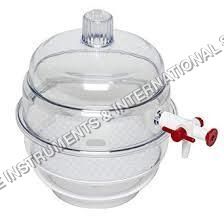

Price:
- 50
- 100
- 200
- 250
- 500
- 1000+

More Products in Laboratory Glassware Category
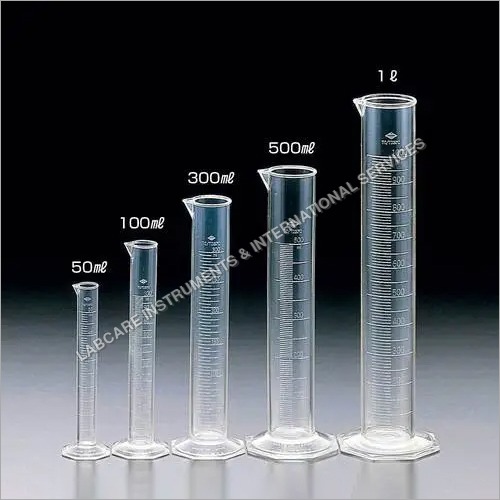
Measuring Cylinder Labcare-Online
Price 10.00 INR
Minimum Order Quantity : 5 Boxes
Material : Borosilicate Glass
Type : Other, Measuring Cylinder
Glass Type : Borosilicate
Equipment Type : Measuring Equipment
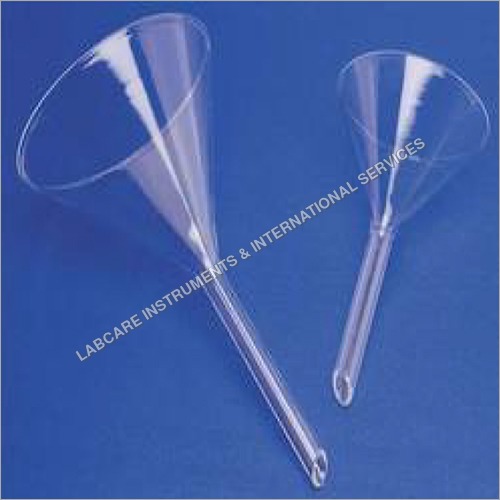
Laboratory Funnel
Price 30 INR / Box
Minimum Order Quantity : 20 Boxes
Material : fiber glass
Type : Funnels

GOVT. APPROVED MANUFACTURER, SUPPLIER AND EXPORTER
 Send Inquiry
Our Products
- Laboratory Microscope
- Hospital Furnitures
- Pharmacy Instruments
- COVID-19 SAFETY EQUIPMENTS
- Physical Instruments
- Laboratory Glasswere
- Anatomical Models
- Laboratory Glassware
- MIDWIFERY & CHILD HEALTH CARE SECTION
- Unique Products
- Chemistry Lab Equipment
- Scientific Instrument
- scientific laboratory instruments
- Physics equipments
- Hospital Equipments
- Educational Equipments kits
- ANALOG LAB TRANING MODULES
- Engineering Models & Equipments.
- Scientific Instruments
- Math catalogue Math items
- Building Furniture for School, Collegs & Office
- EDUCATIONAL WORKING MODELS
- AGRICULTURE EQUIPMENTS
- GEOGRAPHY EQUIPMENTS SECTION
- Disposible items
- The Survey Engineering Equipments Section
- Nursing College Equipments
- Fluid Machnical Lab Equipmens Labcare-Online
- Heat Transfer Lab Appartus Labcare-Online
- Labcare Entomological Equipments.
- Science and Security Equipments
- Defence Utility Equipment
- Office Equipment
- Sanitary Napkins and Diapers
- I.T.I Tools and Machines
- SCIENCE LAB EQUIPMENT
- LABTRONIKS SPECTROPHOTOMETERS
- Nebulizers
- LABTRONIKS


 Send Inquiry
 Send SMS
Developed and Managed by Infocom Network Private Limited.
