
 Send Inquiry
 Send Inquiry
BENDING OF BEAM APPARATUS By Labcare Export
Price 2400.0 INR/ Piece
BENDING OF BEAM APPARATUS By Labcare Export Specification
- Accuracy
- 0.01 mm
- Temperature Range
- Ambient
- Measurement Range
- 025 mm Deflection
- Capacity
- Up to 50 kg
- Core Components
- Beam, Supports, Load Hanger, Slotted Weights, Dial Gauge
- Model No
- LB-BENDING-01
- Automation Grade
- Manual
- Voltage
- 230 V AC
- Power Source
- Manual/Mechanical
- Frequency
- 50 Hz
- Feature
- High Accuracy, Sturdy Construction, Corrosion Resistant
- Equipment Materials
- Mild Steel (MS), Stainless Steel (SS), Aluminum
- Type
- Mechanical, Bench-top
- Usage
- Lab Experiment, Educational Use
- Display Type
- Analog Dial Gauge
- Dimension (L*W*H)
- 1000 x 200 x 450 mm
- Weight
- Approx 20 kg
- Surface Finish
- Smooth, Powder Coated
- No. of Supports
- 2 Adjustable Knife Edge Supports
- Loading Type
- Central Point/Multiple Point Loading
- Max Deflection Gauge Reading
- 25 mm
- Thickness of Beam
- 3 mm
- Width of Beam
- 25 mm
- Scale Graduation
- 0.01 mm
- Suitable For
- Young's Modulus and Elastic Modulus Experiments
- Length of Beam
- 700 mm
BENDING OF BEAM APPARATUS By Labcare Export Trade Information
- Minimum Order Quantity
- 1 Piece
- Payment Terms
- a, ', ,, ', ', C, a, s, h, a, C, a, s, h, d, v, a, c, e, (, C, ), ', ,, d, Paypal, Cash Advance (CA), Cash in Advance (CID), ', v, a, c, e, (, C, ), '
- Supply Ability
- 100 Pieces Per Week
- Delivery Time
- 7 Days
- Sample Available
- No
- Sample Policy
- ', r, s, , s, , y, ', s, , p, p, n, , n, d, , s, , p, d, , y, , r, Free samples available with shipping and taxes paid by the buyer, , p,
- Main Export Market(s)
- o, ', e, , E, u, o, p, e, ', ,, , ', A, a, ', ,, , ', A, u, a, a, ', ,, , ', e, a, , A, e, c, a, ', ,, , ', A, e, c, a, ', ,, , ', o, u, A, e, c, a, ', ,, , ', E, a, ', e, e, h, , h, , E, u, , , o, p, e, ', ,, ', d, d, e, , E, a, ', ,, , ', A, c, South America, Eastern Europe, Western Europe, Middle East, Central America, Australia, North America, Africa, Asia, a
- Main Domestic Market
- ', ', l, l, All India
BENDING OF BEAM APPARATUS By Labcare Export About
A Bar Pendulum also known as a Compound Pendulum is a type of pendulum that consists of a rigid bar or rod with a fixed pivot point Unlike a simple pendulum which consists of a mass attached to a string or rod a compound pendulum uses the bar itself as the oscillating object and its motion depends on both the center of mass and the distribution of mass along the bar
Key Features
Rigid Structure The bar is typically made from a material with a high density such as steel or brass to ensure the pendulum has significant mass
Fixed Pivot Point The bar is hinged at one end allowing it to swing in a circular arc
Period of Oscillation The time it takes for one full swing back and forth depends on the length of the bar and the position of the pivot The formula for the period of a compound pendulum takes into account the moment of inertia of the bar and the distance from the pivot to the center of mass
Use in Measuring Gravity Compound pendulums are often used in experiments to measure gravitational acceleration as their period can be precisely calculated from the dimensions of the bar and the position of the pivot
Moment of Inertia The oscillation period is influenced by the distribution of mass along the bar which is described by its moment of inertia
Applications
Scientific Experiments Used in the study of oscillatory motion and as a method to determine the value of g acceleration due to gravity
Timekeeping Devices Historically similar principles were used in timekeeping devices like early clocks
Physics Demonstrations Demonstrates rotational and oscillatory motion in educational settings
Exceptional Measurement Precision
Equipped with an analog dial gauge offering 0.01 mm scale graduation, the Bending of Beam Apparatus delivers high accuracy in deflection measurements. This level of sensitivity is especially valuable when conducting experiments to determine Youngs modulus and elastic properties of different materials, supporting both educational and industrial testing requirements.
Versatile and Sturdy Construction
Designed with two adjustable knife-edge supports, this apparatus accommodates beams up to 700 mm in length and 25 mm in width, supporting central and multiple loading scenarios. Manufactured from powder-coated mild steel, stainless steel, and aluminum, its built for durability, corrosion resistance, and long-term laboratory use.
Ideal for Educational Laboratories
Intended for bench-top use with a manual, non-automated system, the model is perfect for academic settings. Students and instructors benefit from clear, hands-on learning experiences while establishing foundational understanding of mechanical properties using reliable, easy-to-use instrumentation.
FAQs of BENDING OF BEAM APPARATUS By Labcare Export:
Q: How do you use the Bending of Beam Apparatus for Youngs modulus experiments?
A: To conduct Youngs modulus experiments, securely place the beam on the two adjustable knife-edge supports. Apply a known weight via the load hanger at the central or multiple points, depending on the experiment. Use the analog dial gauge to record the resulting deflection, then calculate Youngs modulus using the measured values and standard formulas.Q: What types of loads can this apparatus accommodate?
A: The apparatus supports both central point loading and multiple point loading. With a capacity of up to 50 kg, users can test a broad range of forces using slotted weights and load hangers, making it suitable for various beam deflection experiments.Q: When should the device be recalibrated or checked for accuracy?
A: It is advisable to check the dial gauge and supports for calibration before each use, particularly in a laboratory environment where consistent accuracy is essential. Regular maintenance and periodic checks help in maintaining measurement precision and device longevity.Q: Where is the Bending of Beam Apparatus commonly used?
A: This apparatus is primarily used in educational and research laboratories, such as those in universities, technical institutes, and quality control labs in engineering industries across India. Its suitable for teaching, demonstrations, and routine experimental research.Q: What processes are involved in setting up the bending experiment?
A: Begin by adjusting the beam supports to the desired positions and ensure a stable setup. Place the beam, zero the dial gauge, and slowly add weights using the load hanger. Observe and record the deflection indicated by the dial gauge for each weight applied, ensuring the apparatus remains level and stable during the test.Q: What are the benefits of using this manual bench-top model?
A: Manual operation ensures direct, hands-on control and engagement with experiments, fostering better understanding of mechanical properties. Its analog precision, sturdy design, and ease of use make it ideal for educational purposes, while corrosion resistance ensures a long service life.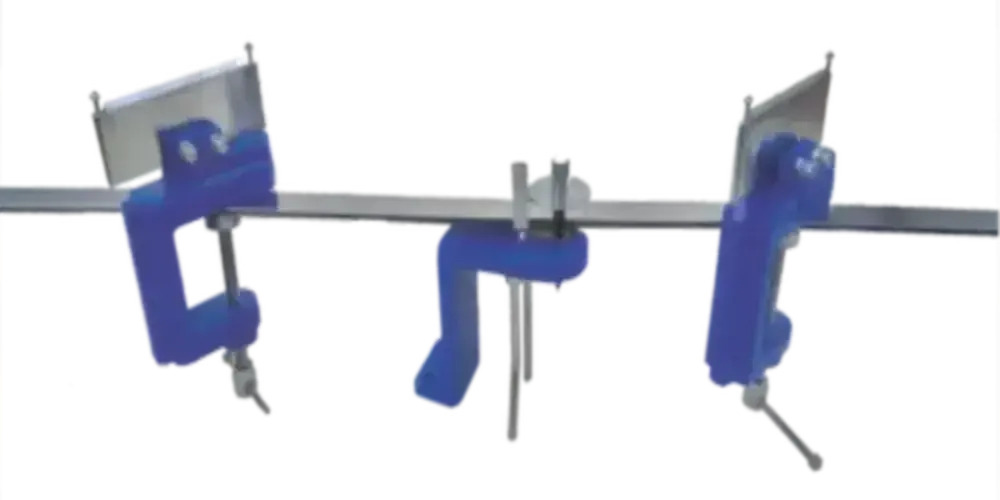

Price:
- 50
- 100
- 200
- 250
- 500
- 1000+

More Products in SCIENCE LAB EQUIPMENT Category
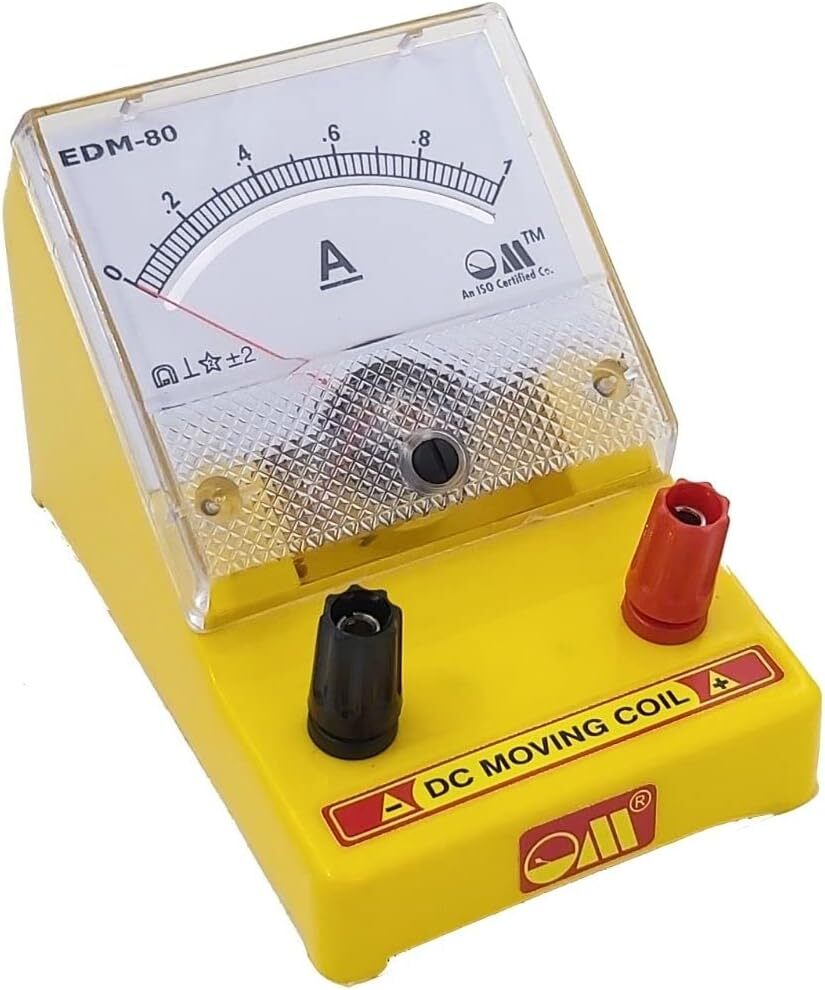
AMMETER (MO-64) By Labcare
Price 220 INR / Piece
Minimum Order Quantity : 1 Piece
Display Type : Analog
Measurement Range : 1 Amp to 200 Amp
Capacity : 1 Amp, 5 Amp, 10 Amp, 15 Amp, 30 Amp, 50 Amp, 100 Amp, 200 Amp
Usage : Measuring electric current in laboratory experiments
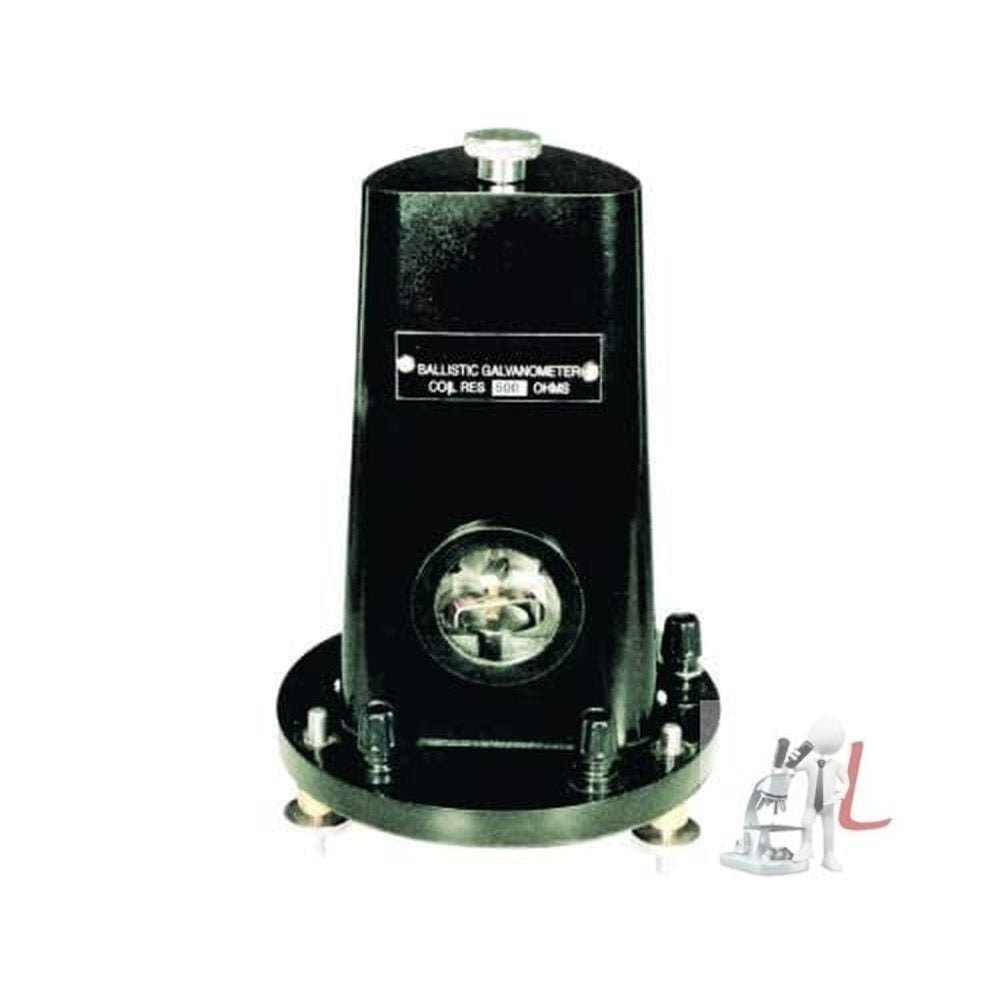
BALLISTIC GALVANOMETER By Labcare Export
Price 13799.0 INR / Piece
Minimum Order Quantity : 1 Piece
Display Type : Analog (Deflection Scale)
Measurement Range : 10 microcoulombs to 200 microcoulombs (varies by setup)
Capacity : Not Applicable (Reflects charge sensitivity, not load)
Usage : Measurement of electric charge/discharge in physics labs, educational demonstrations
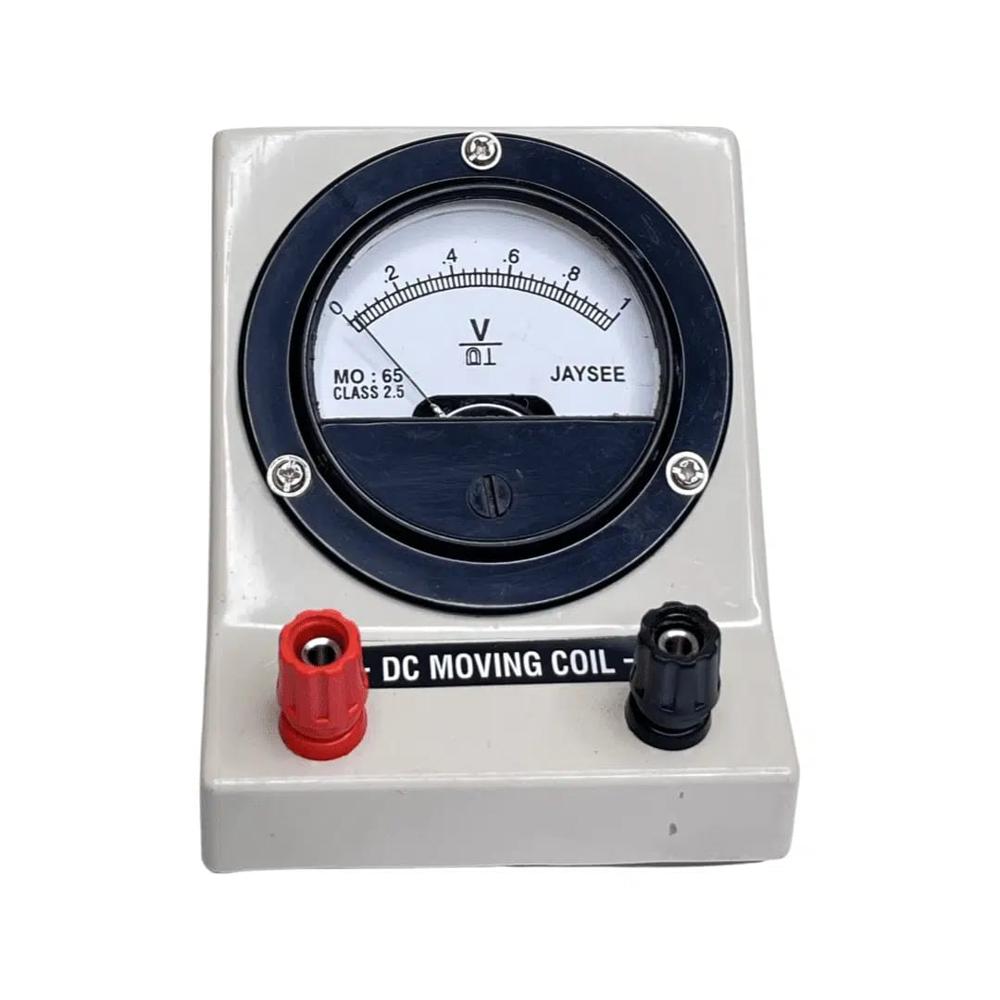
AMMETER (MO-67) By Labcare
Price 700.0 INR / Piece
Minimum Order Quantity : 1 Piece
Display Type : Analog Needle Display
Measurement Range : 0 to 5 Amperes
Capacity : 05 Amp
Usage : Laboratory Measurement of Current
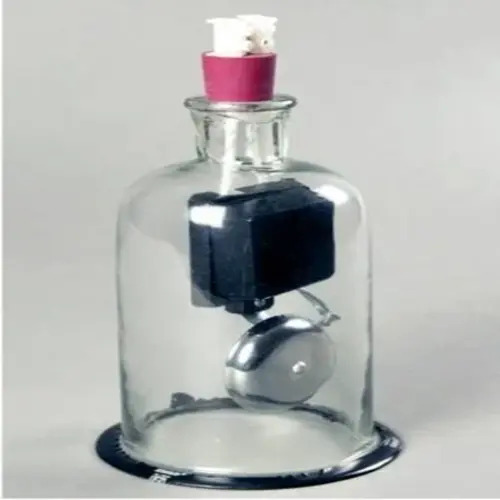
BELL EXPERIMENT APPARATUS By Labcare
Price 850.0 INR / Piece
Minimum Order Quantity : 1 Piece
Display Type : Analog
Measurement Range : Audibility of Bell Under Vacuum
Capacity : 2 kg
Usage : Laboratory Demonstration of Bell Experiment

GOVT. APPROVED MANUFACTURER, SUPPLIER AND EXPORTER
 Send Inquiry
Our Products
- Laboratory Microscope
- Hospital Furnitures
- Pharmacy Instruments
- COVID-19 SAFETY EQUIPMENTS
- Physical Instruments
- Laboratory Glasswere
- Anatomical Models
- Laboratory Glassware
- MIDWIFERY & CHILD HEALTH CARE SECTION
- Unique Products
- Chemistry Lab Equipment
- Scientific Instrument
- scientific laboratory instruments
- Physics equipments
- Hospital Equipments
- Educational Equipments kits
- ANALOG LAB TRANING MODULES
- Engineering Models & Equipments.
- Scientific Instruments
- Math catalogue Math items
- Building Furniture for School, Collegs & Office
- EDUCATIONAL WORKING MODELS
- AGRICULTURE EQUIPMENTS
- GEOGRAPHY EQUIPMENTS SECTION
- Disposible items
- The Survey Engineering Equipments Section
- Nursing College Equipments
- Fluid Machnical Lab Equipmens Labcare-Online
- Heat Transfer Lab Appartus Labcare-Online
- Labcare Entomological Equipments.
- Science and Security Equipments
- Defence Utility Equipment
- Office Equipment
- Sanitary Napkins and Diapers
- I.T.I Tools and Machines
- SCIENCE LAB EQUIPMENT
- LABTRONIKS SPECTROPHOTOMETERS
- Nebulizers
- LABTRONIKS


 Send Inquiry
 Send SMS
Developed and Managed by Infocom Network Private Limited.
