
 Send Inquiry
 Send Inquiry
Bifilar Pendulum (Iron)
Bifilar Pendulum (Iron) Specification
- Weight
- Approx. 1.6 kg
- Power Type
- Manual (Non-Electric)
- Style
- Laboratory instrument
- Use
- Physics Experiment, Determining Moment of Inertia
- Surface Finish
- Polished iron, painted base
- Model No
- BIFA-IR-01
- Size
- Standard lab size, compact
- Assembly
- Requires minor assembly before use
- Features
- Detachable rods, Adjustable rod spacing, Stable design
- Type
- Mechanical Pendulum Apparatus
- Material
- Iron Rods, Metal Base
- Dimensions
- Rod length approx. 30 cm, Base approx. 18 x 12 x 2 cm
- Shape
- Rectangular base with cylindrical rods
- Color
- Black and Metallic Grey
- Function
- Demonstrates oscillatory motion between rods
- Age
- For Physics Students (Age 14+)
- Advantage
- Durable construction, Reusable, Accurate results
- Usage Environment
- Classrooms, Physics Labs, Educational Institutions
- Number of Rods
- Two parallel iron rods
- Adjustability
- Rod spacing can be altered for varying experiments
- Support Stand
- Solid metal base with mounting hardware
- Experiment Applications
- Used to study torsional motion and calculate moment of inertia
- Stability
- Anti-slip rubber pads on base
- Maintenance
- Rust-resistant finish, easy to clean
- Compatibility
- Suitable for use with standard lab weights
Bifilar Pendulum (Iron) Trade Information
- FOB Port
- MUMBAI
- Payment Terms
- Cash Against Delivery (CAD), Cash on Delivery (COD), Letter of Credit (L/C), Telegraphic Transfer (T/T), Western Union, Paypal, Letter of Credit at Sight (Sight L/C), Delivery Point (DP), Days after Acceptance (DA), Cash in Advance (CID), Cheque, Cash Advance (CA)
- Supply Ability
- 50 Per Week
- Delivery Time
- 1 Week
- Sample Available
- Yes
- Sample Policy
- Sample costs shipping and taxes has to be paid by the buyer
- Packaging Details
- card board packing
- Main Export Market(s)
- Australia, North America, South America, Eastern Europe, Western Europe, Middle East, Central America, Asia, Africa
- Main Domestic Market
- All India
- Certifications
- ISO Certified product
Bifilar Pendulum (Iron) About
Versatile Usage and Easy Application
The Bifilar Pendulum (Iron) offers reliable manual operation for studying oscillatory motion and moment of inertia. Ideal for hands-on demonstrations, its adjustable rod spacing provides flexibility for different physics concepts. Designed for regular lab use, the apparatus suits classroom lessons and advanced practical sessions, delivering accurate results whether exploring basic principles or complex experimental theories.
Domestic Market Reach and Fast Delivery
Serving the pan-India domestic market, we estimate supply capabilities for both bulk and single orders. Samples are available on request, allowing buyers to assess the product before purchase. Express shipping options ensure swift delivery, supporting institutional and distributor needs nationwide. We maintain ready stock for prompt fulfillment, accommodating urgent requirements and regular academic procurement cycles.
FAQs of Bifilar Pendulum (Iron):
Q: How do you assemble the Bifilar Pendulum (Iron) for experiments?
A: Assembly requires attaching the detachable parallel iron rods to the solid metal base using the included mounting hardware. Minor set-up ensures the apparatus is ready for physics demonstrations.Q: What experiments can be performed with this bifilar pendulum?
A: This apparatus is primarily used to study torsional motion, calculate moment of inertia, and demonstrate oscillatory motion principles in physics labs and classrooms.Q: When is the ideal time to use this instrument in the curriculum?
A: The pendulum is best incorporated during physics lessons focusing on rotational dynamics, mechanical systems, or laboratory practicals involving motion analysis.Q: Where should the bifilar pendulum be placed for optimal results?
A: Place the instrument on a flat, stable surface in classrooms or labs, ensuring the anti-slip rubber pads contact the table to maximize stability during experiments.Q: What benefits are provided by the adjustable rods and rust-resistant finish?
A: Adjustable rods offer experimental flexibility, while the rust-resistant finish ensures the product remains durable and easy to maintain for recurring academic use.Q: How can physics students make the most of this bifilar pendulum?
A: Students can vary rod spacing, use standard lab weights, and observe torsional oscillations to reinforce theoretical learning with practical, accurate results.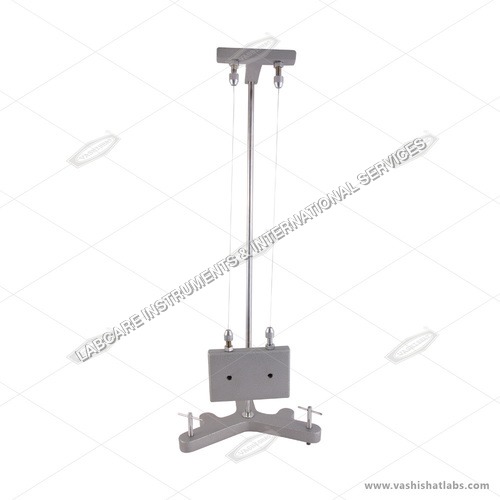

Price:
- 50
- 100
- 200
- 250
- 500
- 1000+

More Products in Physics equipments Category
Laboratory Equipment
Price 1100 / Piece
Minimum Order Quantity : 5
Material : Powder coated mild steel
Shape : Rectangular
Function : Laboratory workspace & storage
Color : White & Blue

Bio Gas plant working model Labcare-Online
Price 340 INR / Box
Minimum Order Quantity : 5 Boxes
Material : Highgrade Acrylic and Plastic
Shape : Rectangular with cylindrical digestor
Function : Simulates biogas production and gas movement
Color : Multicolor / Transparent
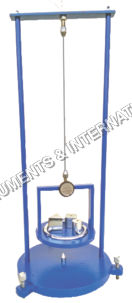
Inertia table Moment
Material : Mild Steel with Cast Iron Top
Shape : Rectangular Table with Circular Rotating Plate
Function : Finds the moment of inertia using rotating table
Color : Grey with Polished Surface
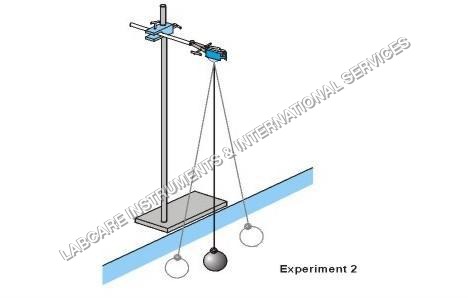
Simple Pendulum Labcare
Material : Brass (bob), Stainless Steel (rod), Wooden Stand
Shape : Cylindrical Bob, Rigid Stand
Function : Demonstrates Periodic Oscillation of a Simple Pendulum
Color : Golden (bob), Metallic Silver (rod), Brown (stand)

GOVT. APPROVED MANUFACTURER, SUPPLIER AND EXPORTER
 Send Inquiry
Our Products
- Laboratory Microscope
- Hospital Furnitures
- Pharmacy Instruments
- COVID-19 SAFETY EQUIPMENTS
- Physical Instruments
- Laboratory Glasswere
- Anatomical Models
- Laboratory Glassware
- MIDWIFERY & CHILD HEALTH CARE SECTION
- Unique Products
- Chemistry Lab Equipment
- Scientific Instrument
- scientific laboratory instruments
- Physics equipments
- Hospital Equipments
- Educational Equipments kits
- ANALOG LAB TRANING MODULES
- Engineering Models & Equipments.
- Scientific Instruments
- Math catalogue Math items
- Building Furniture for School, Collegs & Office
- EDUCATIONAL WORKING MODELS
- AGRICULTURE EQUIPMENTS
- GEOGRAPHY EQUIPMENTS SECTION
- Disposible items
- The Survey Engineering Equipments Section
- Nursing College Equipments
- Fluid Machnical Lab Equipmens Labcare-Online
- Heat Transfer Lab Appartus Labcare-Online
- Labcare Entomological Equipments.
- Science and Security Equipments
- Defence Utility Equipment
- Office Equipment
- Sanitary Napkins and Diapers
- I.T.I Tools and Machines
- SCIENCE LAB EQUIPMENT
- LABTRONIKS SPECTROPHOTOMETERS
- Nebulizers
- LABTRONIKS


 Send Inquiry
 Send SMS
Developed and Managed by Infocom Network Private Limited.
