
 Send Inquiry
 Send Inquiry
Glass Dessicators Vaccum
Glass Dessicators Vaccum Specification
- Temperature Resistance
- Up to 120C (standard use); not for direct heating
- Shape
- Round
- Glass Type
- Borosilicate Glass
- Control Type
- Manual vacuum valve or stopcock
- Features
- High chemical resistance, clear visibility, airtight seal, sturdy construction, reusable
- Type
- Vacuum Desiccator
- Dimension (L*W*H)
- Available in multiple sizes (100 mm to 300 mm diameter)
- Equipment Type
- Laboratory Desiccator
- Equipment Materials
- Borosilicate Glass, Porcelain Plate, Rubber/Gasket Seal
- Power
- Not applicable (manual operation)
- Material
- Borosilicate Glass with vacuum-safe components
- Application
- Laboratory moisture- and dust-free storage, vacuum drying
- Capacity (Ltr)
- Varies by diameter (typically 18 L)
- Vacuum Port
- Standard glass stopcock for hose connection
- Cleaning and Maintenance
- Easy to clean and autoclave compatible
- Maximum Vacuum
- Up to 740 mm Hg
- Plate Type
- Porcelain with perforations
- Usage
- Ideal for storing moisture-sensitive chemicals and samples
- Base Type
- Heavy-wall ground flange for stability
- Locking Mechanism
- Knob and Rubber Ring for airtight closure
- Color
- Transparent
- Weight
- Varies with size (approx. 14 kg)
Glass Dessicators Vaccum Trade Information
- FOB Port
- MUMBAI
- Payment Terms
- Cash on Delivery (COD), Cash Against Delivery (CAD), Cash in Advance (CID), Cheque, Cash Advance (CA)
- Supply Ability
- 50 Per Week
- Delivery Time
- 1 Week
- Sample Available
- Yes
- Sample Policy
- Sample costs shipping and taxes has to be paid by the buyer
- Packaging Details
- CARD BOARD PACKING
- Main Export Market(s)
- Asia, Australia, North America, South America, Eastern Europe, Western Europe, Middle East, Africa, Central America
- Main Domestic Market
- All India
- Certifications
- ISO CERTIFIED PRODUCT
Glass Dessicators Vaccum About
Excellent Choice for Laboratory Use
Glass Desiccators Vacuum are primarily used for dust- and moisture-free storage of sensitive chemicals and laboratory samples. They cater to both specific and general laboratory needs, whether for research institutes, universities, industrial quality control, or pharmaceutical labs. These desiccators are utilized by laboratory technicians, scientists, educational instructors, and industry professionals, ensuring that vital samples remain uncontaminated and dry. Their robust design makes them essential equipment across various scientific and technical disciplines.
Supply Ability and Market Reach
With high market value and steady supply ability, Glass Desiccators Vacuum are widely exported, especially to top-ranking international markets including Asia, Europe, and the Americas. Packaging is carefully managed for secure transportation, and list prices are competitive within the laboratory equipment sector. Samples are available upon request, allowing buyers to assess quality prior to commitment. The products distribution network spans manufacturers, traders, and suppliers, establishing it as a preferred choice in the global marketplace.
FAQs of Glass Dessicators Vaccum:
Q: How do you operate the vacuum mechanism on a Glass Desiccator?
A: To operate the vacuum mechanism, ensure the porcelain plate is properly placed, secure the lid with the knob and rubber ring for an airtight seal, connect a vacuum hose to the glass stopcock, and manually evacuate air to the desired pressure, up to 740 mm Hg.Q: What are the main applications of Glass Desiccators Vacuum in laboratories?
A: These desiccators are ideal for moisture- and dust-free storage of sensitive samples, vacuum drying, and preserving hygroscopic chemicals, making them suitable for general research, chemical analysis, and industrial use.Q: When should you choose borosilicate glass desiccators over plastic alternatives?
A: Select borosilicate glass desiccators when chemical resistance, clear visibility, and high durability against temperature changes are important, especially for critical laboratory work and when autoclaving is required.Q: Where are Glass Desiccators Vacuum primarily used?
A: They are widely utilized in research laboratories, educational institutions, industrial quality control labs, and pharmaceutical settings, both in India and across international markets.Q: What is the cleaning and maintenance process for this desiccator?
A: Cleaning is simpledisassemble the components, wash with laboratory detergent, rinse thoroughly, and autoclave if needed. Periodically check the rubber gasket and stopcock for wear to maintain an airtight seal.Q: What benefits do users gain from choosing this type of vacuum desiccator?
A: Users benefit from excellent chemical resistance, airtight storage, easy monitoring of samples, stability during use, and reusable, autoclave-compatible construction, making it a cost-effective and reliable laboratory tool.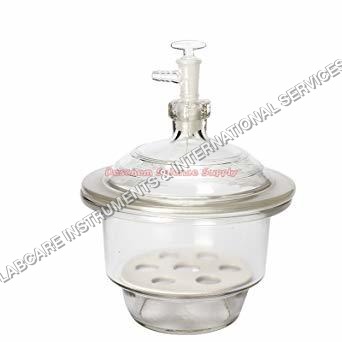

Price:
- 50
- 100
- 200
- 250
- 500
- 1000+

More Products in Laboratory Glasswere Category
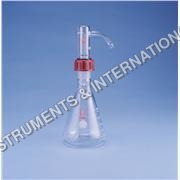
Chromatography Sprayer
Application : Spraying reagents on TLC plates and chromatographic applications
Features : Fine atomization, corrosion resistant, easy cleaning, refillable
Material : Borosilicate Glass and Metal
Glass Type : Borosilicate Glass
Shape : Cylindrical
Type : Other, Chromatography Sprayer
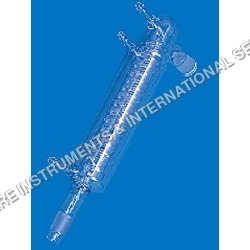
Bulb condensor
Application : Laboratory use; condensation of vapors
Features : Uniform cooling, High resistance to thermal shock, Easy to clean, Chemicalresistant
Material : Glass
Glass Type : Borosilicate 3.3
Shape : Bulbshaped body with narrow tube
Type : Other, Bulb Condenser
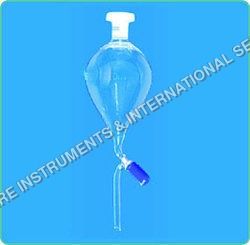
Glass stopcock Separating Funnel
Application : Laboratory chemical separation and extraction
Features : Leakproof, reusable, chemical resistant, easy to clean
Material : HighQuality Borosilicate Glass
Glass Type : Borosilicate
Shape : Conical with cylindrical neck (Pear Shape)
Type : Other, Separating Funnel with Glass Stopcock
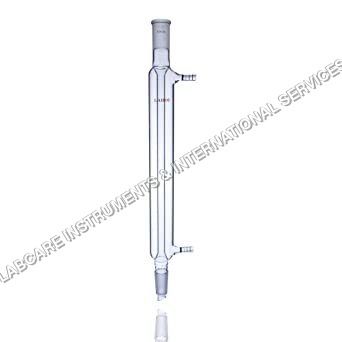
Condensor Leibig
Application : Laboratory distillation and reflux setups
Features : Straight inner tube, external cooling jacket, uniform cooling
Material : Highquality borosilicate glass
Glass Type : Borosilicate
Shape : Straight cylindrical
Type : Other, Leibig Condenser

GOVT. APPROVED MANUFACTURER, SUPPLIER AND EXPORTER
 Send Inquiry
Our Products
- Laboratory Microscope
- Hospital Furnitures
- Pharmacy Instruments
- COVID-19 SAFETY EQUIPMENTS
- Physical Instruments
- Laboratory Glasswere
- Anatomical Models
- Laboratory Glassware
- MIDWIFERY & CHILD HEALTH CARE SECTION
- Unique Products
- Chemistry Lab Equipment
- Scientific Instrument
- scientific laboratory instruments
- Physics equipments
- Hospital Equipments
- Educational Equipments kits
- ANALOG LAB TRANING MODULES
- Engineering Models & Equipments.
- Scientific Instruments
- Math catalogue Math items
- Building Furniture for School, Collegs & Office
- EDUCATIONAL WORKING MODELS
- AGRICULTURE EQUIPMENTS
- GEOGRAPHY EQUIPMENTS SECTION
- Disposible items
- The Survey Engineering Equipments Section
- Nursing College Equipments
- Fluid Machnical Lab Equipmens Labcare-Online
- Heat Transfer Lab Appartus Labcare-Online
- Labcare Entomological Equipments.
- Science and Security Equipments
- Defence Utility Equipment
- Office Equipment
- Sanitary Napkins and Diapers
- I.T.I Tools and Machines
- SCIENCE LAB EQUIPMENT
- LABTRONIKS SPECTROPHOTOMETERS
- Nebulizers
- LABTRONIKS


 Send Inquiry
 Send SMS
Developed and Managed by Infocom Network Private Limited.
