
 Send Inquiry
 Send Inquiry
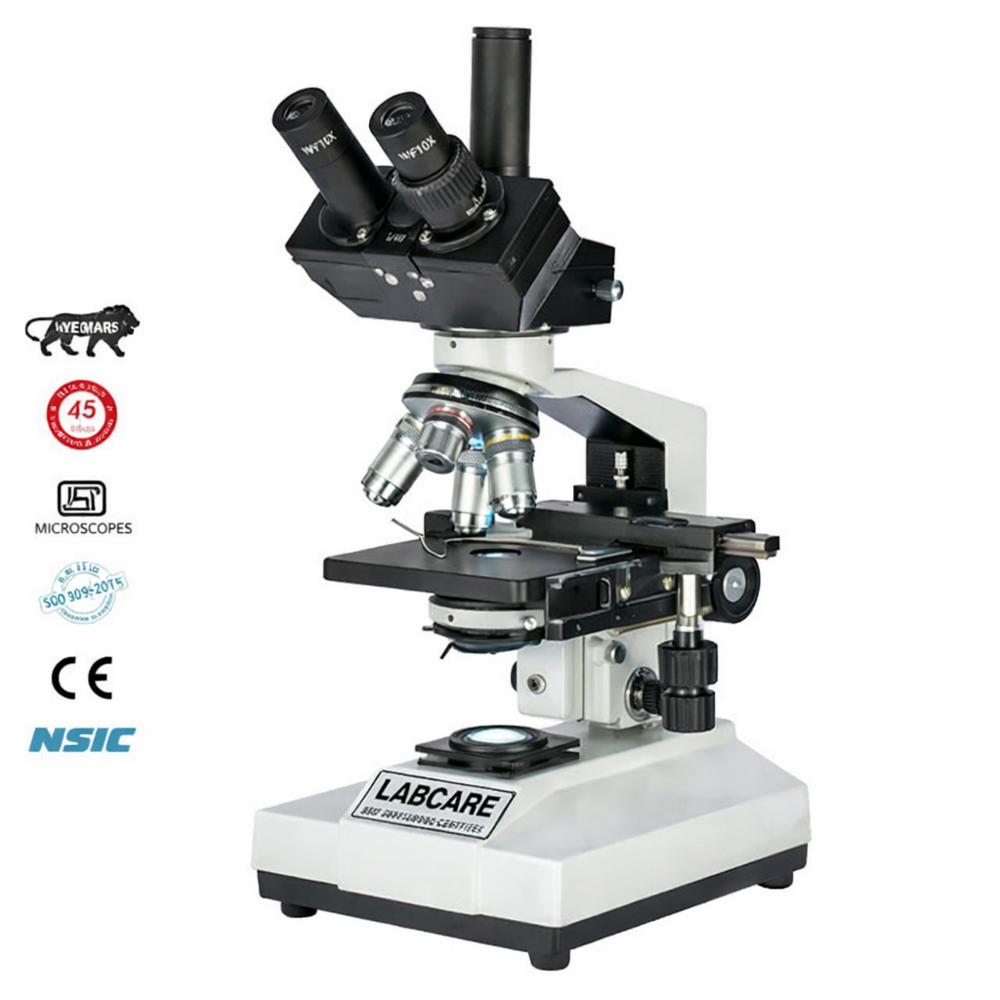
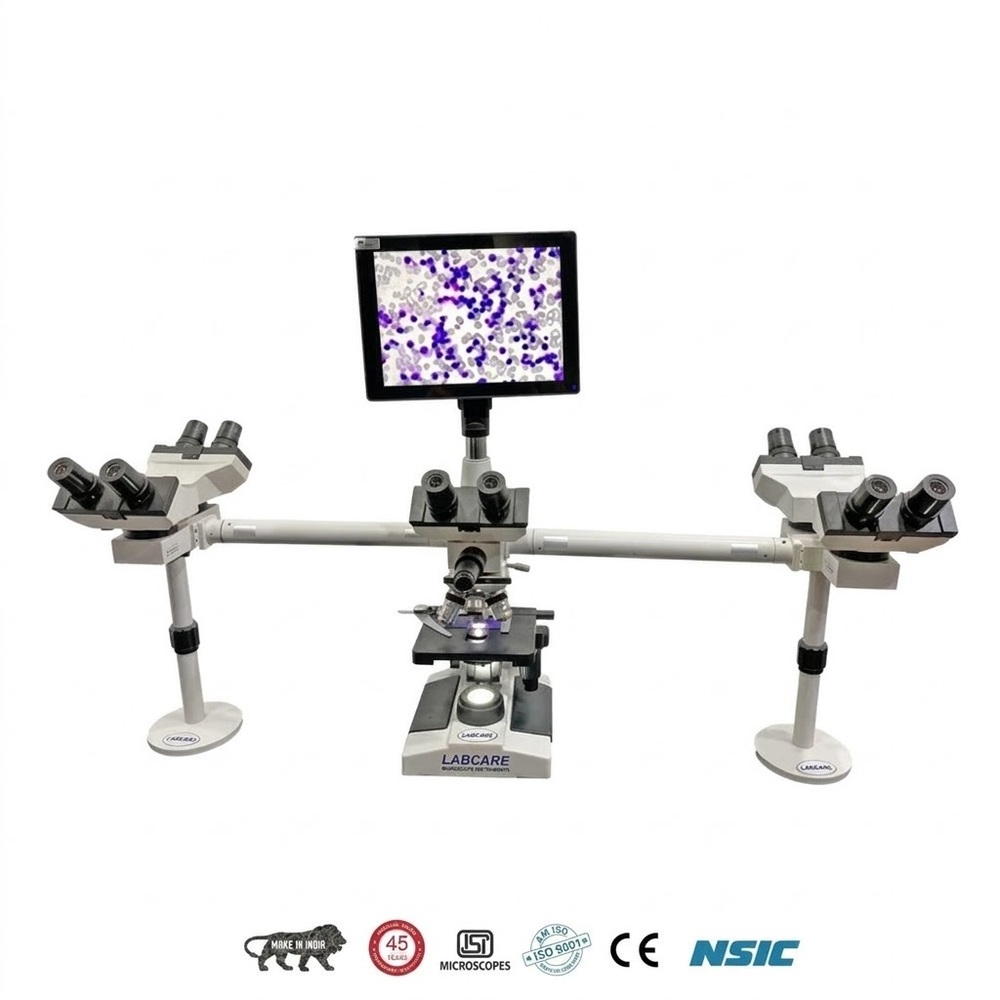
LED Research Trinocular Microscope BM-6Tr
Price 18000 INR/ Piece
MOQ : 1 Piece
LED Research Trinocular Microscope BM-6Tr Trade Information
- Minimum Order Quantity
- 1 Piece
- FOB Port
- Gujarat
- Payment Terms
- Paypal, Cash Against Delivery (CAD), Cash on Delivery (COD), Cash Advance (CA), Cash in Advance (CID), Cheque, Days after Acceptance (DA), Delivery Point (DP), Letter of Credit at Sight (Sight L/C), Telegraphic Transfer (T/T), Western Union, Letter of Credit (L/C)
- Sample Policy
- Sample costs shipping and taxes has to be paid by the buyer
- Packaging Details
- Strong packaging
- Main Export Market(s)
- Asia, Australia, Central America, North America, South America, Eastern Europe, Western Europe, Middle East, Africa
LED Research Trinocular Microscope BM-6Tr About
> Two 10x Wide Field Eye -piece. > 4 nos. Objectives, Parafocal Achromatic, 4x, 10x, 40x SL and 100x SL Oil immersion.> Stage : Horizontal Mechanical of size 120 X 125mm min.> Illumination : LED Light with on/off switch, light intensity regulator and Plano concave mirror attachment suitable for 220V, 50 Hz. AC supply.> Eye Pieces for Trinocular Microscope confirm to IS : 8275:1976Also available without ISI mark
Discovering the World of Microscopy: Research Trinocular Microscopes Unveiled
Introduction:
In the realm of scientific exploration, researchers, scientists, and students depend on advanced tools to unravel the mysteries of the microscopic world. Among the essential instruments, the Research Binocular Microscope stands tall, enabling intricate examinations and analysis at the cellular and subcellular levels. In this article, we delve into the features, applications, and benefits of the Research Binocular Microscope, guiding you through the wondrous world of microscopy.
Keyword: Research Trinocular Microscope
Unveiling the Research Trinocular Microscope:The Research Binocular Microscope is a state-of-the-art instrument designed to provide researchers with a powerful tool for precise and detailed observations. Unlike traditional monocular microscopes, this advanced variant features two eyepieces, enabling comfortable and immersive viewing experiences for extended research sessions. Its high-quality optics and sophisticated design facilitate superior image clarity, allowing researchers to explore microscopic structures with unparalleled accuracy.
Features that Set the Research Trinocular Microscope Apart:a. Enhanced Ergonomics: The Trinocular viewing configuration reduces eye strain and fatigue, ensuring comfortable use during prolonged research sessions. Adjustable interpupillary distance and diopter settings cater to individual preferences, promoting ergonomic excellence.
b. Magnification and Objectives: The Research Trinocular Microscope offers a wide range of magnification options, accommodating diverse research needs. The availability of multiple objectives empowers researchers to examine specimens at various magnification levels, unveiling hidden details.
c. Illumination Technology: Equipped with advanced illumination sources, including LED and halogen options, this microscope guarantees even and bright illumination for accurate visualization of specimens.
d. Digital Imaging Capability: Many modern Research Trinocular Microscopes are equipped with built-in digital cameras, enabling researchers to capture high-resolution images and videos of their discoveries for documentation and analysis.
Applications in Research:a. Biological Studies: The Research Trinocular Microscope is an indispensable tool in biology and life sciences, facilitating research in cell biology, histology, microbiology, and genetics. It allows scientists to study intricate cellular structures and behaviors critical for advancing medical breakthroughs and understanding life processes.
b. Material Science: In material science research, this microscope aids in the examination of materials at the micro-level, analyzing their composition, structure, and properties. Researchers can gain insights into material characteristics, which have far-reaching applications in industries such as electronics, nanotechnology, and metallurgy.
c. Environmental Science: The microscope plays a vital role in environmental research by helping scientists study soil, water, and air samples. It enables the identification of microorganisms, pollutants, and particles, contributing to a better understanding of environmental dynamics and pollution control.



Tell us about your requirement

Price:
Quantity
Select Unit
- 50
- 100
- 200
- 250
- 500
- 1000+
Additional detail
Mobile number
Email

More Products in Laboratory Microscope Category
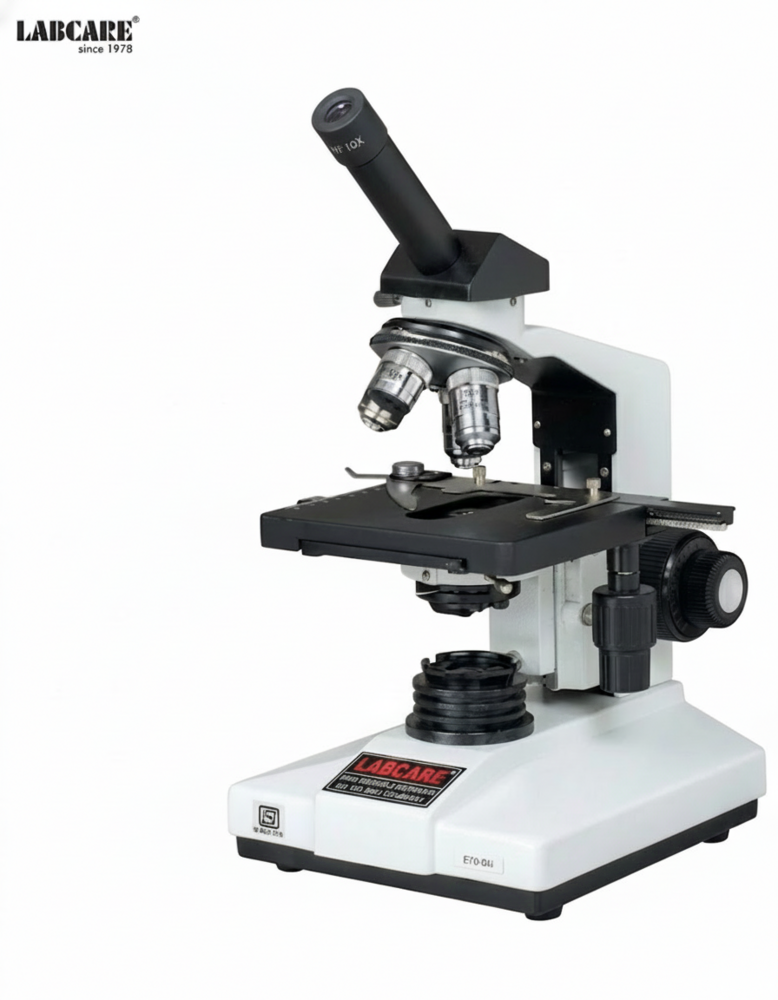
BM-8mo Research Monocular Microscope, For Laboratory
Price 18000 INR / Piece
Minimum Order Quantity : 1 Piece
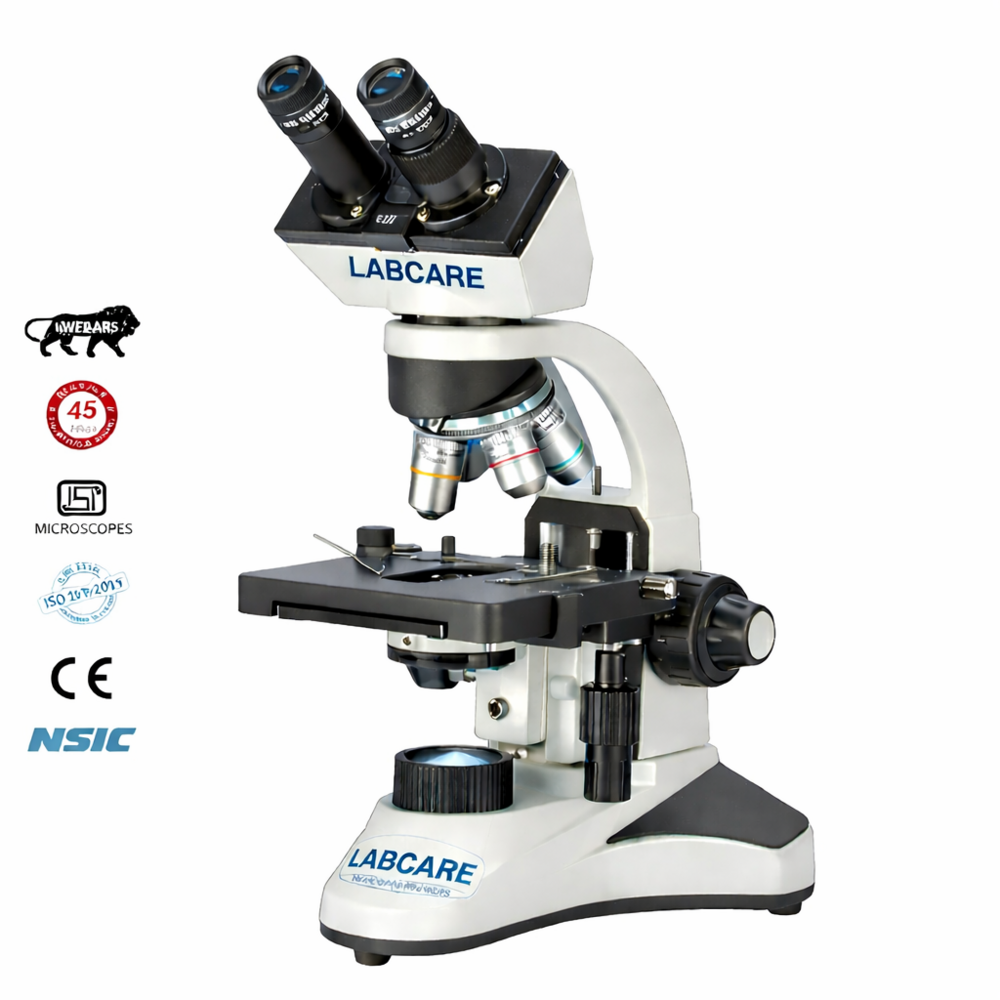
Upto 1000x Research Binocular Microscope BM-9bi
Price 25000 INR / Piece
Minimum Order Quantity : 1 Piece

LABCARE INSTRUMENTS & INTERNATIONAL SERVICES
GOVT. APPROVED MANUFACTURER, SUPPLIER AND EXPORTER
Send Inquiry
GOVT. APPROVED MANUFACTURER, SUPPLIER AND EXPORTER
 Send Inquiry
Our Products
- Laboratory Microscope
- Hospital Furnitures
- Pharmacy Instruments
- COVID-19 SAFETY EQUIPMENTS
- Physical Instruments
- Laboratory Glasswere
- Anatomical Models
- Laboratory Glassware
- MIDWIFERY & CHILD HEALTH CARE SECTION
- Unique Products
- Chemistry Lab Equipment
- Scientific Instrument
- scientific laboratory instruments
- Physics equipments
- Hospital Equipments
- Educational Equipments kits
- ANALOG LAB TRANING MODULES
- Engineering Models & Equipments.
- Scientific Instruments
- Math catalogue Math items
- Building Furniture for School, Collegs & Office
- EDUCATIONAL WORKING MODELS
- AGRICULTURE EQUIPMENTS
- GEOGRAPHY EQUIPMENTS SECTION
- Disposible items
- The Survey Engineering Equipments Section
- Nursing College Equipments
- Fluid Machnical Lab Equipmens Labcare-Online
- Heat Transfer Lab Appartus Labcare-Online
- Labcare Entomological Equipments.
- Science and Security Equipments
- Defence Utility Equipment
- Office Equipment
- Sanitary Napkins and Diapers
- I.T.I Tools and Machines
- SCIENCE LAB EQUIPMENT
- LABTRONIKS SPECTROPHOTOMETERS
- Nebulizers
- LABTRONIKS

Plant No 18, Near Shiv Mandir, Behind B D Flour Mill, Pragati Vihar,Ambala Cantt - 133001, Haryana, India

Mr Abhishek Kaushal
(CEO)
Mobile :07971191059
 Send Inquiry
 Send SMS
Developed and Managed by Infocom Network Private Limited.
