
 Send Inquiry
 Send Inquiry
Lees and Charlton's apparatus
Lees and Charlton's apparatus Specification
- Use
- Thermal conductivity experiment
- Features
- Includes copper vessel, brass disc, insulation pad, thermometer ports
- Assembly
- Requires simple assembly
- Power Type
- Manual/Non-electric
- Weight
- Approx. 2.5 kg
- Surface Finish
- Polished
- Style
- Laboratory Instrument
- Model No
- LC-5935533
- Size
- Standard
- Type
- Physics Laboratory Apparatus
- Material
- Polished Brass and Metal
- Dimensions
- Approx. 30 cm x 15 cm x 18 cm
- Shape
- Rectangular base with cylindrical disc
- Color
- Silver/Brass
- Function
- Determining thermal conductivity of poor conductors
- Age
- Applicable for Secondary and Higher Education
- Advantage
- Precise thermal insulation measurement
- Maximum Temperature Tolerance
- 120°C
- Base Material
- Heavy-duty Steel
- Safety Features
- Heat-resistant handles, secure mounts
- Accessories Provided
- Thermometers, Insulation Pad, Vessel, Brass Disc
- Insulation Pad Material
- Felt or similar
- Experimental Accuracy
- High precision with correct procedure
- Compatible Fluids
- Water, Oil
- Thermometer Range
- 0°C to 110°C
- Packing Type
- Individual box
- Disc Thickness
- Approx. 1 cm
- Copper Vessel Volume
- 250-300 ml
- OEM Support
- Available
Lees and Charlton's apparatus Trade Information
- FOB Port
- MUMBAI
- Payment Terms
- Cash Against Delivery (CAD), Cash on Delivery (COD), Cash Advance (CA), Letter of Credit (L/C), Telegraphic Transfer (T/T), Paypal, Western Union, Letter of Credit at Sight (Sight L/C), Delivery Point (DP), Days after Acceptance (DA), Cash in Advance (CID), Cheque
- Supply Ability
- 50 Per Week
- Delivery Time
- 1 Week
- Sample Available
- Yes
- Sample Policy
- Sample costs shipping and taxes has to be paid by the buyer
- Packaging Details
- card board packing
- Main Export Market(s)
- Australia, North America, South America, Eastern Europe, Western Europe, Middle East, Central America, Asia, Africa
- Main Domestic Market
- All India
- Certifications
- ISO Certified product
Lees and Charlton's apparatus About
The company was established in 1986 at Ambala Cantt., Haryana, India, with the modern manufacturing facility of laboratory equipments. Most of the Products are manufactured to specification defined by international standards. All have a reputation for quality which is second to none. Company manufacturing units is highly equipped with latest equipment and tools to manufacturer flawless laboratory products, most competitive prices and viability of quality products are our main objects.
Our products are already matchless in the industry due to continuous improvement in quality & workmanship. our innovative nature plays a vital role to improve the things. we also keep improving the quality in tune with the latest development in the international market.
Accurate Measurement in Thermal Conductivity Experiments
Lees and Charltons apparatus delivers high-precision results when researching the thermal conductivity of poor conductors like felt or similar materials. Its well-crafted componentspolished brass disc, robust steel base, and copper vesselensure stability and uniform heat distribution throughout the experiment. The apparatus is fitted with ports for thermometers and is compatible with multiple fluids, enhancing the breadth of possible scientific investigations.
Safe, User-Friendly Design for Laboratory Use
Designed for educational laboratory environments, this instrument features heat-resistant handles and secure mounting for safe handling. All accessories, including thermometers and insulation pads, are included. Simple assembly makes it accessible for instructors and students, while the compact packaging and durable build allow for convenient storage and transport within laboratory settings.
Versatile and Reliable for Various Scientific Applications
With OEM support available and compatibility with both water and oil as working fluids, this apparatus fits diverse scientific needs. The polished surface finish, standard sizing, and manageable weight make it suitable for consistent use in secondary and higher educational laboratories across India. Its reliability is enhanced by the inclusion of all core accessories and a sturdy individual box packing.
FAQs of Lees and Charltons apparatus:
Q: How do you set up the Lees and Charltons apparatus for thermal conductivity experiments?
A: To set up the Lees and Charltons apparatus, assemble the base, mount the brass disc and insulation pad, and fix the copper vessel securely above the disc. Insert thermometers into the provided ports, ensuring proper positioning. Add your chosen fluid (water or oil) into the vessel before starting the heating process.Q: What is the main purpose of using the Lees and Charltons apparatus in laboratories?
A: The primary purpose is to measure the thermal conductivity of poor conductors such as felt or similar materials. It provides students and researchers with accurate data on heat flow through these materials by assessing temperature differences and heat transfer rates.Q: When should this apparatus be used in an educational setting?
A: This apparatus is best used during physics experiments focused on heat transfer and thermal conductivity, particularly in secondary or higher education laboratory classes. It is ideal for practical sessions where hands-on demonstration of theoretical concepts is required.Q: Where can this apparatus be set up and operated safely?
A: It should be used on stable laboratory benches within science classrooms or research labs. The heat-resistant handles and secure mounts ensure it can be handled safely during heated experiments.Q: What are the benefits of using the provided copper vessel and brass disc in the experiment?
A: The copper vessel ensures even heating of the fluid, while the brass disc provides a precise interface for measuring temperature gradients. Combined, these components increase accuracy and reproducibility of the experimental outcomes.Q: What fluids are compatible with this apparatus for experiments?
A: The apparatus is designed for use with either water or oil as working fluids, offering flexibility in experimental approaches to studying thermal conductivity.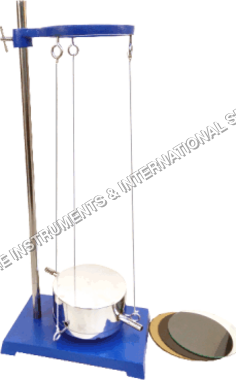

Price:
- 50
- 100
- 200
- 250
- 500
- 1000+

More Products in Physics equipments Category
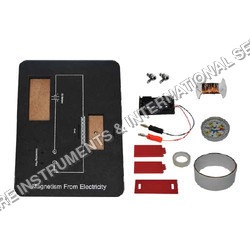
Megnetism From Electricity Kits for School Labcare
Style : Educational Laboratory Kit
Model No : LME4501
Shape : Assorted educational lab kit components; rectangular main base
Size : Compact, portable kit for desktop use
Color : Multicolor (as per educational standard color codes)
Surface Finish : Smooth, noncorrosive, easyclean finish
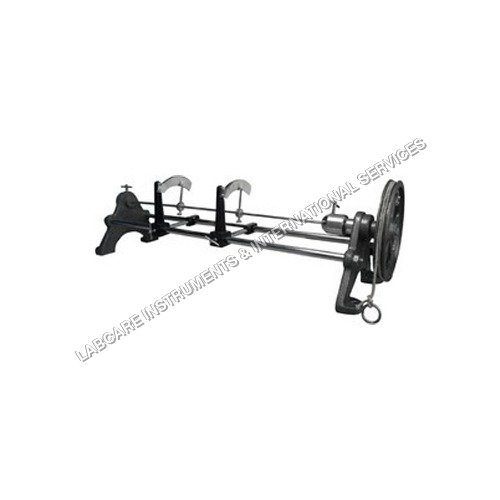
Torsion Apparatus Mtr. Horizontal
Style : Laboratory Instrument
Model No : MTRTAH100 (example)
Shape : Rectangular base with mounted rods and scales
Size : Standard lab bench size
Color : Blue (main body with metallic finish components)
Surface Finish : Powder coated base, polished metal components
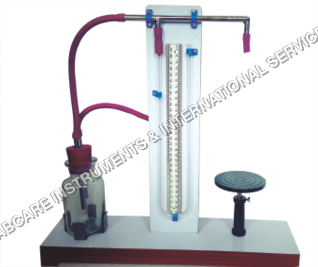
Jaggers Apparatus sunmica top labcare
Style : Laboratory Apparatus
Model No : Labcare JAG01
Shape : Rectangular base with vertical rods
Size : Standard size for demonstration apparatus
Color : Brown sunmica top, silver components
Surface Finish : Glossy sunmica finish
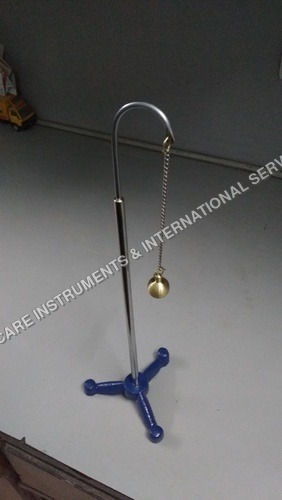
Pendulam BOB Stand Labcare
Style : Laboratory Standard
Model No : LCPB01
Shape : Rectangular Base with Vertical Rod
Size : Standard Lab Size
Color : Black base with metallic rod
Surface Finish : Powder Coated Base & Polished Rod

GOVT. APPROVED MANUFACTURER, SUPPLIER AND EXPORTER
 Send Inquiry
Our Products
- Laboratory Microscope
- Hospital Furnitures
- Pharmacy Instruments
- COVID-19 SAFETY EQUIPMENTS
- Physical Instruments
- Laboratory Glasswere
- Anatomical Models
- Laboratory Glassware
- MIDWIFERY & CHILD HEALTH CARE SECTION
- Unique Products
- Chemistry Lab Equipment
- Scientific Instrument
- scientific laboratory instruments
- Physics equipments
- Hospital Equipments
- Educational Equipments kits
- ANALOG LAB TRANING MODULES
- Engineering Models & Equipments.
- Scientific Instruments
- Math catalogue Math items
- Building Furniture for School, Collegs & Office
- EDUCATIONAL WORKING MODELS
- AGRICULTURE EQUIPMENTS
- GEOGRAPHY EQUIPMENTS SECTION
- Disposible items
- The Survey Engineering Equipments Section
- Nursing College Equipments
- Fluid Machnical Lab Equipmens Labcare-Online
- Heat Transfer Lab Appartus Labcare-Online
- Labcare Entomological Equipments.
- Science and Security Equipments
- Defence Utility Equipment
- Office Equipment
- Sanitary Napkins and Diapers
- I.T.I Tools and Machines
- SCIENCE LAB EQUIPMENT
- LABTRONIKS SPECTROPHOTOMETERS
- Nebulizers
- LABTRONIKS


 Send Inquiry
 Send SMS
Developed and Managed by Infocom Network Private Limited.
