
 Send Inquiry
 Send Inquiry
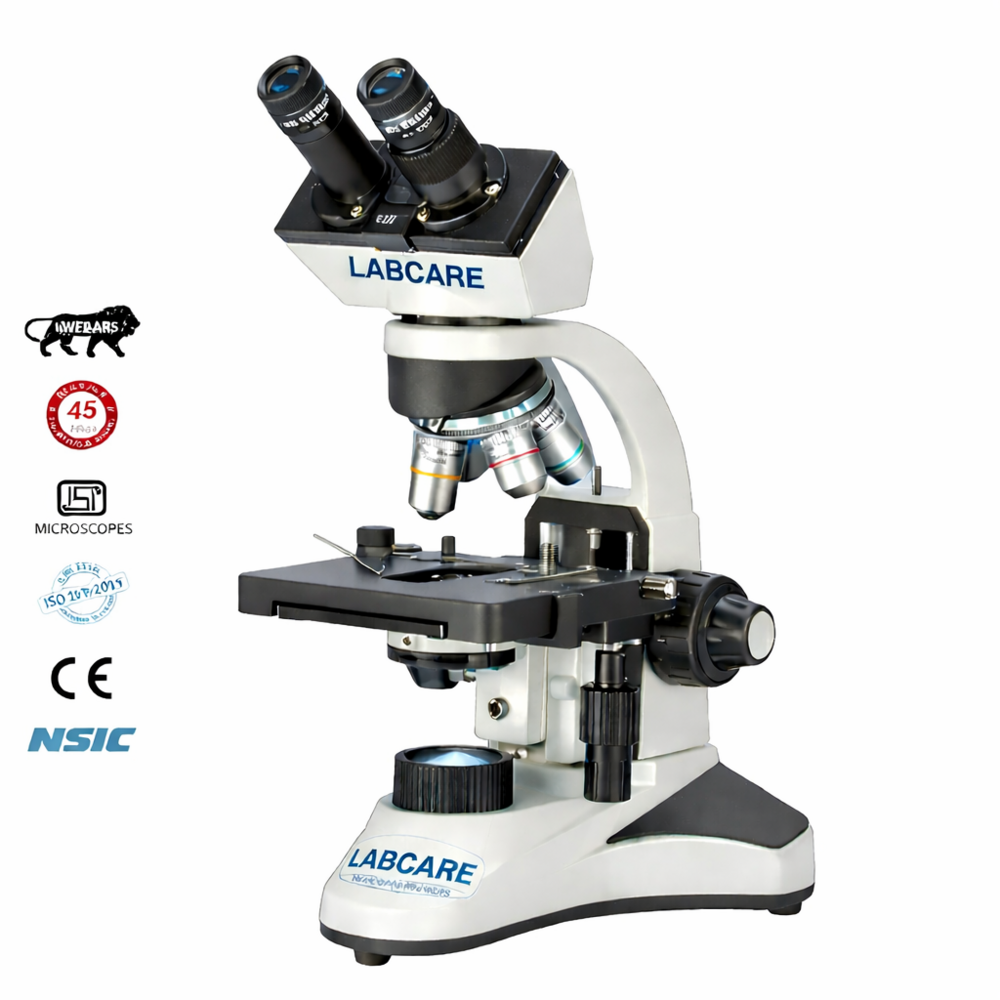
RESEARCH TRINOCULAR MICROSCOPE FXL-TRINO
Price 35000 INR/ Piece
MOQ : 1 Piece
RESEARCH TRINOCULAR MICROSCOPE FXL-TRINO Specification
- Spare Parts
- Dust cover, fuse, immersion oil, user manual
- Focus System
- Coaxial coarse and fine focus with tension adjustment
- View Head
- Trinocular head for simultaneous eyepiece and camera viewing
- Features
- Sturdy metal frame, anti-fungal optics, ergonomic design, camera adaptability
- Theory
- Advanced microscopy for research and laboratory applications
- Drawtube
- Trinocular (for simultaneous viewing and camera attachment)
- Sensor
- Compatible with CCD/CMOS microscope cameras (not included)
- Resolution
- Dependent on objective and eyepiece combination; supports high-resolution observation
- Interface
- Standard camera port/interface (C-mount type for camera integration)
- Frame Rate
- Dependent on camera (not included), typically up to 60fps with suitable sensor
- Focal Distance
- 160 mm (standard for most research microscopes)
- Magnification
- 40x to 1000x (using paired eyepieces and objectives)
- Dimensions
- Approximately 380 mm 220 mm 150 mm
- Focus Range
- Coarse and fine focusing mechanism with smooth adjustment
- Eyepieces
- Paired wide field 10x and 15x eyepieces
- Eyepiece Tube
- Inclined at 45, 360 rotatable
- Illumination
- Built-in halogen or LED transmitted illumination, 6V-20W halogen
- Coarse Adjustment Range
- Approx. 30 mm
- Fine Adjustment Range
- 0.002 mm/2 m precision
- Working Stage
- Graduated mechanical stage, 135 mm x 120 mm with low-position coaxial controls
- Still Image Capture Resolution
- Camera dependent; up to 5MP or more with compatible sensor
- Video Capture Resolution
- Camera dependent, supports HD/Full HD with appropriate camera
- Image Format
- Supports camera/photo integration; output depending on connected camera
- Interpupillary Distance
- 55 mm to 75 mm adjustable
- Objective Achromatic
- 4x, 10x, 40x (S), 100x (S, Oil) DIN achromatic objectives
- Condenser
- Abbe condenser N.A. 1.25 with iris diaphragm and filter holder
- Light Source
- Halogen lamp 6V/20W (or LED, model dependent)
- Nosepiece
- Quadruple revolving nosepiece with ball bearing for smooth movement
- Safety Features
- Overheat protection and fuse for illumination system
- Accessory Compatibility
- Supports dark field, phase contrast, and polarization accessories (optional)
- Body Material
- Die-cast metal frame with corrosion-resistant coating
- Power Supply
- AC 220V/110V 10%, 50/60Hz
- Stage Movement
- Travel range 70 mm x 50 mm with vernier scale for precise measurement
- Color
- White and black finish for professional laboratory appearance
RESEARCH TRINOCULAR MICROSCOPE FXL-TRINO Trade Information
- Minimum Order Quantity
- 1 Piece
- FOB Port
- Gujarat
- Payment Terms
- Paypal, Cash Against Delivery (CAD), Cash on Delivery (COD), Cash Advance (CA), Cash in Advance (CID), Cheque, Days after Acceptance (DA), Delivery Point (DP), Letter of Credit at Sight (Sight L/C), Telegraphic Transfer (T/T), Western Union, Letter of Credit (L/C)
- Supply Ability
- 100 Pieces Per Month
- Delivery Time
- 7 Days
- Sample Policy
- Sample costs shipping and taxes has to be paid by the buyer
- Packaging Details
- Strong packaging
- Main Export Market(s)
- Asia, Australia, Central America, North America, South America, Eastern Europe, Western Europe, Middle East, Africa
RESEARCH TRINOCULAR MICROSCOPE FXL-TRINO About
Infinite Optical Systems 160mmViewing Head : Sidentopf Trinocular Viewing Head, Inclined at 30 Degree, Interpupillary 48mm-75mm
Eyepiece: Wide Field Eyepiece WF10X/18mm
Objective: Infinite 195 Series Achromatic Objective 4X, 10X, 40X, 100Xs (Oil).
Nosepiece : Forward Quadruple Nosepiece
Condenser : Abbe Condenser NA 1.25 with Diaphragm
Focusing System : Coaxial Coarse and Fine Adjustment, Fine Division 0.002mm, Coarse Stroke 36mm
Stage: Double Layer Mechanical Stage 142x132mm, Moving Range 75mm x 50mm.
illumination: External illumination, 3W/LED.
Product Single Size : 30cm x 20cm x 38cm
Additional Information:
- Production Capacity: 2000
- Delivery Time: 3 DAYS
High-Precision Optical System
Equipped with DIN achromatic objectives (4x, 10x, 40x S, 100x S Oil) and wide field eyepieces (10x, 15x), the FXL-TRINO delivers crisp, high-resolution images across a wide magnification range. The trinocular head supports both direct viewing and camera integration for image capture or live analysis.
Robust and Ergonomic Design
The die-cast metal frame with a corrosion-resistant finish ensures long-term durability, while the ergonomic design and 45 inclined, 360 rotatable eyepiece tube provide comfort during extended use. Its professional white and black finish enhances any laboratory environment.
Advanced Stage and Focusing Mechanisms
The microscope features a quadruple revolving nosepiece with smooth ball-bearing movement, a precision mechanical stage with sizable travel and vernier scale, as well as coaxial coarse and fine focusing adjustments, allowing for accurate, repeatable observations.
Flexible Illumination and Accessory Support
Choose between powerful 6V/20W halogen or modern LED illumination for tailored lighting conditions. The FXL-TRINO supports optional dark field, phase contrast, and polarization accessories, enhancing versatility for diverse research tasks.
FAQ's of RESEARCH TRINOCULAR MICROSCOPE FXL-TRINO:
Q: How can I attach a camera to the RESEARCH TRINOCULAR MICROSCOPE FXL-TRINO for image capture?
A: The FXL-TRINO features a trinocular head with a standard C-mount interface, allowing you to mount compatible CCD or CMOS microscope cameras (not included) for still image and video capture. Simply attach your camera to the designated port for seamless integration.Q: What are the magnification and focusing capabilities of this microscope?
A: This model offers a magnification range from 40x to 1000x, utilizing paired 10x and 15x wide field eyepieces with DIN achromatic objectives. The coaxial coarse and fine focusing mechanism ensures precise adjustments, with a fine focusing precision of 0.002 mm and a 30 mm coarse adjustment range.Q: When should I use the optional dark field, phase contrast, or polarization accessories?
A: These optional accessories are designed for specialized applications: use dark field for observing live and unstained specimens, phase contrast for visualizing transparent materials, and polarization for studying birefringent samples. Each enhances the microscope's versatility for advanced research needs.Q: Where can I use the FXL-TRINO, and is it suitable for professional laboratories?
A: Yes, the FXL-TRINO is designed for use in research institutions, hospitals, educational settings, and industrial laboratories. Its robust construction, advanced optical capabilities, and ergonomic design make it especially suitable for professional environments.Q: What safety features are incorporated in the illumination system?
A: The microscope's illumination system includes overheat protection and a replaceable fuse, ensuring reliable and safe operation during prolonged use, whether you choose the halogen or LED light source configuration.Q: How do I achieve precise measurements on the specimen stage?
A: The graduated mechanical stage provides a 70 mm x 50 mm travel range with a vernier scale, allowing for highly accurate movement and measurement of specimens during observation or documentation.Q: What benefits does the anti-fungal optical design provide?
A: The anti-fungal optics prevent the growth of fungi on the lenses and optical elements, preserving image quality and extending the service life of the microscope, especially in humid or laboratory environments.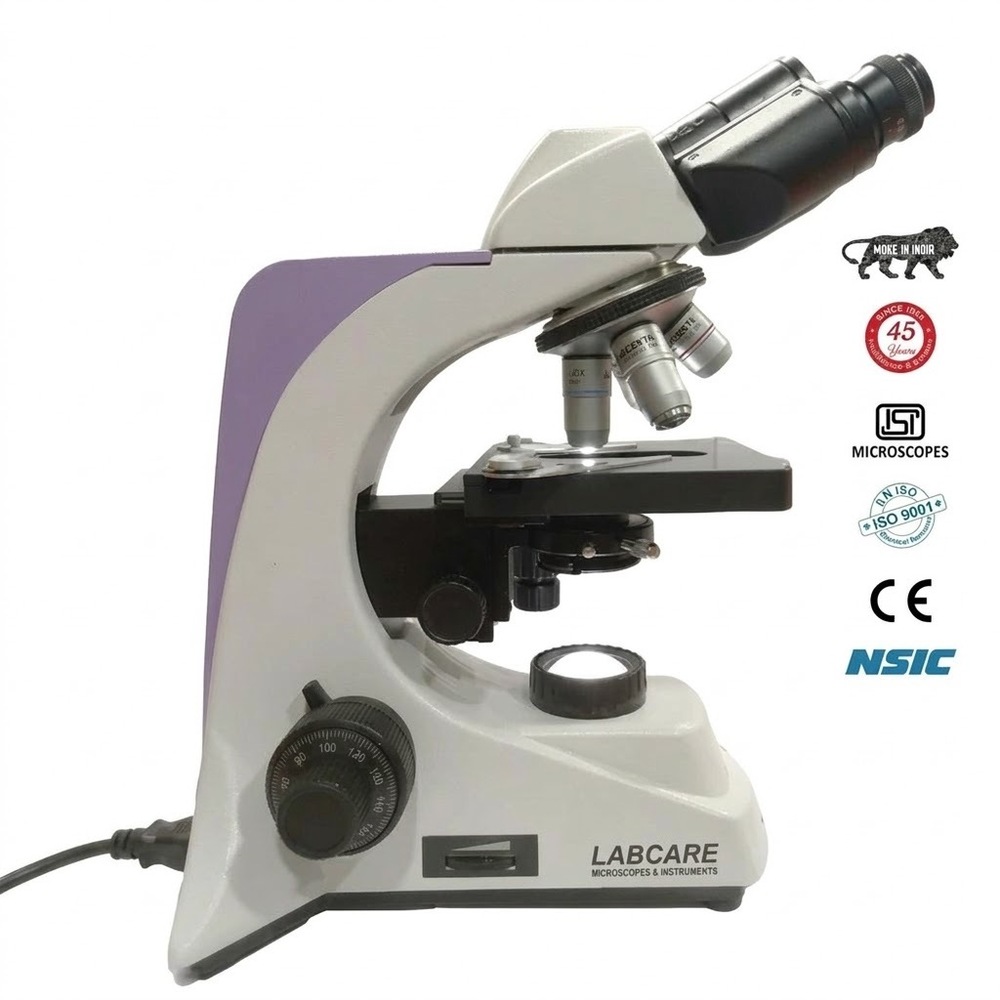



Tell us about your requirement

Price:
Quantity
Select Unit
- 50
- 100
- 200
- 250
- 500
- 1000+
Additional detail
Mobile number
Email

More Products in Laboratory Microscope Category
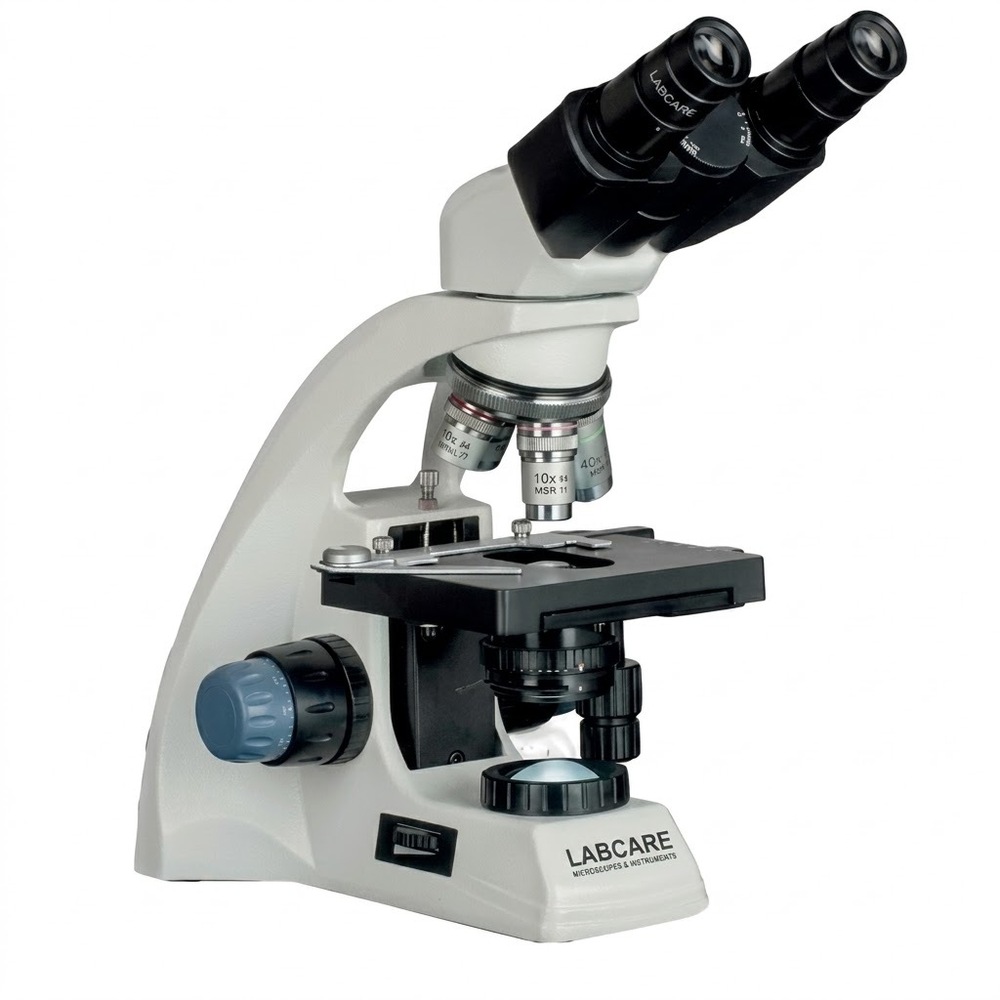
Research Binocular Microscope (AXL BINO)
Price 22000 INR / Piece
Minimum Order Quantity : 1 Piece
Dimensions : Approx. 370 mm x 235 mm x 185 mm (L x W x H)
Focus Range : Coarse and fine adjustment
Focal Distance : Standard to researchgrade, long working distance objectives supported
Condenser : Abbe condenser N.A. 1.25 with iris diaphragm and filter holder
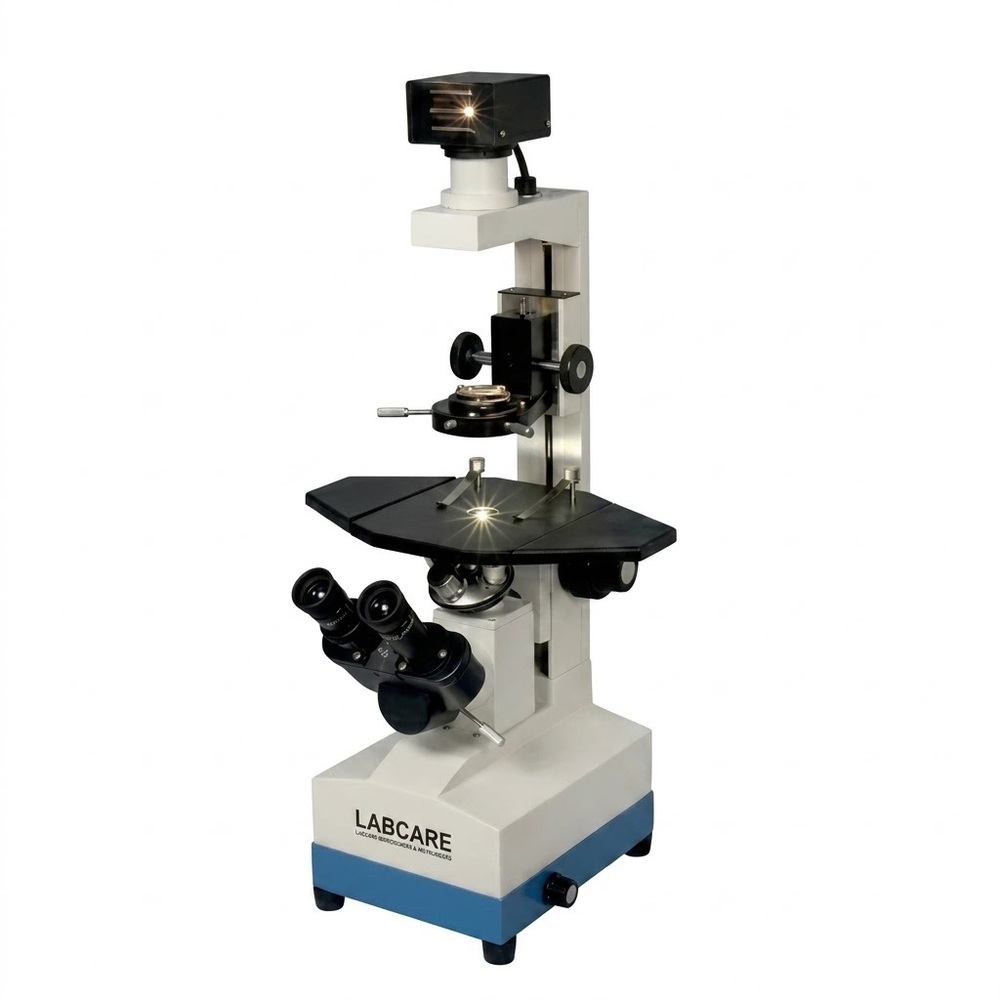
Inverted Tissue Culturepe
Price 35000 INR / Piece
Minimum Order Quantity : 1 Piece
Dimensions : Approx. 490 x 250 x 530 mm
Focus Range : Up to 8 mm (coarse + fine adjustment)
Focal Distance : 45 mm
Condenser : Long Working Distance (LWD) condenser, NA 0.3
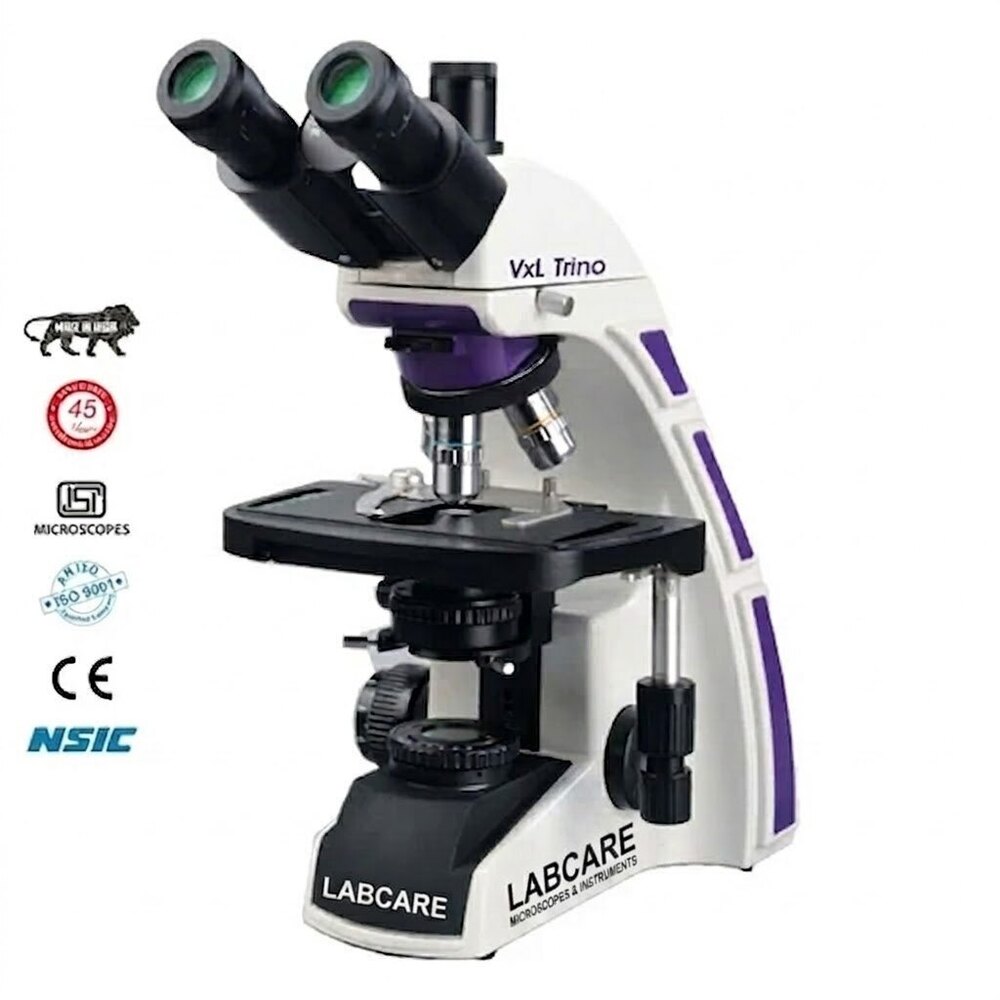
Upto 1000x Research Binocular Microscope BM-9bi
Price 25000 INR / Piece
Minimum Order Quantity : 1 Piece

LABCARE INSTRUMENTS & INTERNATIONAL SERVICES
GOVT. APPROVED MANUFACTURER, SUPPLIER AND EXPORTER
Send Inquiry
GOVT. APPROVED MANUFACTURER, SUPPLIER AND EXPORTER
 Send Inquiry
Our Products
- Laboratory Microscope
- Hospital Furnitures
- Pharmacy Instruments
- COVID-19 SAFETY EQUIPMENTS
- Physical Instruments
- Laboratory Glasswere
- Anatomical Models
- Laboratory Glassware
- MIDWIFERY & CHILD HEALTH CARE SECTION
- Unique Products
- Chemistry Lab Equipment
- Scientific Instrument
- scientific laboratory instruments
- Physics equipments
- Hospital Equipments
- Educational Equipments kits
- ANALOG LAB TRANING MODULES
- Engineering Models & Equipments.
- Scientific Instruments
- Math catalogue Math items
- Building Furniture for School, Collegs & Office
- EDUCATIONAL WORKING MODELS
- AGRICULTURE EQUIPMENTS
- GEOGRAPHY EQUIPMENTS SECTION
- Disposible items
- The Survey Engineering Equipments Section
- Nursing College Equipments
- Fluid Machnical Lab Equipmens Labcare-Online
- Heat Transfer Lab Appartus Labcare-Online
- Labcare Entomological Equipments.
- Science and Security Equipments
- Defence Utility Equipment
- Office Equipment
- Sanitary Napkins and Diapers
- I.T.I Tools and Machines
- SCIENCE LAB EQUIPMENT
- LABTRONIKS SPECTROPHOTOMETERS
- Nebulizers
- LABTRONIKS

Plant No 18, Near Shiv Mandir, Behind B D Flour Mill, Pragati Vihar,Ambala Cantt - 133001, Haryana, India

Mr Abhishek Kaushal
(CEO)
Mobile :07971191059
 Send Inquiry
 Send SMS
Developed and Managed by Infocom Network Private Limited.
