
 Send Inquiry
 Send Inquiry
Spirogyra
Spirogyra Specification
- Weight
- Negligible (depends on volume supplied)
- Model No
- Spirogyra-5924
- Features
- Spiral chloroplast arrangement, rapid reproduction, non-toxic
- Style
- Natural Green Algae
- Use
- Aquatic research, water purification, education, biotechnology
- Assembly
- Supplied in ready-to-use suspension
- Power Type
- Requires light for growth (photosynthetic)
- Surface Finish
- Smooth, gelatinous surface
- Size
- Strands from few centimeters up to several meters
- Type
- Single-cell filamentous algae
- Material
- Living algae (Spirogyra sp.)
- Dimensions
- Variable, typically filamentous strands 10-100 µm wide
- Shape
- Filamentous, spiral chloroplasts
- Color
- Bright green
- Function
- Produces oxygen, supports aquatic ecosystem, nutrient absorption
- Age
- Fresh culture specimens
- Advantage
- Photosynthetic, oxygen-generating, bioindicator for water health
- pH Tolerance
- Optimal range pH 6.5 - 8.5
- Habitat Requirement
- Freshwater ponds, ditches, slow streams
- Identification
- Microscopically visible spiral chloroplasts
- Shelf Life
- Best used within 10-14 days of supply
- Growth Rate
- Fast under optimal light and nutrient conditions
- Safety
- Non-toxic and safe for educational and research use
- Packaging
- Sterile laboratory-grade container or bottle
- Sterilization
- Not applicable; provided as live cultures
- Temperature Range
- 16°C to 27°C is optimal
- Storage
- Keep in temperature-controlled, lit environment
Spirogyra Trade Information
- FOB Port
- MUMBAI
- Payment Terms
- Cash Against Delivery (CAD), Cash on Delivery (COD), Delivery Point (DP), Letter of Credit (L/C), Letter of Credit at Sight (Sight L/C), Telegraphic Transfer (T/T), Western Union, Paypal, Cash Advance (CA), Days after Acceptance (DA), Cash in Advance (CID), Cheque
- Supply Ability
- 50 Per Week
- Delivery Time
- 1 Week
- Sample Available
- Yes
- Sample Policy
- Sample costs shipping and taxes has to be paid by the buyer
- Packaging Details
- card board packing
- Main Export Market(s)
- Australia, South America, Western Europe, Middle East, Asia, Central America, Eastern Europe, North America, Africa
- Main Domestic Market
- All India
- Certifications
- ISO Certified product
Spirogyra About
Established in the year 1986 at Ambala (Haryana, India), we"LABCARE INSTRUMENTS are a Sole Proprietorship firm affianced in manufacturing highly durable array of Anatomical Models, Microbiology Models, Community Medicines Models, Forensic Models New Addition and Forensic Model. We offer these products at reasonable prices and deliver these within the promised time-frame., we have been able to provide utmost satisfaction of our clients.Distinctive Spiral Structure
Spirogyra is easily identified microscopically by its unique spiral chloroplasts. This structural hallmark distinguishes it from other algal cultures and makes it ideal for educational demonstrations. Its filamentous strands can vary in width and length, offering a dynamic view of cellular arrangement and reproduction.
Optimal Growth and Storage Conditions
To ensure healthy, rapid growth, Spirogyra requires ample light and nutrient access. It thrives in freshwater with a pH of 6.58.5, at temperatures between 16C and 27C. Cultures should be stored in well-lit, temperature-controlled setups, where they maintain their vitality for up to two weeks after supply.
Safe and Versatile Applications
Provided as fresh, non-toxic, living algae, Spirogyra serves varied purposesfrom research and biotechnology to classroom education and water purification. Its photosynthetic nature generates oxygen and supports the broader aquatic ecosystem while acting as a bioindicator for environmental monitoring.
FAQs of Spirogyra:
Q: How should Spirogyra cultures be stored to maintain maximum viability?
A: For optimal results, keep Spirogyra cultures in a temperature-controlled, well-lit environment between 16C and 27C. Exposure to consistent light and suitable freshwater conditions helps maintain their health for 1014 days.Q: What makes Spirogyra a valuable component in aquatic research and biotechnology?
A: Spirogyras rapid photosynthetic growth, oxygen generation, and spiral chloroplasts enhance its utility in aquatic research, water purification, and studies of nutrient absorption. Its sensitivity to water quality also enables use as a bioindicator.Q: When is the best time to use the supplied Spirogyra cultures after receiving them?
A: For peak viability and activity, use the Spirogyra cultures within 1014 days of supply. Prompt utilization ensures the algaes physiological functions and visible features are preserved.Q: Where can Spirogyra be introduced for optimal growth in laboratory or educational settings?
A: Spirogyra is best cultured in freshwater aquaria, tanks, or beakers, replicating its natural habitats like ponds or slow-moving streams. Ensure stable temperature, pH (6.58.5), and light levels to support vigorous growth.Q: What is the recommended process for observing Spirogyras spiral chloroplasts?
A: To visualize the distinctive spiral chloroplasts, mount a filamentous strand on a microscope slide with a drop of freshwater, cover gently, and examine with at least 100x magnification under transmitted light.Q: How is Spirogyra supplied and what are the storage requirements upon arrival?
A: Spirogyra is delivered in a sterile, laboratory-grade container as a ready-to-use suspension. Upon receipt, store the culture in a lit area at 1627C to preserve its vitality for laboratory or educational use.Q: What are the main benefits of using Spirogyra in aquatic experiments or classroom demonstrations?
A: Spirogyras bright green color, spiral chloroplasts, rapid growth, and oxygen production provide an engaging visual and functional example for teaching photosynthesis, ecological principles, and water health monitoring.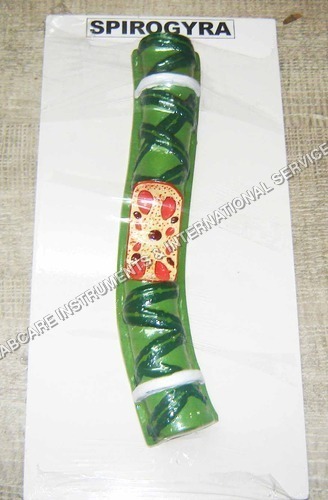

Price:
- 50
- 100
- 200
- 250
- 500
- 1000+

More Products in Anatomical Models Category
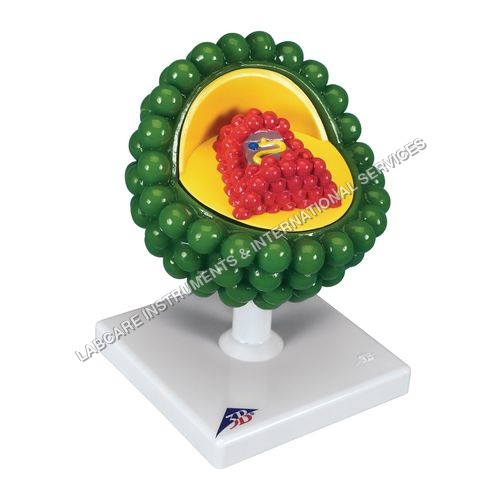
Virus model
Surface Finish : Smooth, HandPainted
Advantage : Durable and easytoclean, Accurate representation
Dimensions : Approx. 15 cm (height) x 22 cm (width) x 15 cm (depth)
Size : Large Display Size
Material : HighQuality PVC Plastic
Assembly : Preassembled
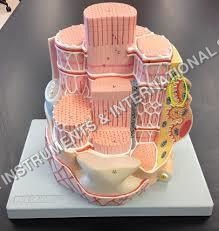
Skeletal Muscle Fibre model
Surface Finish : Smooth, handpainted finish
Advantage : Detailed representation of skeletal muscle fibre structure
Dimensions : Approx. 40 cm length x 12 cm width x 8 cm height
Size : Lifesize representation
Material : Highquality PVC plastic
Assembly : No assembly required
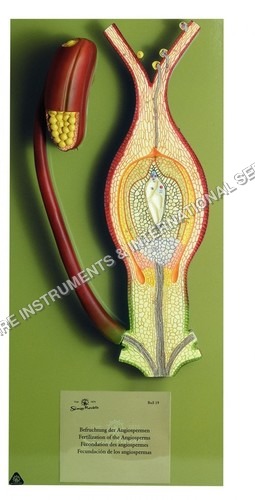
L.S. Ovary
Surface Finish : Smooth, Nontoxic, and Easy to Clean
Advantage : Durable, Lightweight, and Easy to Handle
Dimensions : Standard size (Refer to product description for exact measurements)
Size : Life Size
Material : Highquality PVC Plastic
Assembly : Preassembled, Ready to use
Endocrine system model
Surface Finish : Smooth, Painted
Advantage : Corrosion resistance, High detail, Easy to clean, Durable
Dimensions : Approx. 45 cm x 18 cm x 7 cm
Size : Lifesize
Material : Highquality PVC Plastic
Assembly : Preassembled

GOVT. APPROVED MANUFACTURER, SUPPLIER AND EXPORTER
 Send Inquiry
Our Products
- Laboratory Microscope
- Hospital Furnitures
- Pharmacy Instruments
- COVID-19 SAFETY EQUIPMENTS
- Physical Instruments
- Laboratory Glasswere
- Anatomical Models
- Laboratory Glassware
- MIDWIFERY & CHILD HEALTH CARE SECTION
- Unique Products
- Chemistry Lab Equipment
- Scientific Instrument
- scientific laboratory instruments
- Physics equipments
- Hospital Equipments
- Educational Equipments kits
- ANALOG LAB TRANING MODULES
- Engineering Models & Equipments.
- Scientific Instruments
- Math catalogue Math items
- Building Furniture for School, Collegs & Office
- EDUCATIONAL WORKING MODELS
- AGRICULTURE EQUIPMENTS
- GEOGRAPHY EQUIPMENTS SECTION
- Disposible items
- The Survey Engineering Equipments Section
- Nursing College Equipments
- Fluid Machnical Lab Equipmens Labcare-Online
- Heat Transfer Lab Appartus Labcare-Online
- Labcare Entomological Equipments.
- Science and Security Equipments
- Defence Utility Equipment
- Office Equipment
- Sanitary Napkins and Diapers
- I.T.I Tools and Machines
- SCIENCE LAB EQUIPMENT
- LABTRONIKS SPECTROPHOTOMETERS
- Nebulizers
- LABTRONIKS


 Send Inquiry
 Send SMS
Developed and Managed by Infocom Network Private Limited.
