
 Send Inquiry
 Send Inquiry
BALLISTIC GALVANOMETER By Labcare Export
Price 13799.0 INR/ Piece
BALLISTIC GALVANOMETER By Labcare Export Specification
- Temperature Range
- Room Temperature (Typically 10C to 40C)
- Automation Grade
- Manual Operation
- Power Source
- External Source (Passive Instrument)
- Voltage
- Operates at Small Potential Differences (Millivolt Range; Not for High Voltage)
- Core Components
- Moving Coil, Suspension Fiber, Scale, Mirror, Damping Magnet, Glass Case
- Model No
- LBG-101 (or As per Company Catalog)
- Frequency
- DC (Direct Current) Only
- Accuracy
- High Sensitivity; Deflection Typically Proportional to Charge (micro-coulombs scale)
- Capacity
- Not Applicable (Reflects charge sensitivity, not load)
- Feature
- High Sensitivity, Low Damping, Mirror & Lamp Scale Arrangement, Zero Adjuster
- Measurement Range
- 10 micro-coulombs to 200 micro-coulombs (varies by setup)
- Equipment Materials
- Heavy Cast Iron Base, Non-Magnetic Frame, Glass Front, Brass Fittings
- Type
- Moving Coil, Mirror Type
- Usage
- Measurement of electric charge/discharge in physics labs, educational demonstrations
- Display Type
- Analog (Deflection Scale)
- Dimension (L*W*H)
- Approx 18 cm x 12 cm x 20 cm
- Weight
- Approx 1.5 - 2.0 kg
- Scale Graduation
- Mirror Scale, Anti-Parallax with Fine Markings
- Internal Resistance
- Approx 500 2000 Ohms
- Operating Principle
- Faradays Law of Electromagnetic Induction
- Suspension
- Phosphor Bronze Ribbon or Quartz Fiber
- Package Contents
- Instrument, Operation Manual, Standard Accessories
- Deflection Type
- Ballistic (Proportional to Quantity of Charge)
- Mirror Arrangement
- Plane Mirror for Lamp & Scale/Spot Reflection Method
- Finish
- Durable Enamel Paint/Coating for Rugged Use
- Damping
- Air Damping with Soft Iron Cylinder and/or Magnetic Damping
- Connection Terminals
- Brass Terminals with Knurled Nuts
- Pointer Type
- Knife Edge, Anti-Static
BALLISTIC GALVANOMETER By Labcare Export Trade Information
- Minimum Order Quantity
- 1 Piece
- Supply Ability
- 100 Pieces Per Week
- Delivery Time
- 7 Days
- Sample Available
- No
- Main Domestic Market
- [, ', A, l, l, , I, i, a, ', ], n, d
BALLISTIC GALVANOMETER By Labcare Export About
A Ballistic Galvanometer is a highly sensitive device used for measuring the charge or current produced during a brief electric pulse, often in research and laboratory settings. It operates on the principle of electromagnetic induction, where the moving coil is deflected by the current passed through it, which is proportional to the magnitude of the pulse. The deflection is recorded, providing information about the electric charge or impulse duration. It is particularly used in experiments involving the charging and discharging of capacitors, as well as other transient current studies.
Ballistic Galvanometers (100 or 500 Ohm) typically have a resistance value, which influences their sensitivity and the range of measurements. These devices are often used in applications that require high accuracy over short time intervals.
Exceptional Sensitivity and Precision
This ballistic galvanometer is engineered for high sensitivity, with deflection directly proportional to the charge (micro-coulombs scale). The anti-parallax mirror scale, fine graduations, and knife-edge pointer enable accurate readings. The mirror and lamp arrangement further enhances measurement precision by minimizing reading errors, making it perfect for advanced physics experiments and educational demonstrations.
Robust and User-Friendly Construction
Encased in a durable enamel-coated cast iron body with a non-magnetic frame and glass front, this galvanometer provides long-lasting serviceability. Brass terminals with knurled nuts ensure secure connections, while the zero adjuster and external power source input allow for manual operation and fine-tuning. All relevant accessories and a detailed operation manual are included for straightforward setup and use.
FAQ's of BALLISTIC GALVANOMETER By Labcare Export:
Q: How does the BALLISTIC GALVANOMETER by Labcare Export measure the quantity of electric charge?
A: The galvanometer operates on Faraday's Law of Electromagnetic Induction, generating a proportional deflection on the scale when a charge passes through its moving coil. The ballistic mode records the rapid movement (or 'ballist') caused by a brief current pulse during charge or discharge.Q: What process should be followed to use the galvanometer in a laboratory experiment?
A: Ensure the instrument is properly leveled on a stable surface. Connect your experimental setup using the brass terminals. Adjust the zero using the zero adjuster, then conduct your discharge or charge experiment. Observe the knife-edge pointer reflection on the anti-parallax mirror scale, and record the maximum deflection to determine the quantity of charge.Q: Where is this galvanometer typically used and for what kind of applications?
A: It is commonly used in physics labs, educational institutions, and research settings for experiments involving measurement of electric charge-such as capacitor discharge studies, demonstration of electromagnetic induction, and verification of Faraday's law.Q: When should the quartz fiber or phosphor bronze ribbon suspension be chosen?
A: Both types are supplied to optimize the suspension system's thermal and mechanical properties. Quartz fiber is highly stable and less affected by humidity, suitable for precise, long-term measurements, whereas phosphor bronze is known for durability in general laboratory use.Q: What are the benefits of the mirror scale and anti-static features?
A: The mirror scale eliminates parallax error by allowing you to align the pointer reflection precisely with the scale marking. The anti-static pointer reduces the influence of stray static charges, resulting in more stable, reproducible readings.Q: How does the damping mechanism work and why is it important?
A: The instrument uses air damping with a soft iron cylinder and/or magnetic damping to gently slow the moving coil, preventing overshooting or oscillations. This ensures the pointer settles quickly and accurately at its maximum deflection, providing clear, reliable measurements.Q: What voltage and measurement range can this galvanometer handle?
A: Designed for low-voltage, direct current situations, the galvanometer operates effectively at millivolt ranges and is ideal for measuring charge quantities from 10 micro-coulombs to 200 micro-coulombs, depending on the configuration and experiment setup.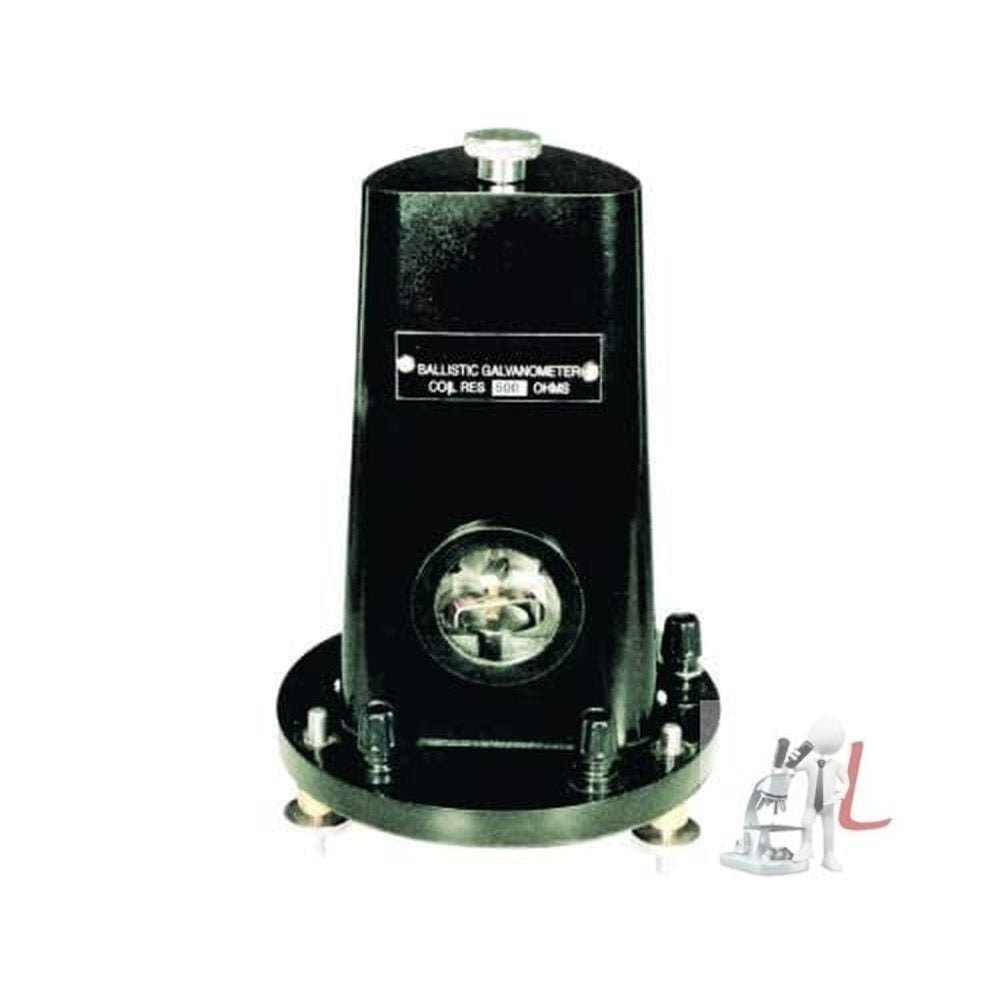

Price:
- 50
- 100
- 200
- 250
- 500
- 1000+

More Products in SCIENCE LAB EQUIPMENT Category
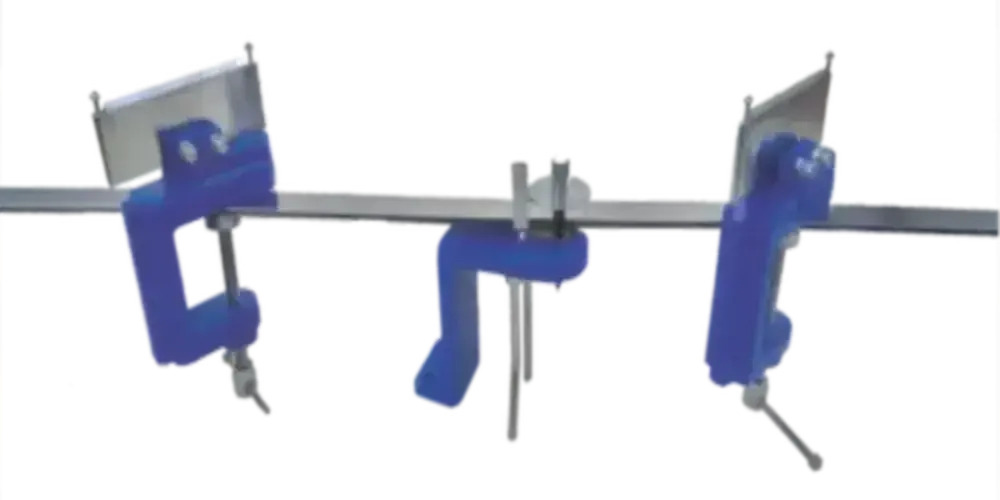
BENDING OF BEAM APPARATUS By Labcare Export
Price 2400.0 INR / Piece
Minimum Order Quantity : 1 Piece
Type : Mechanical, Benchtop
Equipment Materials : Mild Steel (MS), Stainless Steel (SS), Aluminum
Core Components : Beam, Supports, Load Hanger, Slotted Weights, Dial Gauge
Dimension (L*W*H) : 1000 x 200 x 450 mm
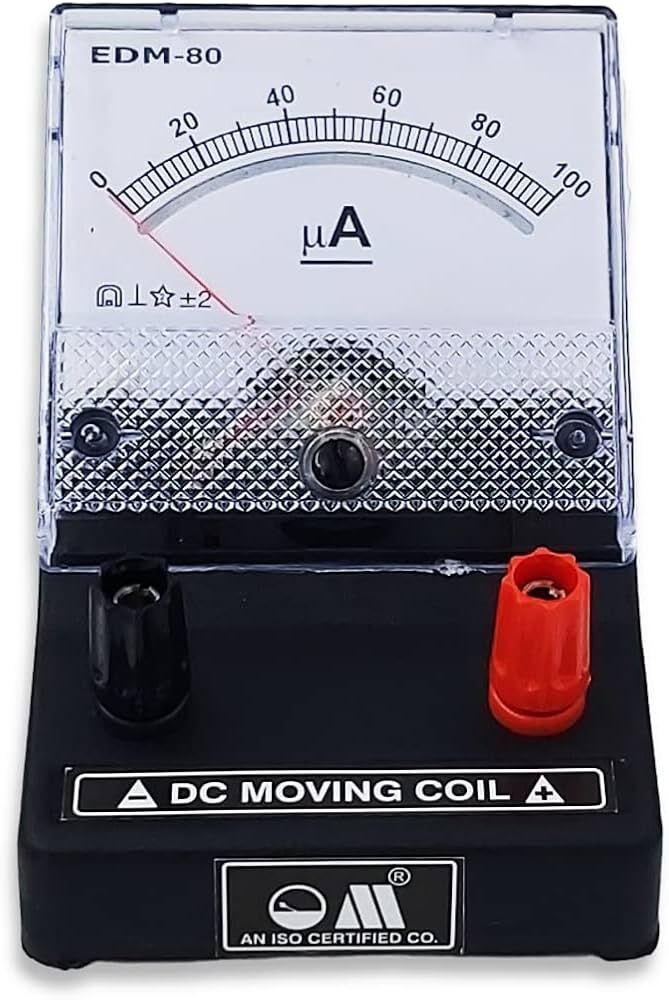
AMMETER (MO-66) By Labcare
Price 550.00 INR / Piece
Minimum Order Quantity : 1 Piece
Type : Panel Mount Ammeter
Equipment Materials : Plastic Body with Glass Front
Core Components : Moving Coil, Magnet, Scale, Pointer
Dimension (L*W*H) : Approx. 90 x 90 x 45 mm
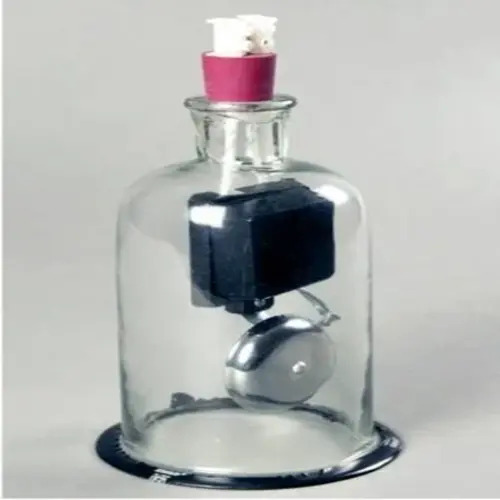
BELL EXPERIMENT APPARATUS By Labcare
Price 850.0 INR / Piece
Minimum Order Quantity : 1 Piece
Type : Physics Laboratory Equipment
Equipment Materials : Powder Coated Metal, Bakelite and Brass Accessories
Core Components : Enclosure Dome, Electric Bell, Vacuum Pump Connector, Power Supply Leads
Dimension (L*W*H) : 32 x 22 x 25 cm
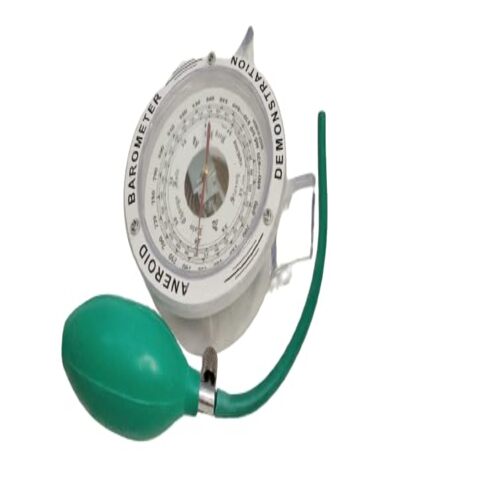
ANEROID BAROMETER (by Labcare)
Price 780.0 INR / Piece
Minimum Order Quantity : 1 Piece
Type : Aneroid Barometer
Equipment Materials : Metal Body with Glass Cover
Core Components : Aneroid Capsule, Mechanical Pointer, Dial Scale
Dimension (L*W*H) : Approx. 135mm (Diameter) x 45mm (Thickness)

GOVT. APPROVED MANUFACTURER, SUPPLIER AND EXPORTER
 Send Inquiry
Our Products
- Laboratory Microscope
- Hospital Furnitures
- Pharmacy Instruments
- COVID-19 SAFETY EQUIPMENTS
- Physical Instruments
- Laboratory Glasswere
- Anatomical Models
- Laboratory Glassware
- MIDWIFERY & CHILD HEALTH CARE SECTION
- Unique Products
- Chemistry Lab Equipment
- Scientific Instrument
- scientific laboratory instruments
- Physics equipments
- Hospital Equipments
- Educational Equipments kits
- ANALOG LAB TRANING MODULES
- Engineering Models & Equipments.
- Scientific Instruments
- Math catalogue Math items
- Building Furniture for School, Collegs & Office
- EDUCATIONAL WORKING MODELS
- AGRICULTURE EQUIPMENTS
- GEOGRAPHY EQUIPMENTS SECTION
- Disposible items
- The Survey Engineering Equipments Section
- Nursing College Equipments
- Fluid Machnical Lab Equipmens Labcare-Online
- Heat Transfer Lab Appartus Labcare-Online
- Labcare Entomological Equipments.
- Science and Security Equipments
- Defence Utility Equipment
- Office Equipment
- Sanitary Napkins and Diapers
- I.T.I Tools and Machines
- SCIENCE LAB EQUIPMENT
- LABTRONIKS SPECTROPHOTOMETERS
- Nebulizers
- LABTRONIKS


 Send Inquiry
 Send SMS
Developed and Managed by Infocom Network Private Limited.
