
 Send Inquiry
 Send Inquiry
BELL EXPERIMENT APPARATUS By Labcare
Price 850.0 INR/ Piece
BELL EXPERIMENT APPARATUS By Labcare Specification
- Model No
- LC/BELL-EXP
- Temperature Range
- Ambient to 50°C
- Core Components
- Enclosure Dome, Electric Bell, Vacuum Pump Connector, Power Supply Leads
- Capacity
- 2 kg
- Feature
- Transparent Acrylic Dome for Clear Observation
- Measurement Range
- Audibility of Bell Under Vacuum
- Frequency
- 50 Hz
- Voltage
- 220-240 V AC
- Automation Grade
- Manual
- Accuracy
- Standard Laboratory Tolerance
- Power Source
- Electric (230V AC)
- Equipment Materials
- Powder Coated Metal, Bakelite and Brass Accessories
- Type
- Physics Laboratory Equipment
- Usage
- Laboratory Demonstration of Bell Experiment
- Display Type
- Analog
- Dimension (L*W*H)
- 32 x 22 x 25 cm
- Weight
- Approx. 2.5 kg
- Safety Features
- Pressure Release Valve Included
- Dome Material
- High-Strength Acrylic
- Bell Activation
- Switch Controlled
- Pump Compatibility
- Compatible with all Standard Laboratory Vacuum Pumps
- External Power Plug Type
- Indian Standard
- Operating Environment
- Indoor; Dry Laboratory
- Application
- Educational Physics Experiments, Sound Propagation Studies
- Noise Reduction
- Demonstrates sound attenuation in vacuum
- Connections
- Banana Socket Terminals
- Finish
- Epoxy Powder Coated Base
BELL EXPERIMENT APPARATUS By Labcare Trade Information
- Minimum Order Quantity
- 1 Piece
- Supply Ability
- 100 Pieces Per Week
- Delivery Time
- 7 Days
- Sample Available
- No
- Main Domestic Market
- ', A, l, l, , I, n, d, i, a, ', ], [
About BELL EXPERIMENT APPARATUS By Labcare
The Bell Experiment Apparatus (also called the Bell in Bell Jar apparatus) is an educational device used to demonstrate the effect of a vacuum on sound propagation. It consists of a bell mounted inside a glass jar with a vacuum pump. The setup demonstrates how sound diminishes as air is removed from the jar, showing the essential requirement of a medium (like air) for sound to travel.
Working Principle:
- Sound and Medium: When the bell is rung inside the jar with normal air pressure, the sound is loud and easily heard. As the air inside the jar is pumped out, creating a vacuum, the sound produced by the bell gradually becomes fainter. Eventually, once a sufficient vacuum is created, the bell's sound can no longer be heard, even though it is still ringing. This happens because, in a vacuum, there are no air molecules to carry the sound waves.
- Educational Use: This apparatus is widely used in physics classrooms to demonstrate the need for a medium for sound to propagate. It highlights the concept that sound cannot travel in a vacuum since it requires a medium like air, water, or solid matter to transmit vibrations.
Key Features:
- Bell: A metal bell that produces sound when struck.
- Glass Jar: A transparent bell jar or cylinder that holds the bell and can be sealed airtight.
- Vacuum Pump: A pump used to evacuate the air from the jar to create a vacuum.
- Sealed Lid: The jar has a lid that can be sealed once the bell and pump are set up.
Applications:
- Used in demonstrations to explain properties of sound waves.
- In educational settings, it is an excellent visual and practical way to teach students about vacuum and sound properties.
Clear Sound Demonstration in Physics
Labcare's Bell Experiment Apparatus enables direct observation of sound attenuation under vacuum. Its transparent acrylic dome ensures students and educators can clearly witness how a bell's sound fades as air is removed, making abstract concepts tangible in a practical, hands-on setting.
Robust Construction and Safety
Engineered with durability in mind, the apparatus features a powder-coated base and high-strength acrylic dome. For safe laboratory use, it includes a pressure release valve, ensuring secure operation even during extensive demonstrations at temperatures up to 50C.
Easy Integration with Laboratory Equipment
Designed for universal laboratory compatibility, the apparatus fits standard vacuum pumps and uses banana socket terminals for quick, stable connections. The device operates on a standard 220-240 V AC supply, ensuring effortless installation and reliable performance across laboratories in India.
FAQ's of BELL EXPERIMENT APPARATUS By Labcare:
Q: How does the Bell Experiment Apparatus demonstrate sound propagation in a vacuum?
A: The apparatus allows users to observe an electric bell ringing inside a sealed, transparent acrylic dome. When air is evacuated with a vacuum pump, the bell's sound gradually diminishes, illustrating that sound requires a medium (such as air) to travel.Q: What steps should I follow to use the Bell Experiment Apparatus in a laboratory setting?
A: Begin by connecting the apparatus to a standard vacuum pump and plugging the power supply into an Indian Standard socket. Place the bell inside the dome, close the enclosure, and activate the bell using the control switch. Start the vacuum pump to remove air and observe changes in sound audibility through the dome.Q: When is this apparatus most effectively used during educational demonstrations?
A: This equipment is most effective for physics lessons on sound propagation, the properties of a vacuum, or demonstrations relating to the importance of a medium for sound travel. It visually clarifies theoretical concepts, making them memorable and easily understood by students.Q: Where can the Bell Experiment Apparatus be safely operated?
A: This unit is designed for indoor, dry laboratories where the environmental temperature stays between ambient and 50C. The apparatus should be set up on a stable surface to ensure optimal performance and safety during use.Q: What safety measures are built into the Bell Experiment Apparatus?
A: A pressure release valve is included for controlled air release after use, reducing the risk of over-pressurization. The high-strength acrylic dome and sturdy epoxy powder-coated base also provide additional protection during experiments.Q: What are the main benefits of using a transparent acrylic dome?
A: The clear dome provides unrestricted visibility, allowing observers to watch the bell and understand the relationship between air pressure and sound clearly. It also facilitates easy supervision and assessment during classroom experiments.Q: Is the Bell Experiment Apparatus compatible with all laboratory vacuum pumps?
A: Yes, the apparatus is designed to connect seamlessly with all standard laboratory vacuum pumps, ensuring versatile use in various educational and research institutions.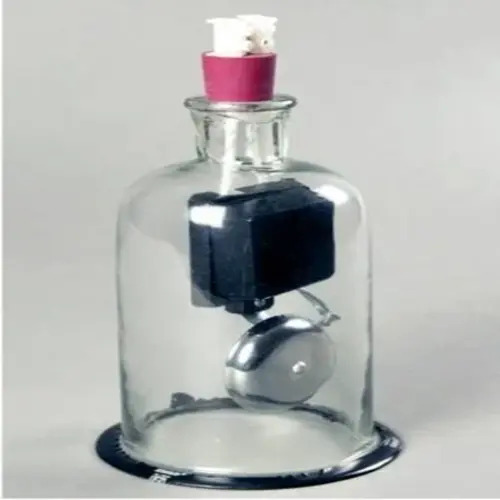

Price:
- 50
- 100
- 200
- 250
- 500
- 1000+

More Products in SCIENCE LAB EQUIPMENT Category
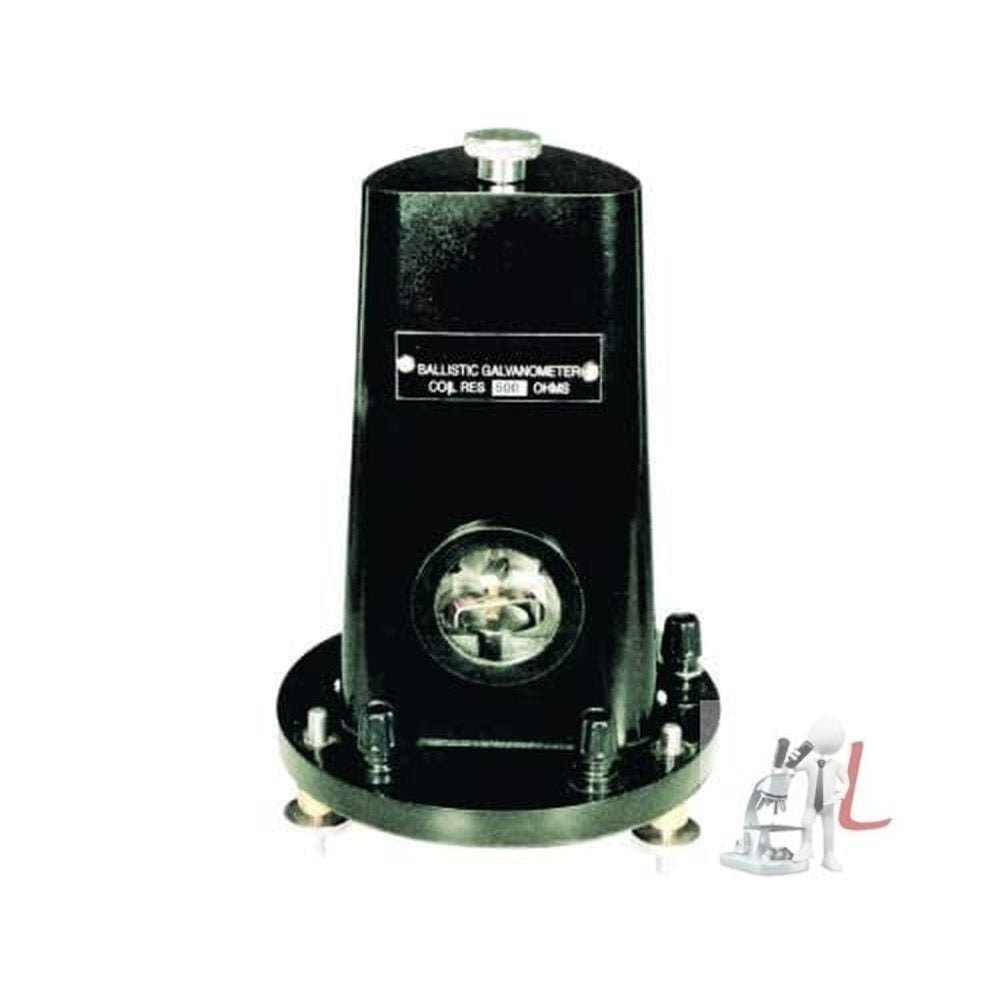
BALLISTIC GALVANOMETER By Labcare Export
Price 5400.0 INR / Piece
Minimum Order Quantity : 1 Piece
Automation Grade : Manual Operation
Accuracy : High Sensitivity; Deflection Typically Proportional to Charge (microcoulombs scale)
Usage : Measurement of electric charge/discharge in physics labs, educational demonstrations
Type : Moving Coil, Mirror Type
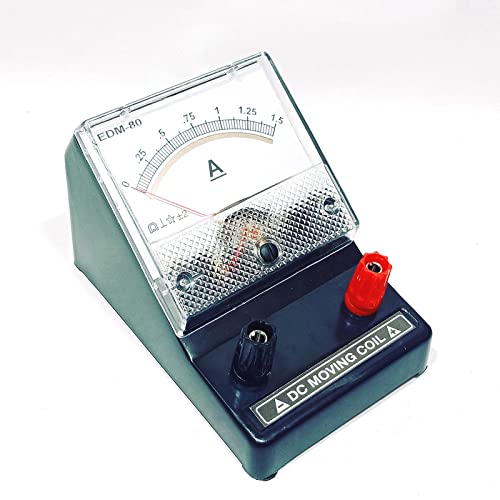
AMMETER (EDM-80) by Labcare Export
Price 320.0 INR / Piece
Minimum Order Quantity : 1 Piece
Automation Grade : Manual
Accuracy : 1.5% of Full Scale
Usage : Measuring Electric Current
Type : Panel Mount
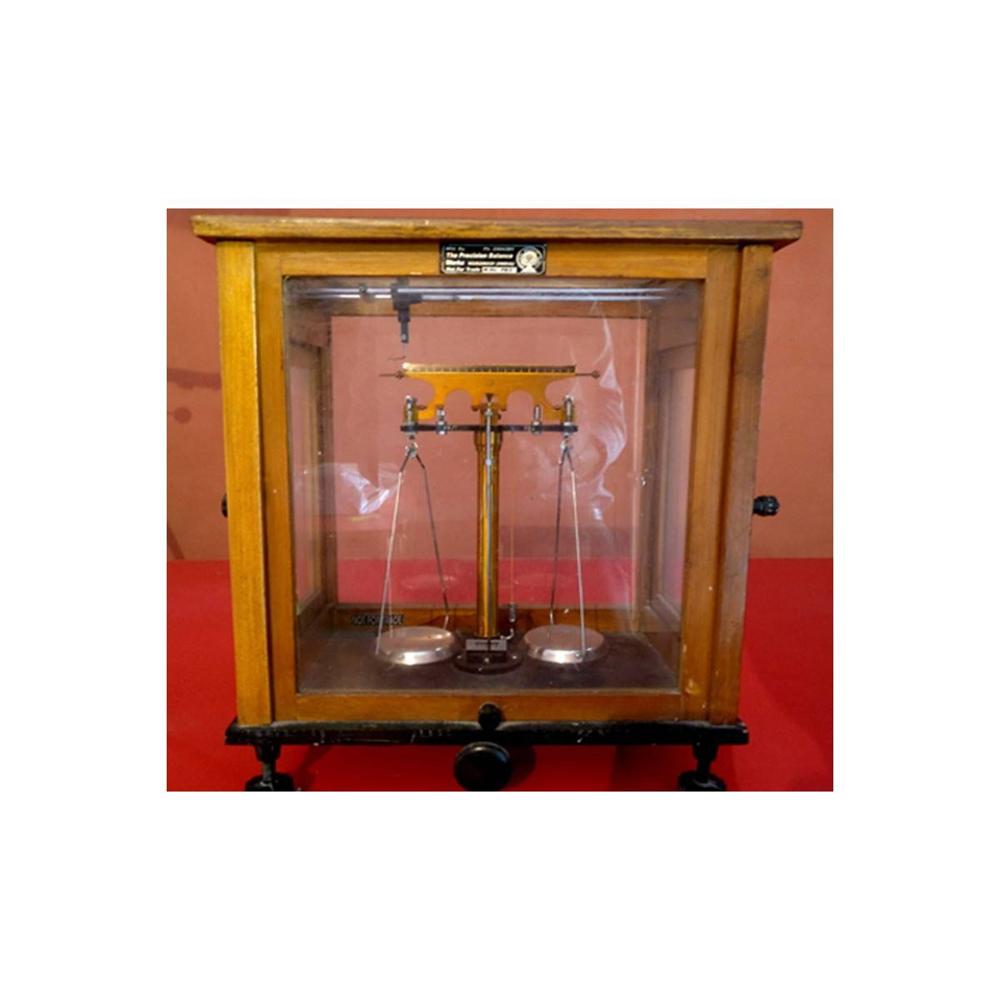
BALANCE PHYSICAL (Cap 250Gm) By Labcare Export
Price 2000.0 INR / Piece
Minimum Order Quantity : 1 Piece
Automation Grade : Manual
Accuracy : Up to 10 mg
Usage : Laboratory, Educational, Research
Type : Physical Balance
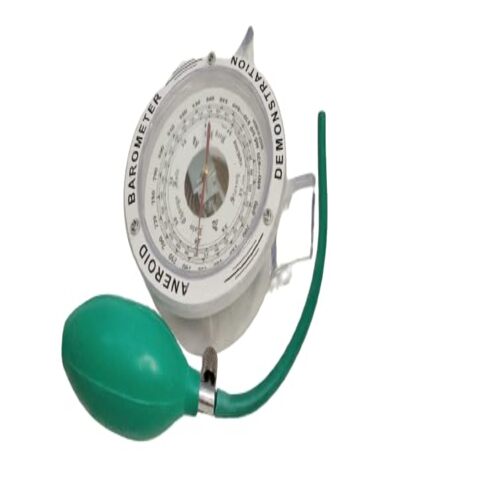
ANEROID BAROMETER (by Labcare)
Price 780.0 INR / Piece
Minimum Order Quantity : 1 Piece
Automation Grade : Manual
Accuracy : 3 hPa (hectopascal)
Usage : Measurement of Atmospheric Pressure
Type : Aneroid Barometer

GOVT. APPROVED MANUFACTURER, SUPPLIER AND EXPORTER
 Send Inquiry
Our Products
- Laboratory Microscope
- Hospital Furnitures
- Pharmacy Instruments
- COVID-19 SAFETY EQUIPMENTS
- Physical Instruments
- Laboratory Glasswere
- Anatomical Models
- Laboratory Glassware
- MIDWIFERY & CHILD HEALTH CARE SECTION
- Unique Products
- Chemistry Lab Equipment
- Scientific Instrument
- scientific laboratory instruments
- Physics equipments
- Hospital Equipments
- Educational Equipments kits
- ANALOG LAB TRANING MODULES
- Engineering Models & Equipments.
- Scientific Instruments
- Math catalogue Math items
- Building Furniture for School, Collegs & Office
- EDUCATIONAL WORKING MODELS
- AGRICULTURE EQUIPMENTS
- GEOGRAPHY EQUIPMENTS SECTION
- Disposible items
- The Survey Engineering Equipments Section
- Nursing College Equipments
- Fluid Machnical Lab Equipmens Labcare-Online
- Heat Transfer Lab Appartus Labcare-Online
- Labcare Entomological Equipments.
- Science and Security Equipments
- Defence Utility Equipment
- Office Equipment
- Sanitary Napkins and Diapers
- I.T.I Tools and Machines
- SCIENCE LAB EQUIPMENT
- LABTRONIKS SPECTROPHOTOMETERS
- Nebulizers
- LABTRONIKS


 Send Inquiry
 Send SMS
Developed and Managed by Infocom Network Private Limited.
