
 Send Inquiry
 Send Inquiry
Compound Bar Pendulum (Iron) labcare
Compound Bar Pendulum (Iron) labcare Specification
- Model No
- LC-823
- Features
- Knife edges fitted, Graduated Markings, Smooth surface, Rigid structure
- Surface Finish
- Powder Coated
- Weight
- Approx. 2.5 kg
- Style
- Laboratory Standard
- Assembly
- Pre-assembled
- Power Type
- Non-Electric
- Use
- Physics Experiments, Measurement of Acceleration Due to Gravity
- Size
- Standard Laboratory Size
- Type
- Compound Bar Pendulum
- Material
- Iron
- Dimensions
- 1000 mm (Length) x 40 mm (Width) x 20 mm (Thickness)
- Shape
- Rectangular Bar
- Color
- Black / Metallic Grey
- Function
- Find the acceleration due to gravity and study compound pendulum principles
- Age
- Suitable for High School and College Laboratories
- Advantage
- High Precision, Durable Construction, Corrosion Resistant
- Temperature Resistance
- Up to 80°C
- Packaging
- Box-packed with protective foam
- Edge Type
- Polished, hardened knife edges
- Bar Composition
- Solid Iron with uniform mass distribution
- Laboratory Application
- Used in experiments to determine the moment of inertia and radius of gyration
- Compatibility
- Compatible with standard laboratory stands
- Mounting
- Knife-edged and ready for suspension
- Length Accuracy
- ±0.5 mm
- Handling
- Easy-grip ends for safe manual handling
- Graduations
- Precisely Marked Positions along the Bar
Compound Bar Pendulum (Iron) labcare Trade Information
- FOB Port
- MUMBAI
- Payment Terms
- Cash Against Delivery (CAD), Cash on Delivery (COD), Days after Acceptance (DA), Delivery Point (DP), Letter of Credit (L/C), Letter of Credit at Sight (Sight L/C), Western Union, Paypal, Telegraphic Transfer (T/T), Cash in Advance (CID), Cheque, Cash Advance (CA)
- Supply Ability
- 50 Per Week
- Delivery Time
- 1 Week
- Sample Available
- Yes
- Sample Policy
- Sample costs shipping and taxes has to be paid by the buyer
- Packaging Details
- card board packing
- Main Export Market(s)
- Australia, North America, South America, Eastern Europe, Western Europe, Middle East, Central America, Asia, Africa
- Main Domestic Market
- All India
- Certifications
- ISO Certified product
Compound Bar Pendulum (Iron) labcare About
The company was established in 1986 at Ambala Cantt., Haryana, India, with the modern manufacturing facility of laboratory equipments. Most of the Products are manufactured to specification defined by international standards. All have a reputation for quality which is second to none. Company manufacturing units is highly equipped with latest equipment and tools to manufacturer flawless laboratory products, most competitive prices and viability of quality products are our main objects.
Our products are already matchless in the industry due to continuous improvement in quality & workmanship. our innovative nature plays a vital role to improve the things. we also keep improving the quality in tune with the latest development in the international market.
Precision Measurement for Physics Studies
The Labcare Compound Bar Pendulum is tailored for laboratory experiments that require exceptional measurement accuracy. With precisely marked graduations and a length accuracy of 0.5 mm, students and researchers can reliably assess gravitational acceleration and pendulum properties. Its knife-edged, polished suspension points guarantee minimal friction, while its sturdy, powder-coated surface resists corrosion, maintaining measurement integrity over time.
Engineered for Safety and Versatility
Designed with safety and user convenience in mind, the pendulum features easy-grip ends for comfortable handling during setup and experimentation. Compatible with most standard laboratory stands, its robust construction and temperature resistance up to 80C make it versatile for various educational settings. Delivered pre-assembled in protective foam packaging, it is ready for immediate use in any laboratory environment.
FAQs of Compound Bar Pendulum (Iron) labcare:
Q: How does the Compound Bar Pendulum (LC-823) facilitate accurate measurement of gravitational acceleration in the laboratory?
A: The pendulums precisely graduated bar and knife-edged mountings enable users to conduct experiments that accurately determine the acceleration due to gravity. The uniform mass distribution and finely marked positions allow for exact length adjustments, ensuring experimental precision.Q: What laboratory stands and equipment are compatible with this compound bar pendulum?
A: This pendulum is designed to be fully compatible with standard laboratory stands used in high school and college physics labs, ensuring broad applicability and ease of integration into existing laboratory setups.Q: When should this compound bar pendulum be used in physics education?
A: It is best utilized during experiments focused on rotational dynamics, specifically for determining a bars moment of inertia, radius of gyration, and for measuring the acceleration due to gravitycommon in both high school and undergraduate physics courses.Q: Where can this pendulum be installed or suspended for experimentation?
A: The pendulum can be suspended from any robust, stable laboratory stand capable of supporting its weight (approx. 2.5 kg). Its knife-edged mountings and pre-assembled structure streamline setup in most standard laboratory environments.Q: What is the process for using the compound bar pendulum in an experimental setup?
A: Begin by mounting the pendulum securely using its knife edges on a laboratory stand. Adjust the suspension point according to the graduated markings, then release the bar to oscillate and record timings as needed for your experiment.Q: Is the pendulum safe and convenient for frequent student use?
A: Yes, the pendulums easy-grip ends, polished knife edges, and protected packaging make it safe for repeated handling by students. Its rigid, corrosion-resistant build ensures longevity, reducing the need for frequent maintenance or replacement.Q: What are the main benefits of choosing the Labcare LC-823 Compound Bar Pendulum for laboratory applications?
A: This pendulum offers high precision, durable construction, and excellent corrosion resistance. Its pre-assembled, user-friendly design is ideal for educational environments, enabling accurate and repeatable demonstrations of compound pendulum principles.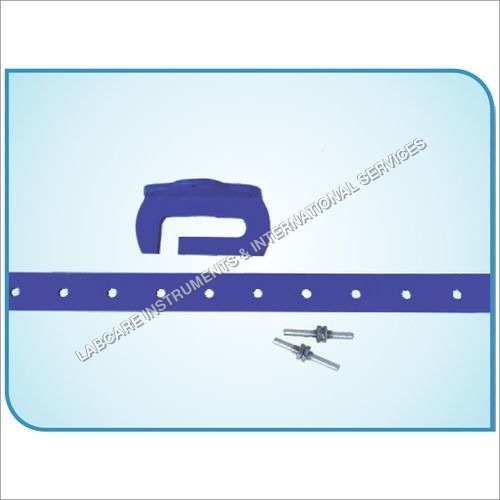

Price:
- 50
- 100
- 200
- 250
- 500
- 1000+

More Products in Physics equipments Category
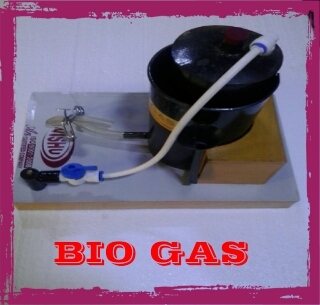
Bio Gas plant working model Labcare-Online
Price 340 INR / Box
Minimum Order Quantity : 5 Boxes
Color : Multicolor / Transparent
Dimensions : Approx. 30 cm x 20 cm x 20 cm
Advantage : Visual learning aids, easy maintenance, ecofriendly
Model No : LCBIOGAS01
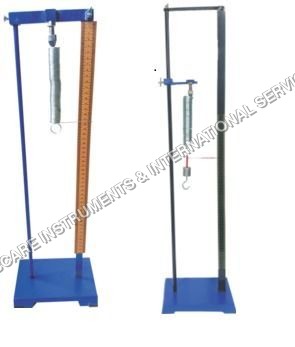
Constant spring apparatus abcare
Color : Blue frame, transparent scale panel, chrome plated spring
Dimensions : 400mm x 150mm x 120mm
Advantage : Accurate measurement of spring deformation under constant load; Durable construction ensures longterm classroom use
Model No : ABCASpringCONST02
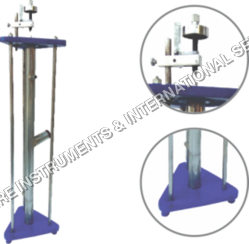
Linear expansion vertical labcare
Color : Metallic grey with colored rods
Dimensions : Standard laboratory size (customizable as per requirement)
Advantage : Accurate measurement and clear reading
Model No : Labcare LEV101
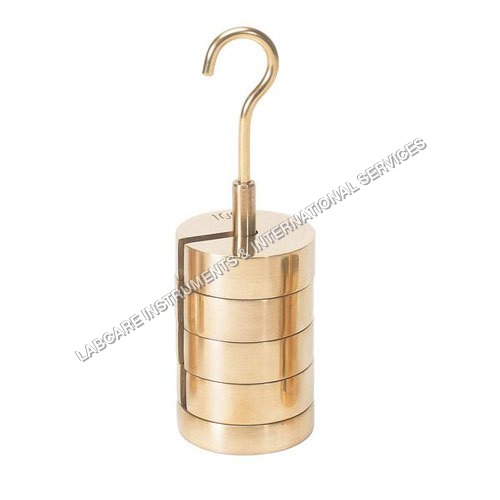
Slotted Weight with hanger labcare
Color : Silver or golden (varies with material)
Dimensions : 67 mm slot width, various diameter discs (typically 50 mm diameter)
Advantage : Easy to add or remove weights, stackable design
Model No : Labcare SLW01

GOVT. APPROVED MANUFACTURER, SUPPLIER AND EXPORTER
 Send Inquiry
Our Products
- Laboratory Microscope
- Hospital Furnitures
- Pharmacy Instruments
- COVID-19 SAFETY EQUIPMENTS
- Physical Instruments
- Laboratory Glasswere
- Anatomical Models
- Laboratory Glassware
- MIDWIFERY & CHILD HEALTH CARE SECTION
- Unique Products
- Chemistry Lab Equipment
- Scientific Instrument
- scientific laboratory instruments
- Physics equipments
- Hospital Equipments
- Educational Equipments kits
- ANALOG LAB TRANING MODULES
- Engineering Models & Equipments.
- Scientific Instruments
- Math catalogue Math items
- Building Furniture for School, Collegs & Office
- EDUCATIONAL WORKING MODELS
- AGRICULTURE EQUIPMENTS
- GEOGRAPHY EQUIPMENTS SECTION
- Disposible items
- The Survey Engineering Equipments Section
- Nursing College Equipments
- Fluid Machnical Lab Equipmens Labcare-Online
- Heat Transfer Lab Appartus Labcare-Online
- Labcare Entomological Equipments.
- Science and Security Equipments
- Defence Utility Equipment
- Office Equipment
- Sanitary Napkins and Diapers
- I.T.I Tools and Machines
- SCIENCE LAB EQUIPMENT
- LABTRONIKS SPECTROPHOTOMETERS
- Nebulizers
- LABTRONIKS


 Send Inquiry
 Send SMS
Developed and Managed by Infocom Network Private Limited.
