
 Send Inquiry
 Send Inquiry
Hoffman's Screw Clip Labcare
Hoffman's Screw Clip Labcare Specification
- Power Type
- Manual
- Model No
- Labcare SC-01
- Use
- To control or stop the flow of liquid in rubber or plastic tubing
- Style
- Screw Clip
- Features
- Easy to screw, adjustable pressure, reusable
- Surface Finish
- Nickel plated
- Size
- 16 mm max tube OD
- Assembly
- No assembly required
- Weight
- 10 g (approx)
- Type
- Manual tube clamp
- Material
- Nickel plated brass
- Dimensions
- Standard, suitable for lab tubing up to 16 mm OD
- Shape
- U-shaped
- Color
- Silver
- Function
- Pinching / closing flexible tubing
- Age
- Adult use (laboratory equipment, non-toy)
- Advantage
- Durable, corrosion-resistant
- Package Contents
- 1 screw clip per pack
- Usage Frequency
- Reusable
- Sterility
- Non-sterile
- Temperature Resistance
- Up to 120C
- Compatibility
- Fits standard laboratory burettes
- Grip Type
- Knurled tightening screw
- Chemical Resistance
- Good resistance to acids and alkalis
Hoffman's Screw Clip Labcare Trade Information
- FOB Port
- MUMBAI
- Payment Terms
- Cash on Delivery (COD), Cheque, Letter of Credit (L/C), Paypal, Western Union, Letter of Credit at Sight (Sight L/C), Cash Against Delivery (CAD), Telegraphic Transfer (T/T), Delivery Point (DP), Days after Acceptance (DA), Cash in Advance (CID), Cash Advance (CA)
- Supply Ability
- 50 Per Week
- Delivery Time
- 1 Week
- Sample Available
- Yes
- Sample Policy
- Sample costs shipping and taxes has to be paid by the buyer
- Packaging Details
- Card board packing
- Main Export Market(s)
- Australia, North America, South America, Eastern Europe, Western Europe, Middle East, Africa, Central America, Asia
- Main Domestic Market
- All India
- Certifications
- ISO Certified product
Hoffman's Screw Clip Labcare About
The company was established in 1986 at Ambala Cantt., Haryana, India, with the modern manufacturing facility of laboratory equipments. Most of the Products are manufactured to specification defined by international standards. All have a reputation for quality which is second to none. Company manufacturing units is highly equipped with latest equipment and tools to manufacturer flawless laboratory products, most competitive prices and viability of quality products are our main objects.
Our products are already matchless in the industry due to continuous improvement in quality & workmanship. our innovative nature plays a vital role to improve the things. we also keep improving the quality in tune with the latest development in the international market.
Reliable Flow Control for Laboratory Applications
The Hoffmans Screw Clip Labcare SC-01 provides a straightforward and effective solution for managing the flow of liquids through flexible tubing in laboratory settings. Its knurled screw allows effortless, precise adjustmentsideal for tasks requiring controlled dispensing or complete closure. As a reusable, corrosion-resistant tool, it supports repeated use without loss of functionality, making it a cost-effective accessory for any lab.
Exceptional Build and Versatility
Crafted from nickel-plated brass, the screw clip resists corrosion and withstands temperatures up to 120C, ensuring longevity even in harsh chemical environments. Its compatibility with standard burettes and tubing up to 16 mm OD makes it broadly useful across chemistry and biology labs. The non-sterile, manual design requires no assembly and is simple to install or remove as needed.
FAQs of Hoffmans Screw Clip Labcare:
Q: How do I use the Hoffmans Screw Clip Labcare SC-01 to control liquid flow in tubing?
A: To use the screw clip, simply place it over the flexible tubing and tighten the knurled screw to pinch the tubing closed or to restrict the flow. Loosen the screw slightly to allow controlled flow, or open it fully to restore liquid passage. This manual adjustment enables precise regulation of liquid movement without tools.Q: What types of laboratory tubing is this screw clip compatible with?
A: The Labcare SC-01 is designed to fit standard laboratory tubing, both rubber and plastic, with an outer diameter of up to 16 mm. It is commonly used with standard burettes and most laboratory fluid transfer setups.Q: What benefits does the nickel-plated brass material provide?
A: Nickel-plated brass offers excellent durability and resistance to corrosion, especially when handling acids, alkalis, and other chemicals commonly used in laboratories. This ensures the clip remains reliable through repeated usage in demanding environments.Q: When should I consider using this screw clip instead of other types of clamps?
A: This screw clip is ideal when you need adjustable liquid control or a complete stop in flexible tubing without damaging the tube. Its easy-to-use screw mechanism and compatibility with a range of tubing sizes make it suitable for controlled experiments or processes requiring frequent flow adjustments.Q: Can the Hoffmans Screw Clip Labcare SC-01 be reused, and how should it be maintained?
A: Yes, the screw clip is designed for repeated use. After each use, simply clean it to remove chemical residues and store it in a dry place. Its nickel-plated surface helps prevent rust, so maintenance is minimal.Q: Where is this screw clip manufactured and who supplies it?
A: The Hoffmans Screw Clip Labcare SC-01 is manufactured in India and supplied by various distributors, exporters, importers, manufacturers, service providers, and traders. It is widely available for laboratory procurement both locally and internationally.Q: What is the main advantage of the knurled tightening screw mechanism?
A: The knurled tightening screw provides adjustable and secure pressure to the tubing, allowing for precise and easy regulation of liquid flow. Its ergonomic design ensures a comfortable grip and simple manual operation, with no extra tools required.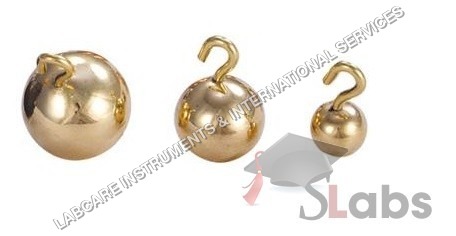

Price:
- 50
- 100
- 200
- 250
- 500
- 1000+

More Products in Physics equipments Category
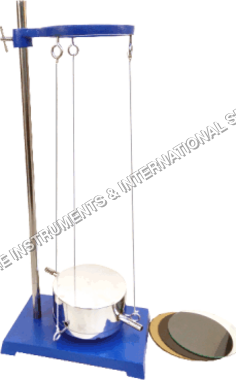
Lees and Charlton's apparatus
Advantage : Precise thermal insulation measurement
Model No : LC5935533
Use : Thermal conductivity experiment
Surface Finish : Polished
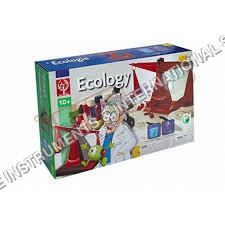
Ecology Book
Advantage : Comprehensive Content, Environment Awareness
Model No : 115Ecology
Use : School, College, Research, Reference
Surface Finish : Glossy
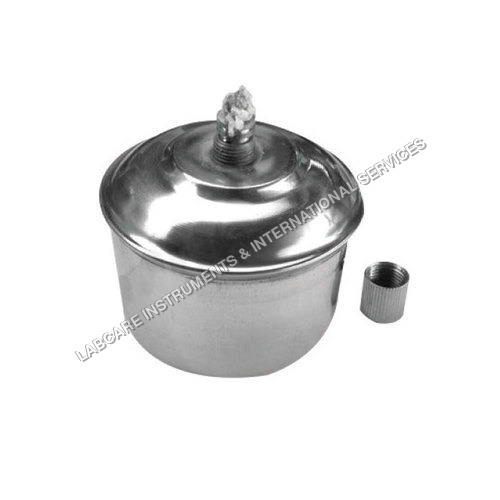
Spirit Lamp Stainless Steel labcare
Advantage : Rustfree, durable, easy to clean
Model No : Labcare LBSPLSS
Use : Heating, sterilization, flame source in laboratory applications
Surface Finish : Polished stainless steel
Cube set of Six Metal
Advantage : Nontoxic, Durable, Corrosion Resistant, High Accuracy on Dimension
Model No : CMC006
Use : Educational, Display, Collection, Scientific Study, Demonstration
Surface Finish : Polished and Smooth

GOVT. APPROVED MANUFACTURER, SUPPLIER AND EXPORTER
 Send Inquiry
Our Products
- Laboratory Microscope
- Hospital Furnitures
- Pharmacy Instruments
- COVID-19 SAFETY EQUIPMENTS
- Physical Instruments
- Laboratory Glasswere
- Anatomical Models
- Laboratory Glassware
- MIDWIFERY & CHILD HEALTH CARE SECTION
- Unique Products
- Chemistry Lab Equipment
- Scientific Instrument
- scientific laboratory instruments
- Physics equipments
- Hospital Equipments
- Educational Equipments kits
- ANALOG LAB TRANING MODULES
- Engineering Models & Equipments.
- Scientific Instruments
- Math catalogue Math items
- Building Furniture for School, Collegs & Office
- EDUCATIONAL WORKING MODELS
- AGRICULTURE EQUIPMENTS
- GEOGRAPHY EQUIPMENTS SECTION
- Disposible items
- The Survey Engineering Equipments Section
- Nursing College Equipments
- Fluid Machnical Lab Equipmens Labcare-Online
- Heat Transfer Lab Appartus Labcare-Online
- Labcare Entomological Equipments.
- Science and Security Equipments
- Defence Utility Equipment
- Office Equipment
- Sanitary Napkins and Diapers
- I.T.I Tools and Machines
- SCIENCE LAB EQUIPMENT
- LABTRONIKS SPECTROPHOTOMETERS
- Nebulizers
- LABTRONIKS


 Send Inquiry
 Send SMS
Developed and Managed by Infocom Network Private Limited.
