
 Send Inquiry
 Send Inquiry
Resistance and P.N junction appartus
Resistance and P.N junction appartus Specification
- Power Type
- Requires external DC source (not included)
- Size
- Standard laboratory size
- Use
- For demonstrating resistance and P-N junction characteristics
- Weight
- Approx. 450 grams
- Style
- Educational Laboratory Apparatus
- Assembly
- Ready to use, no assembly required
- Features
- In-built resistance, P-N junction diode, 3/2 terminals, clearly labeled, portable design
- Model No
- SCI-RES-PNJ-01
- Surface Finish
- Smooth, Semi-gloss
- Type
- Electrical Demonstration Apparatus
- Material
- Bakelite base, Metallic terminals, Electronic components
- Dimensions
- 20 cm x 12 cm x 8 cm (approx.)
- Shape
- Rectangular
- Color
- Black base with silver and colored component markings
- Function
- Measurement and study of resistance and P-N junction diode behavior
- Age
- 14 years and above (suitable for high school, college)
- Advantage
- Easy to use, Demonstrates theoretical concepts practically
- Accessories
- Supplied with connecting wires
- Diode Provided
- Germanium or Silicon Diode (mounted)
- Resistor Value
- Pre-calibrated; resistor securely fixed
- Input Terminals
- 4 mm banana sockets
- Connection Method
- Panel mounted screw terminals
- Operating Temperature
- 0C to 55C
- Max Voltage
- 30 Volts DC
- Max Current
- Up to 500 mA
- Panel Markings
- Clear Silk-screened Legend
- Compliance
- Meets standard school and college curriculum requirements
Resistance and P.N junction appartus Trade Information
- FOB Port
- GUJRAT
- Payment Terms
- Cash on Delivery (COD), Days after Acceptance (DA), Delivery Point (DP), Letter of Credit (L/C), Letter of Credit at Sight (Sight L/C), Western Union, Paypal, Cash Against Delivery (CAD), Telegraphic Transfer (T/T), Cash in Advance (CID), Cheque, Cash Advance (CA)
- Supply Ability
- 50 Per Week
- Delivery Time
- 1 Week
- Sample Available
- Yes
- Sample Policy
- Sample costs shipping and taxes has to be paid by the buyer
- Packaging Details
- Packed with Thermocol and cardbord packing
- Main Export Market(s)
- South America, Western Europe, Middle East, Central America, Eastern Europe, Africa, Australia, Asia, North America
- Main Domestic Market
- All India
- Certifications
- ISO 9001 : 2015 Certified products MSME certified company
Resistance and P.N junction appartus About
school lab equipments menufacturer and supplier, Educational lab equipments menufactuer and supplier , Educational lab equipments, Lab equipments menufacturer in india, Science Educational lab equipments, educational school lab equipments.Purpose and Educational Value
This apparatus enables students to investigate the electrical characteristics of both resistors and P-N junction diodes. It bridges theoretical knowledge and hands-on experimentation, making it an essential tool for teaching core principles in physics and electronics. Its design encourages practical learning in a safe, controlled environment.
Durable Design and User-Friendly Features
Constructed from a sturdy Bakelite base with metallic terminals, the apparatus boasts clear, silk-screened panel markings and securely fixed components. Its portable, rectangular unit features both banana sockets and panel screw terminals, ensuring straightforward, versatile connections. The standard laboratory size ensures easy integration into existing setups.
Ideal for Classroom and Laboratory Demonstration
Conforming to educational standards, this apparatus is suitable for high school and college courses. Supplied ready for immediate use with essential accessories, it is well-suited for demonstrations, practical sessions, and project work. The device can be distributed, exported, or supplied to educational institutions across India.
FAQs of Resistance and P.N junction appartus:
Q: How do I connect and operate the Resistance and P-N Junction Apparatus?
A: To use the apparatus, connect the external DC power supply (up to 30 V) to the 4 mm banana sockets or screw terminals. Use the supplied connecting wires and follow the clear panel markings to set up experiments for measuring resistance or analyzing diode characteristics. No assembly is requiredits ready to use.Q: What experiments can be performed with this device?
A: This apparatus allows you to measure resistance, study the I-V characteristics of P-N junction diodes, and observe diode behavior under forward and reverse bias. These experiments demonstrate foundational concepts in electronics relevant to school and college curriculums.Q: When is this apparatus typically used in an educational setting?
A: It is most commonly used during physics or electronics laboratory sessions in high school and undergraduate courses. It is suitable for practical demonstrations, student experiments, and curriculum-based assessments involving resistance and P-N junction studies.Q: Where should the Resistance and P-N Junction Apparatus be placed for safe operation?
A: Place the apparatus on a flat, stable surface within the laboratory. Ensure it is kept within its operating temperature range of 0C to 55C. For optimal safety, avoid exposure to moisture or extreme environmental conditions.Q: What is the process for demonstrating diode characteristics using this apparatus?
A: Connect the diode section as directed, apply an external DC supply, and vary the input voltage. Measure the current and voltage across the diode using suitable meters to plot the I-V characteristic curve, clearly illustrating forward and reverse bias properties.Q: How does using this apparatus benefit students?
A: By enabling hands-on exploration of theoretical concepts, the apparatus enhances comprehension and retention. Students gain practical experience with real electronic components, bridging the gap between textbook theory and real-world application.Q: What is included with the SCI-RES-PNJ-01 apparatus?
A: The unit comes with a securely mounted diode and resistor, panel with clear legends, metallic terminals, and connecting wires. It requires an external DC source (not supplied) for operation and is delivered fully assembled and ready for immediate use.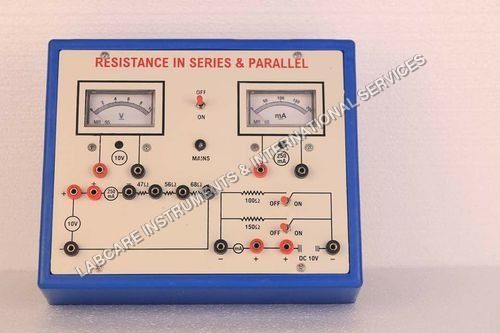

Price:
- 50
- 100
- 200
- 250
- 500
- 1000+

More Products in Educational Equipments kits Category
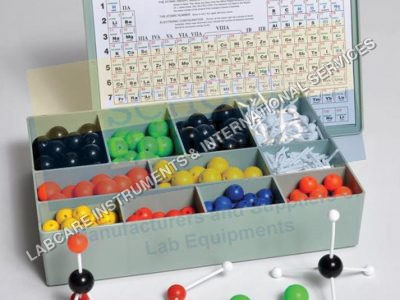
Atomic Model Set Superior
Color : Multicolor (colorcoded for different atoms)
Assembly : Snapfit, DIY construction
Model No : Superior Model Set
Features : Reusable, Expandable, Easy Assembly, Durable, NonToxic
Surface Finish : Smooth, Glossy
Shape : Spherical atoms, sticklike bonds
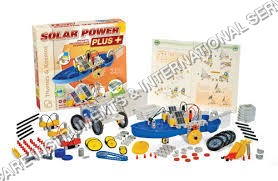
Solar Power
Color : Blue/Black
Assembly : Easy to assemble and install
Model No : SP2024
Features : High efficiency, weather resistant, durable
Surface Finish : Antireflective tempered glass
Shape : Rectangular

BAG OF SCIENCE KIT FOR KIDS
Color : Multicolor
Assembly : Ready to Use
Model No : BOSK01
Features : Multiple Experiments, EasytoFollow Instructions, Reusable Components
Surface Finish : Smooth, Printed
Shape : Rectangular Bag
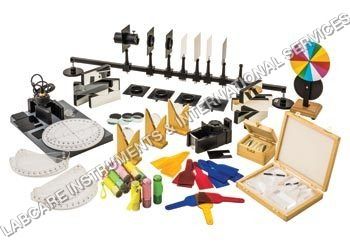
Educational Kit
Color : Multicolored Components
Assembly : Requires Manual Assembly
Model No : EDUSMKIT2024
Features : Multiple Experiments, Safe Components, Easytofollow Instructions
Surface Finish : Glossy Printed Box
Shape : Rectangular Box Packaging

GOVT. APPROVED MANUFACTURER, SUPPLIER AND EXPORTER
 Send Inquiry
Our Products
- Laboratory Microscope
- Hospital Furnitures
- Pharmacy Instruments
- COVID-19 SAFETY EQUIPMENTS
- Physical Instruments
- Laboratory Glasswere
- Anatomical Models
- Laboratory Glassware
- MIDWIFERY & CHILD HEALTH CARE SECTION
- Unique Products
- Chemistry Lab Equipment
- Scientific Instrument
- scientific laboratory instruments
- Physics equipments
- Hospital Equipments
- Educational Equipments kits
- ANALOG LAB TRANING MODULES
- Engineering Models & Equipments.
- Scientific Instruments
- Math catalogue Math items
- Building Furniture for School, Collegs & Office
- EDUCATIONAL WORKING MODELS
- AGRICULTURE EQUIPMENTS
- GEOGRAPHY EQUIPMENTS SECTION
- Disposible items
- The Survey Engineering Equipments Section
- Nursing College Equipments
- Fluid Machnical Lab Equipmens Labcare-Online
- Heat Transfer Lab Appartus Labcare-Online
- Labcare Entomological Equipments.
- Science and Security Equipments
- Defence Utility Equipment
- Office Equipment
- Sanitary Napkins and Diapers
- I.T.I Tools and Machines
- SCIENCE LAB EQUIPMENT
- LABTRONIKS SPECTROPHOTOMETERS
- Nebulizers
- LABTRONIKS


 Send Inquiry
 Send SMS
Developed and Managed by Infocom Network Private Limited.
