
 Send Inquiry
 Send Inquiry
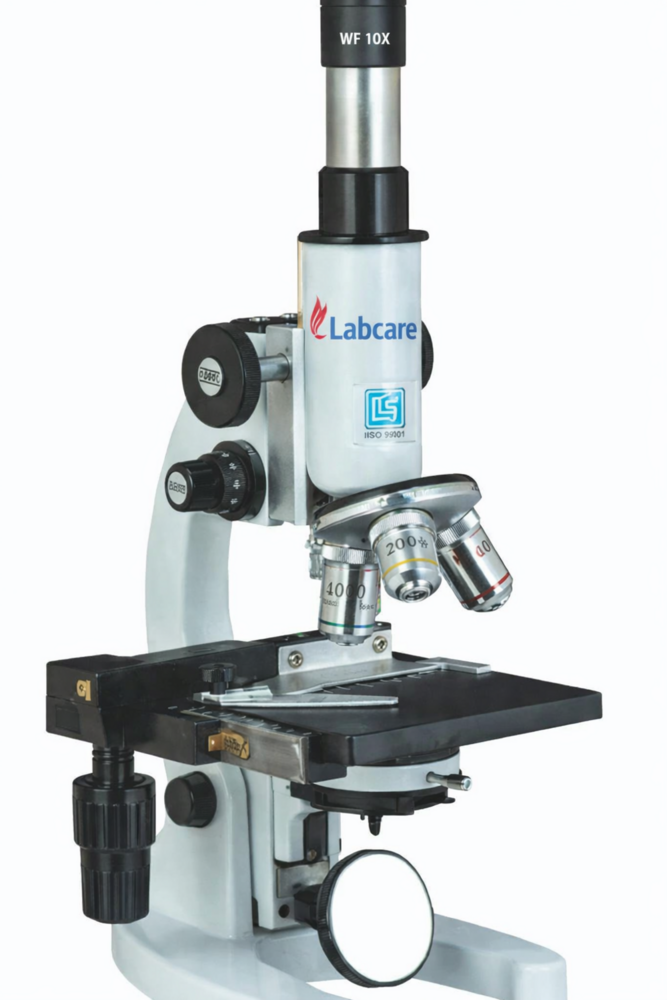
Senior Laboratory Medical Microscope BM-5
Price 6200 INR/ Piece
MOQ : 1 Piece
Senior Laboratory Medical Microscope BM-5 Trade Information
- Minimum Order Quantity
- 1 Piece
- FOB Port
- Gujarat
- Payment Terms
- Paypal, Cash Against Delivery (CAD), Cash on Delivery (COD), Cash Advance (CA), Cash in Advance (CID), Cheque, Days after Acceptance (DA), Delivery Point (DP), Letter of Credit at Sight (Sight L/C), Telegraphic Transfer (T/T), Western Union, Letter of Credit (L/C)
- Sample Policy
- Sample costs shipping and taxes has to be paid by the buyer
- Packaging Details
- Strong packaging
- Main Export Market(s)
- Asia, Australia, Central America, North America, South America, Eastern Europe, Western Europe, Middle East, Africa
Senior Laboratory Medical Microscope BM-5 About
Introduction to Medical MicroscopesA medical microscope is a vital tool in the field of medicine and biomedical research, enabling healthcare professionals and scientists to examine microscopic structures, cells, and tissues with exceptional precision. This sophisticated instrument plays a crucial role in diagnosis, treatment, and research across various medical disciplines. From uncovering the root cause of diseases to exploring the intricacies of cellular interactions, medical microscopes have revolutionized the way we understand and address health-related challenges.
Types of Medical Microscopes
Compound Microscopes: The most common type used in medical settings, compound microscopes consist of multiple lenses that magnify the specimen. They provide high-resolution images of cells and tissues, making them indispensable for routine diagnostic procedures, such as blood smears and histopathology.
Stereomicroscopes (Dissecting Microscopes): These microscopes offer a three-dimensional view of larger specimens and are frequently used in surgeries, dissections, and intricate procedures where depth perception is crucial.
Fluorescence Microscopes: By using specific fluorescent dyes, this type of microscope allows the visualization of specific molecules and structures within cells. It is commonly employed in immunology, genetics, and cancer research.
Confocal Microscopes: Utilizing a laser to scan specimens point by point, confocal microscopes create detailed 3D images, providing improved resolution and reducing background noise. They are ideal for examining complex cellular structures and interactions.
Electron Microscopes: With extraordinarily high magnification power, electron microscopes can visualize ultra-structural details of cells and tissues. Transmission electron microscopes (TEM) and scanning electron microscopes (SEM) are both used in various advanced research applications.
Applications in Medicine
Diagnosis of Diseases: Medical microscopes are invaluable for identifying pathogens, parasites, and abnormal cellular structures, aiding in the accurate diagnosis of infectious diseases, cancers, and other medical conditions.
Hematology: In hematology, medical microscopes are utilized to analyze blood smears, helping detect blood-related disorders such as anemia, leukemia, and malaria.
Histopathology: Tissue samples obtained through biopsies or autopsies are examined using microscopes to diagnose and study diseases like cancer and inflammatory conditions.
Microbiology: Medical microbiologists employ microscopes to study microorganisms, identify bacterial and fungal infections, and determine the efficacy of antimicrobial treatments.
Genetics and Cytogenetics: Medical microscopes are vital tools for examining chromosomes and genetic material, playing a significant role in prenatal testing and the diagnosis of genetic disorders.
Immunology: In immunology research, medical microscopes are used to observe immune cells and their interactions, contributing to a better understanding of immune responses and the development of vaccines.
Neuroscience: Neuroscientists use specialized microscopes to explore the intricate structure of neurons and study brain function, furthering our knowledge of the nervous system and neurological disorders.
Advancements and Future Prospects
Over the years, medical microscopy has witnessed remarkable technological advancements, enhancing its capabilities and opening new avenues for medical research and diagnosis. Recent developments in digital imaging, automation, and artificial intelligence have streamlined analysis processes, improved image quality, and facilitated data sharing among healthcare professionals worldwide.






Tell us about your requirement

Price:
Quantity
Select Unit
- 50
- 100
- 200
- 250
- 500
- 1000+
Additional detail
Mobile number
Email

More Products in Laboratory Microscope Category


LABCARE INSTRUMENTS & INTERNATIONAL SERVICES
GOVT. APPROVED MANUFACTURER, SUPPLIER AND EXPORTER
Send Inquiry
GOVT. APPROVED MANUFACTURER, SUPPLIER AND EXPORTER
 Send Inquiry
Our Products
- Laboratory Microscope
- Hospital Furnitures
- Pharmacy Instruments
- COVID-19 SAFETY EQUIPMENTS
- Physical Instruments
- Laboratory Glasswere
- Anatomical Models
- Laboratory Glassware
- MIDWIFERY & CHILD HEALTH CARE SECTION
- Unique Products
- Chemistry Lab Equipment
- Scientific Instrument
- scientific laboratory instruments
- Physics equipments
- Hospital Equipments
- Educational Equipments kits
- ANALOG LAB TRANING MODULES
- Engineering Models & Equipments.
- Scientific Instruments
- Math catalogue Math items
- Building Furniture for School, Collegs & Office
- EDUCATIONAL WORKING MODELS
- AGRICULTURE EQUIPMENTS
- GEOGRAPHY EQUIPMENTS SECTION
- Disposible items
- The Survey Engineering Equipments Section
- Nursing College Equipments
- Fluid Machnical Lab Equipmens Labcare-Online
- Heat Transfer Lab Appartus Labcare-Online
- Labcare Entomological Equipments.
- Science and Security Equipments
- Defence Utility Equipment
- Office Equipment
- Sanitary Napkins and Diapers
- I.T.I Tools and Machines
- SCIENCE LAB EQUIPMENT
- LABTRONIKS SPECTROPHOTOMETERS
- Nebulizers
- LABTRONIKS

Plant No 18, Near Shiv Mandir, Behind B D Flour Mill, Pragati Vihar,Ambala Cantt - 133001, Haryana, India

Mr Abhishek Kaushal
(CEO)
Mobile :07971191059
 Send Inquiry
 Send SMS
Developed and Managed by Infocom Network Private Limited.
