
 Send Inquiry
 Send Inquiry
Torsion Apparatus Vertical Labcare
Torsion Apparatus Vertical Labcare Specification
- Assembly
- Parts require basic assembly
- Weight
- Approx. 7-8 kg
- Size
- Standard Lab Size
- Surface Finish
- Powder Coated
- Model No
- LC-TAV
- Use
- Determination of modulus of rigidity of a wire / physics lab experiments
- Features
- Graduated scale, removable weights, adjustable chuck, precision pointer, easy assembly
- Power Type
- Manual (Non-Electric)
- Style
- Vertical Lab Equipment
- Type
- Physics Laboratory Apparatus
- Material
- Mild Steel Stand, Brass Scale, Wooden Base, Mild Steel Fittings
- Dimensions
- Apparatus Height Approx. 60 cm
- Shape
- Vertical Cylindrical with rectangular base
- Color
- Blue and Metallic
- Function
- Measuring torsional rigidity/modulus of elasticity
- Age
- Suitable for lab use by students and researchers (15+ years)
- Advantage
- Robust design for accurate measurements in educational laboratories
- Application Field
- Physics labs of schools, colleges, and universities
- Mounting
- Free-standing (tabletop)
- Scale Graduation
- 0-360 Degrees (Brass scale with clear markings)
- Base Material
- Heavy-duty wooden base for stability
- Weight Hangers Included
- Yes, compatible with standard weights (Not always included)
- Pointer Type
- Aluminium pointer for precision readings
- Chuck Type
- Three-jaw adjustable chuck for holding test wires
- Wire Length Capacity
- Up to 1 meter
Torsion Apparatus Vertical Labcare Trade Information
- FOB Port
- MUMBAI
- Payment Terms
- Cash Against Delivery (CAD), Cash on Delivery (COD), Delivery Point (DP), Days after Acceptance (DA), Cash in Advance (CID), Cheque, Cash Advance (CA)
- Supply Ability
- 50 Per Week
- Delivery Time
- 1 Week
- Sample Available
- Yes
- Sample Policy
- Sample costs shipping and taxes has to be paid by the buyer
- Packaging Details
- Card board packing
- Main Export Market(s)
- South America
- Main Domestic Market
- All India
- Certifications
- ISO Certified product
Torsion Apparatus Vertical Labcare About
The company was established in 1986 at Ambala Cantt., Haryana, India, with the modern manufacturing facility of laboratory equipments. Most of the Products are manufactured to specification defined by international standards. All have a reputation for quality which is second to none. Company manufacturing units is highly equipped with latest equipment and tools to manufacturer flawless laboratory products, most competitive prices and viability of quality products are our main objects.
Our products are already matchless in the industry due to continuous improvement in quality & workmanship. our innovative nature plays a vital role to improve the things. we also keep improving the quality in tune with the latest development in the international market.
Reliable Modulus of Rigidity Measurement
Specially engineered for the assessment of torsional rigidity and elasticity modulus, this apparatus provides a stable platform with clear scale graduation from 0 to 360 degrees. Its robust vertical cylindrical stand and precision components facilitate accurate, repeatable readings, making it indispensable for educational settings.
User-Friendly and Adaptable Design
Designed for convenience, the apparatus features a free-standing construction with a heavy-duty wooden base, ensuring excellent stability during experiments. The adjustable three-jaw chuck accommodates wires up to 1 meter, and the apparatus is compatible with standard lab weights, making it suitable for a range of practical physics applications.
FAQs of Torsion Apparatus Vertical Labcare:
Q: How do you assemble and set up the Torsion Apparatus Vertical Labcare in a laboratory?
A: To assemble, secure the vertical stand onto the heavy-duty wooden base. Attach the brass scale, pointer, and three-jaw chuck as per the included instructions. Ensure all fittings are tightened, insert the wire, and position weight hangers if needed. Place the assembled unit on a stable tabletop for best performance.Q: What experiments can be performed using this torsion apparatus?
A: This apparatus is primarily used to determine the modulus of rigidity (torsional rigidity) of wires in physics labs. It can also be used to study material properties, explore torsional oscillations, and demonstrate principles of elasticity and rotational measurements for educational purposes.Q: When should weight hangers and standard weights be used with the apparatus?
A: Weight hangers are used during experiments requiring the application of known torques to the test wire. Attach standard weights to the hanger for precise measurement of wire twist. Although weight hangers are included, standard weights may need to be sourced separately based on experiment requirements.Q: Where is the ideal location to place the apparatus during use?
A: For optimal stability and accuracy, the apparatus should be placed on a flat, level laboratory table away from vibrations or strong air currents. The free-standing, robust wooden base ensures that it remains stable during testing.Q: What is the process for measuring the modulus of rigidity with this apparatus?
A: Fix a wire of up to 1 meter in the adjustable chuck. Apply weights via the hanger to exert torsion. As the wire twists, use the aluminium pointer against the 0-360 brass scale to record angular displacement. Calculations combining applied torque and observed angular shift yield the modulus of rigidity.Q: Who can benefit from using the Torsion Apparatus Vertical Labcare?
A: This apparatus is designed for physics students and researchers (ages 15+), making it ideal for secondary schools, colleges, and universities. Its robust, straightforward build allows users to gain practical experience in material science and elasticity measurements.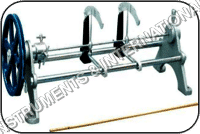

Price:
- 50
- 100
- 200
- 250
- 500
- 1000+

More Products in Physics equipments Category

Meter Bride labcare-Online
Price 300.00 INR
Minimum Order Quantity : 1 Box
Shape : Rectangular
Function : Online meter for accurate analysis & monitoring
Style : Analytical laboratory instrument
Color : White & Blue
Laboratory Equipment
Price 1100 / Piece
Minimum Order Quantity : 5
Shape : Rectangular
Function : Laboratory workspace & storage
Style : Modern Laboratory
Color : White & Blue
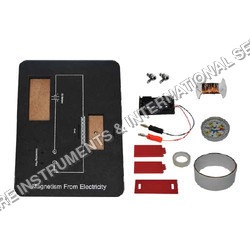
Megnetism From Electricity Kits for School Labcare
Shape : Assorted educational lab kit components; rectangular main base
Function : Visualizes conversion of electrical energy to magnetic energy; supports electricity & magnetism curriculum
Style : Educational Laboratory Kit
Color : Multicolor (as per educational standard color codes)
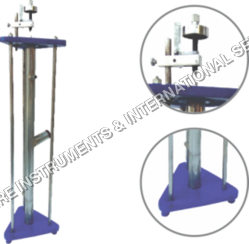
Linear expansion vertical labcare
Shape : Vertical assembly
Function : To demonstrate linear expansion of metals due to heat
Style : Vertical
Color : Metallic grey with colored rods

GOVT. APPROVED MANUFACTURER, SUPPLIER AND EXPORTER
 Send Inquiry
Our Products
- Laboratory Microscope
- Hospital Furnitures
- Pharmacy Instruments
- COVID-19 SAFETY EQUIPMENTS
- Physical Instruments
- Laboratory Glasswere
- Anatomical Models
- Laboratory Glassware
- MIDWIFERY & CHILD HEALTH CARE SECTION
- Unique Products
- Chemistry Lab Equipment
- Scientific Instrument
- scientific laboratory instruments
- Physics equipments
- Hospital Equipments
- Educational Equipments kits
- ANALOG LAB TRANING MODULES
- Engineering Models & Equipments.
- Scientific Instruments
- Math catalogue Math items
- Building Furniture for School, Collegs & Office
- EDUCATIONAL WORKING MODELS
- AGRICULTURE EQUIPMENTS
- GEOGRAPHY EQUIPMENTS SECTION
- Disposible items
- The Survey Engineering Equipments Section
- Nursing College Equipments
- Fluid Machnical Lab Equipmens Labcare-Online
- Heat Transfer Lab Appartus Labcare-Online
- Labcare Entomological Equipments.
- Science and Security Equipments
- Defence Utility Equipment
- Office Equipment
- Sanitary Napkins and Diapers
- I.T.I Tools and Machines
- SCIENCE LAB EQUIPMENT
- LABTRONIKS SPECTROPHOTOMETERS
- Nebulizers
- LABTRONIKS


 Send Inquiry
 Send SMS
Developed and Managed by Infocom Network Private Limited.
