
 Send Inquiry
 Send Inquiry
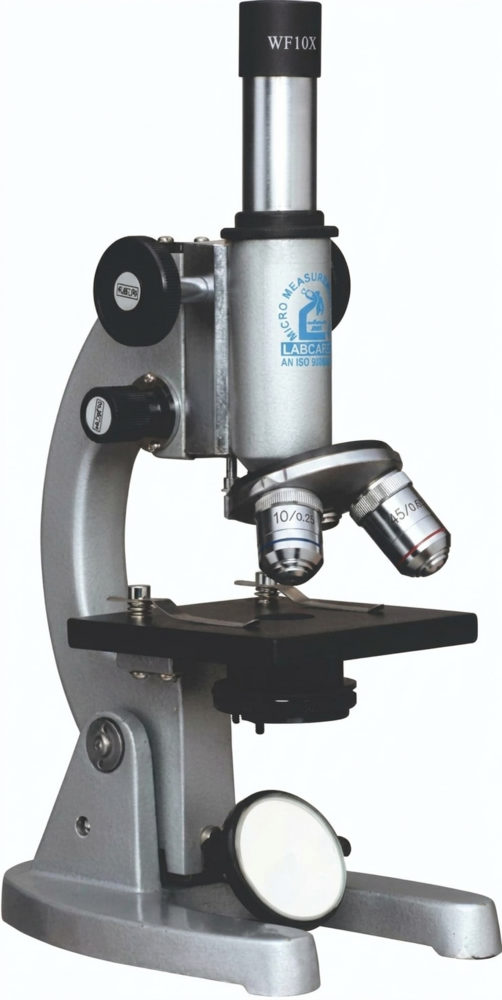
Compound Student Microscope Bm3A
Price 5200 INR/ Piece
Compound Student Microscope Bm3A Trade Information
- Minimum Order Quantity
- 1 Piece
- FOB Port
- Gujarat
- Payment Terms
- Paypal, Cash Against Delivery (CAD), Cash on Delivery (COD), Cash Advance (CA), Cash in Advance (CID), Cheque, Days after Acceptance (DA), Delivery Point (DP), Letter of Credit at Sight (Sight L/C), Telegraphic Transfer (T/T), Western Union, Letter of Credit (L/C)
- Sample Policy
- Sample costs shipping and taxes has to be paid by the buyer
- Packaging Details
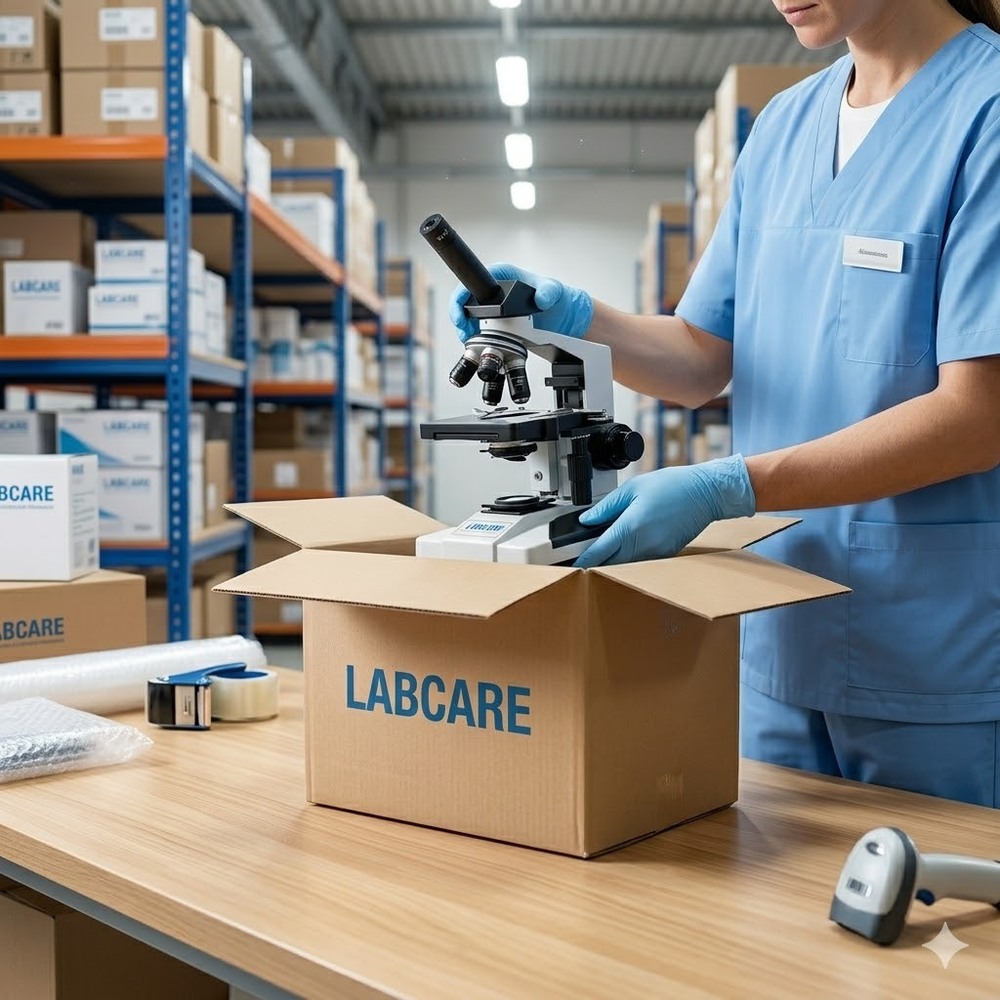
- Strong packaging
- Main Export Market(s)
- Asia, Australia, Central America, North America, South America, Eastern Europe, Western Europe, Middle East, Africa
Compound Student Microscope Bm3A About
Eye Piece: Wide-Field 10x Eye-piece or set of 10x & 15x Huygenian Eye-pieces. Nosepiece: Triple revolving nosepiece with click stops. Stage: High quality S.S. Stage clips provided to hold the slide. Focussing: By vertical movement of the observation tube, with coarse adjustment using rack-pinion movement and fine motion by screw level mechanism. Condenser: Abbe condenser having Numerical aperture of 1.25 with iris diaphragm and swing out filter holder can be moved through rack and pinion. This condenser unit incorporates high efficiency optical system for optimum utilisation of light. Illumination: Arc-Reflector set for using natural light to study the slide. Objective: Achromatic 10x and 40/45x.Packaging : In mould styrofoam box or woodenIntroduction to Monocular Microscope:
A monocular microscope is a widely used optical instrument that allows users to view small objects and specimens at high magnification. It is a fundamental tool in various scientific fields, including biology, medicine, geology, and material science. This type of microscope features a single eyepiece, making it relatively simple and easy to use for both beginners and experienced researchers alike.
Key Components of a Monocular Microscope:Eyepiece (Ocular): The eyepiece is the lens closest to the viewer's eye. It typically has a magnification power of 10x and allows users to observe the specimen in detail.Objective Lens: The objective lens is the primary lens responsible for magnifying the specimen. Monocular microscopes generally have three or four objective lenses, each with different magnification levels, such as 4x, 10x, 40x, and 100x.Stage: The stage is a flat platform where the specimen is placed for examination. It usually has mechanical adjustments to move the specimen in a controlled manner, allowing precise observation.
Coarse and Fine Focus Adjustment: These knobs help in focusing the image of the specimen. The coarse adjustment moves the stage rapidly to get the object close to the desired focus, while the fine adjustment provides finer focus control.Illumination Source: Most modern monocular microscopes have built-in LED illumination that provides ample light to illuminate the specimen for clear observation.Condenser: The condenser is located below the stage and concentrates the light onto the specimen, enhancing the image's brightness and contrast.Diaphragm: The diaphragm is used to adjust the amount of light reaching the specimen. It helps control the image's brightness and improves image quality.
How to Use a Monocular Microscope:
Using a monocular microscope is relatively straightforward, and here are the general steps to follow:
Place the microscope on a stable surface and ensure it is properly plugged in or its batteries are charged for illumination.
Turn on the microscope's illumination source (if applicable) and adjust the brightness using the diaphragm.
Prepare your specimen, such as a thin slice of a plant stem, a drop of water with microorganisms, or a microscope slide with a tissue sample.
Place the specimen on the center of the microscope stage and secure it using the stage clips (if available).
Begin with the lowest magnification objective (usually 4x) and lower the objective lens as close to the stage as possible using the coarse adjustment.
Look through the eyepiece and slowly turn the coarse adjustment knob to move the stage upward until the specimen comes into rough focus.
If needed, switch to higher magnification objectives (10x, 40x, or 100x) by rotating the nosepiece and repeat the focusing process.







Price:
- 50
- 100
- 200
- 250
- 500
- 1000+

More Products in Laboratory Microscope Category
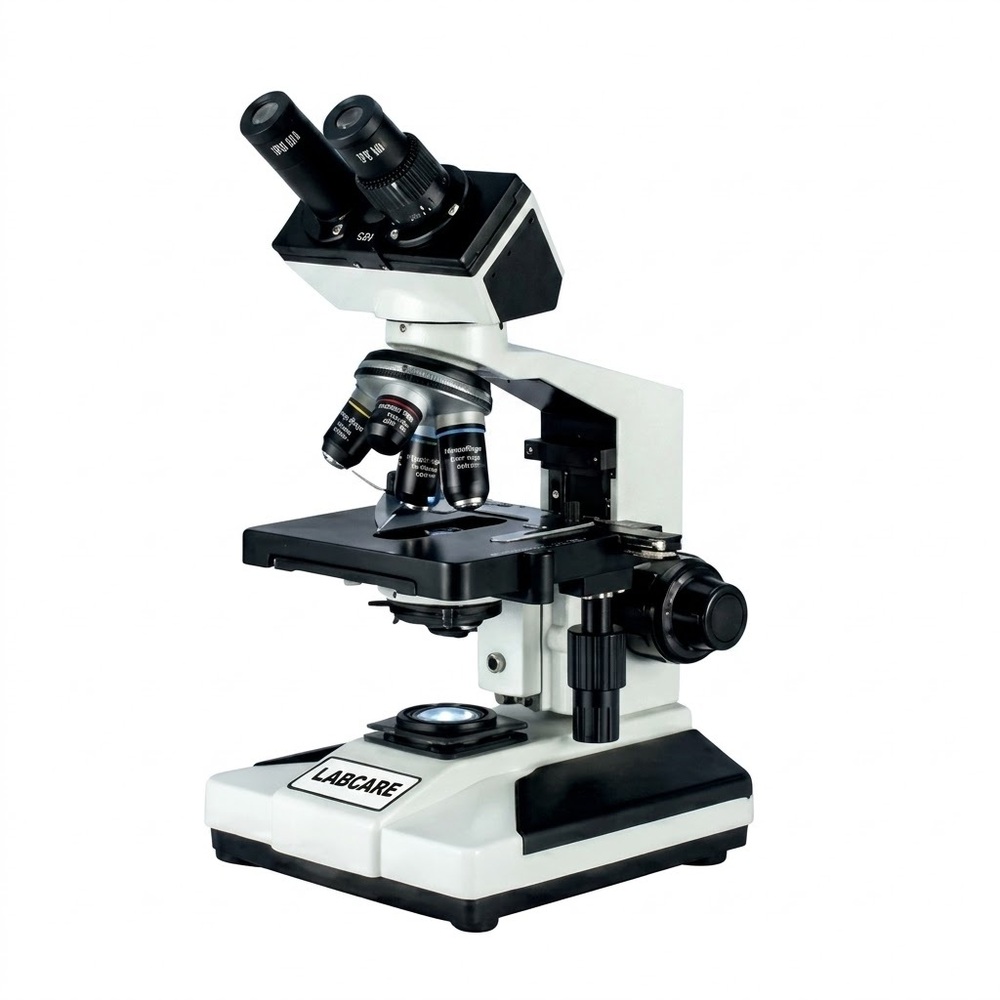
BINOCULAR CO-AXIAL MICROSCOPE
Price 24000 INR / Piece
Minimum Order Quantity : 1 Piece
Working Stage : Mechanical stage, 125 x 115mm with coaxial XY control
Eyepiece Tube : Binocular, 45 inclined, rotatable 360
View Head : Binocular, 360 rotatable
Focal Distance : Varies with objective; typically 160mm mechanical tube length
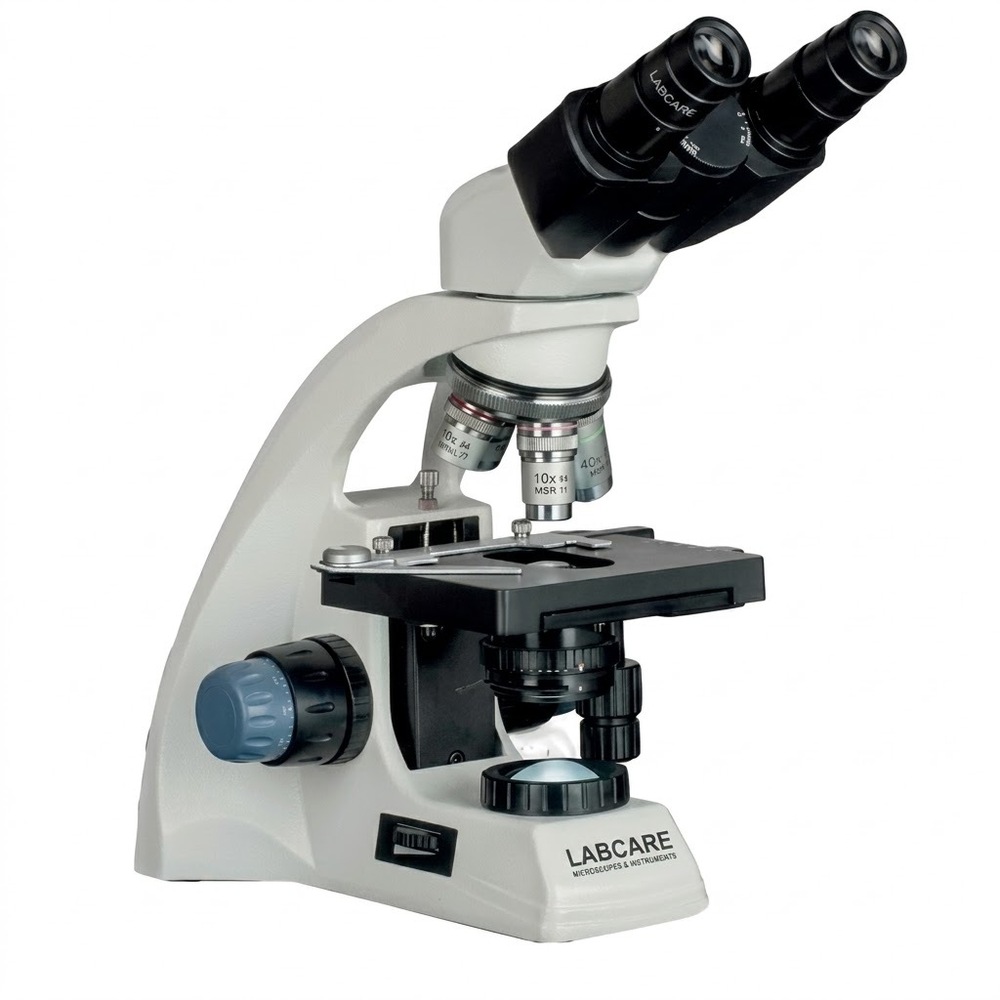
Research Binocular Microscope (AXL BINO)
Price 22000 INR / Piece
Minimum Order Quantity : 1 Piece
Working Stage : Mechanical stage, size 140 x 120 mm with coaxial drive & vernier
Eyepiece Tube : Binocular, inclined at 45, rotatable through 360
View Head : Binocular head, 45 inclined, 360 rotating
Focal Distance : Standard to researchgrade, long working distance objectives supported
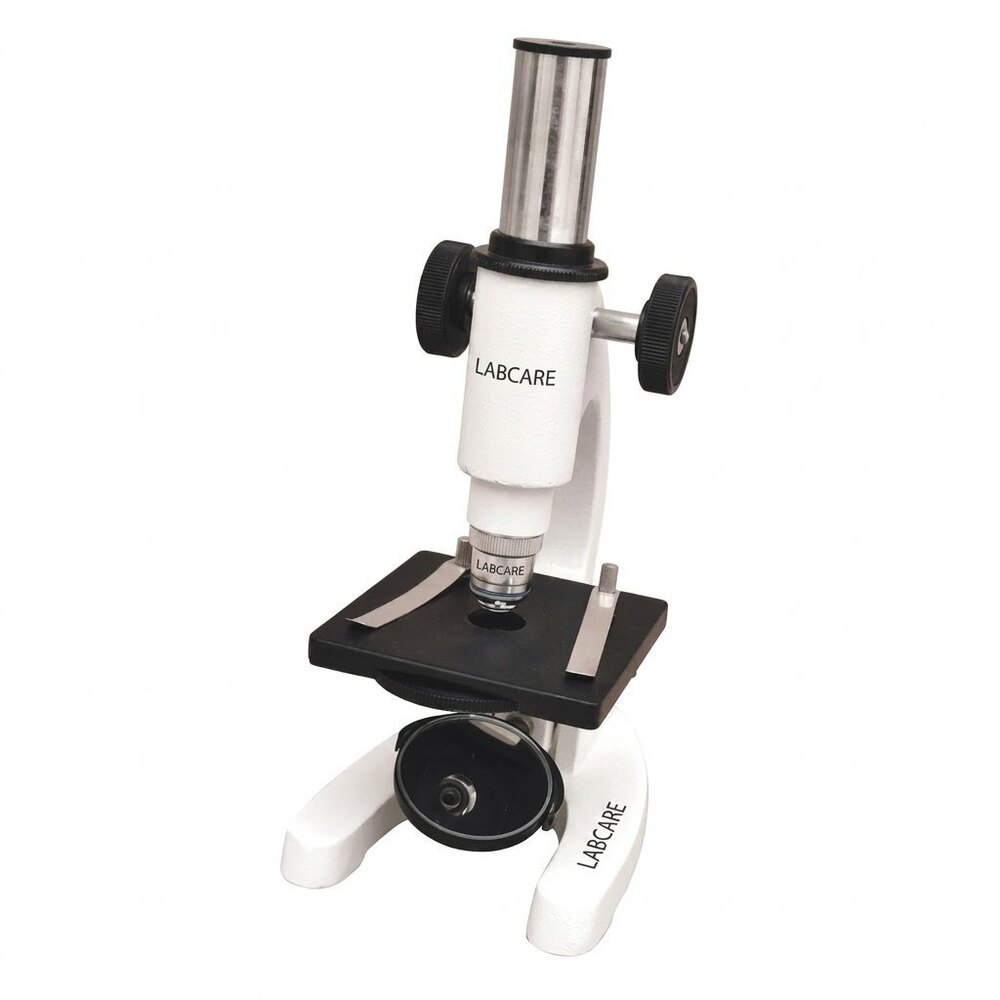
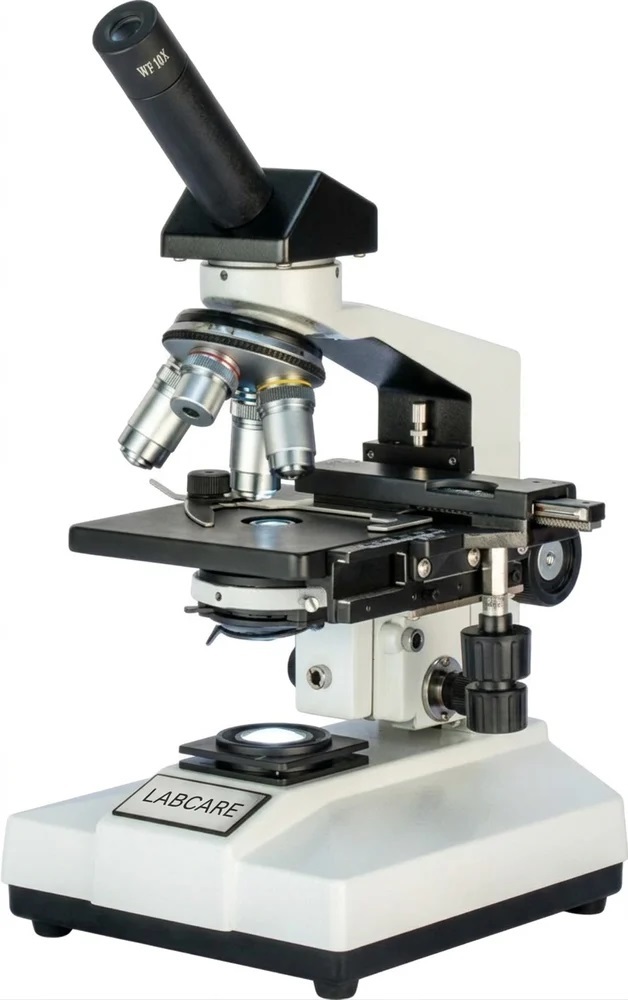
Mild Steel Pathological Monocular Microscope BM-6 MO, For Laboratory
Price 8000 INR / Piece
Minimum Order Quantity : 1 Piece

GOVT. APPROVED MANUFACTURER, SUPPLIER AND EXPORTER
 Send Inquiry
Our Products
- Laboratory Microscope
- Hospital Furnitures
- Pharmacy Instruments
- COVID-19 SAFETY EQUIPMENTS
- Physical Instruments
- Laboratory Glasswere
- Anatomical Models
- Laboratory Glassware
- MIDWIFERY & CHILD HEALTH CARE SECTION
- Unique Products
- Chemistry Lab Equipment
- Scientific Instrument
- scientific laboratory instruments
- Physics equipments
- Hospital Equipments
- Educational Equipments kits
- ANALOG LAB TRANING MODULES
- Engineering Models & Equipments.
- Scientific Instruments
- Math catalogue Math items
- Building Furniture for School, Collegs & Office
- EDUCATIONAL WORKING MODELS
- AGRICULTURE EQUIPMENTS
- GEOGRAPHY EQUIPMENTS SECTION
- Disposible items
- The Survey Engineering Equipments Section
- Nursing College Equipments
- Fluid Machnical Lab Equipmens Labcare-Online
- Heat Transfer Lab Appartus Labcare-Online
- Labcare Entomological Equipments.
- Science and Security Equipments
- Defence Utility Equipment
- Office Equipment
- Sanitary Napkins and Diapers
- I.T.I Tools and Machines
- SCIENCE LAB EQUIPMENT
- LABTRONIKS SPECTROPHOTOMETERS
- Nebulizers
- LABTRONIKS


 Send Inquiry
 Send SMS
Developed and Managed by Infocom Network Private Limited.
