
 Send Inquiry
 Send Inquiry
Single Beam Microprocessor UV-VIS Spectrophotometer
Price 120000.0 INR/ Unit
Single Beam Microprocessor UV-VIS Spectrophotometer Specification
- Capacity
- Single Sample Compartment
- Frequency
- 50 Hz
- Model No
- LT 29
- Temperature Range
- Not Applicable (Room Temperature Use)
- Core Components
- Deuterium Lamp, Tungsten Halogen Lamp, Silicon Photodiode Detector, Grating Monochromator, Microprocessor
- Automation Grade
- Semi-Automatic
- Measurement Range
- 190 - 1100 nm
- Feature
- Microprocessor Controlled, High Accuracy, Graph Plotting, Large Memory, Automatic Wavelength Setting
- Power Source
- AC 220V 10%
- Voltage
- 220V AC 10%
- Accuracy
- 0.5% T
- Equipment Materials
- Powder Coated Metal Body, High-Quality Optical Components
- Type
- Single Beam UV-VIS Spectrophotometer
- Usage
- Quantitative Analysis in Chemistry, Life Sciences, Pharmaceutical Labs, Research Institutes
- Display Type
- LCD Digital Display
- Dimension (L*W*H)
- Approx. 460 x 380 x 180 mm
- Weight
- Approx. 10-12 kg
- Wavelength Repeatability
- 0.2 nm
- Storage
- Up to 200 groups of data and 100 standard curves
- Wavelength Accuracy
- 0.5 nm
- Light Source
- Deuterium and Tungsten Lamps
- Spectral Bandwidth
- 2 nm
- Photometric Repeatability
- 0.3%T
- Detector
- Silicon Photodiode
- Operating Software
- Microprocessor Based Analysis with Inbuilt Printer Option
- Data Output
- RS232, USB
- Photometric Range
- -0.3 to 3.0 Abs
- Photometric Accuracy
- 0.5%T
- Baseline Flatness
- 0.002A
- Sample Holder
- Standard 10 mm Quartz Cuvettes
- Stray Light
- 0.05%T at 220/340 nm
Single Beam Microprocessor UV-VIS Spectrophotometer Trade Information
- Minimum Order Quantity
- 1 Unit
- Delivery Time
- 5-7 Days
Single Beam Microprocessor UV-VIS Spectrophotometer About
High Precision and Reliable Performance
This spectrophotometer achieves impressive photometric accuracy (0.5%T) and repeatability (0.3%T), driven by its silicon photodiode detector and advanced optical components. The device's deuterium and tungsten halogen lamps provide stable illumination, ensuring consistent results for quantitative analysis in various applications.
User-Friendly Features and Storage
With a large LCD digital display, built-in microprocessor analysis, and options for automatic wavelength settings, users benefit from streamlined operation and efficient workflow. The model allows storage of up to 200 data groups and 100 standard curves, maximizing flexibility for both routine and research-based usage.
Robust Build and Versatile Applications
Designed with a powder-coated metal body and high-quality optics, the instrument is built to endure rigorous laboratory environments. Its compatibility with USB and RS232 outputs, as well as inbuilt printer options, ensures seamless data management across distributor, exporter, manufacturer, and laboratory settings.
FAQ's of Single Beam Microprocessor UV-VIS Spectrophotometer:
Q: How does the microprocessor benefit the operation of this UV-VIS spectrophotometer?
A: The integrated microprocessor automates complex analytical routines, improves accuracy with automatic wavelength settings, and allows efficient data handling, including storage of 200 groups of results and 100 standard curves. This makes analysis more reliable and simplifies workflow for users.Q: What are the key benefits of the single beam design in this spectrophotometer?
A: A single beam design offers straightforward sample measurement and is cost-effective while delivering high accuracy for routine quantitative and qualitative analyses, making it suitable for academic, clinical, and industrial labs.Q: When should the deuterium and tungsten halogen lamps be replaced?
A: Lamp replacement intervals depend on usage, but typically deuterium and tungsten lamps should be checked periodically if signal intensity decreases or if baseline noise increases, ensuring continued accuracy in measurements.Q: Where can this spectrophotometer be effectively used?
A: It is ideal for chemistry, life sciences, and pharmaceutical labs, as well as research institutes-anywhere accurate and reliable quantitative UV-VIS analysis is required.Q: What is the process for quantitative analysis using this spectrophotometer?
A: Users prepare samples in the 10 mm quartz cuvette, select parameters via the LCD interface, and the microprocessor system automates spectral scanning and data calculations. Results can be reviewed, stored, exported, or printed.Q: How is data output and management handled?
A: Data can be output via RS232 or USB interfaces for transfer to computers or printers. The large onboard memory also allows storing up to 200 sample groups and 100 standard curves for later review or comparison.Q: What advantages does the automatic wavelength setting provide?
A: Automatic wavelength setting enhances reproducibility and removes the guesswork from manual adjustments, ensuring measurements are consistently accurate and time-efficient for users.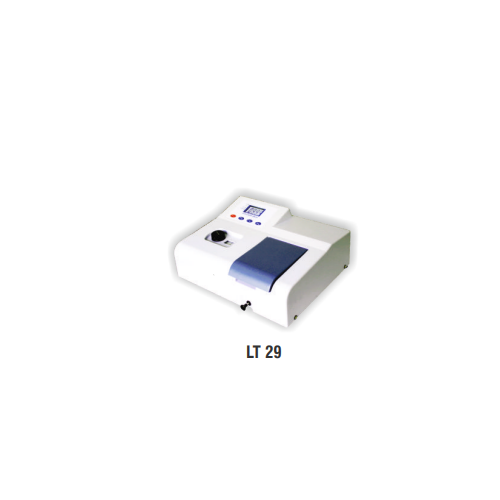

Price:
- 50
- 100
- 200
- 250
- 500
- 1000+

More Products in LABTRONIKS Category
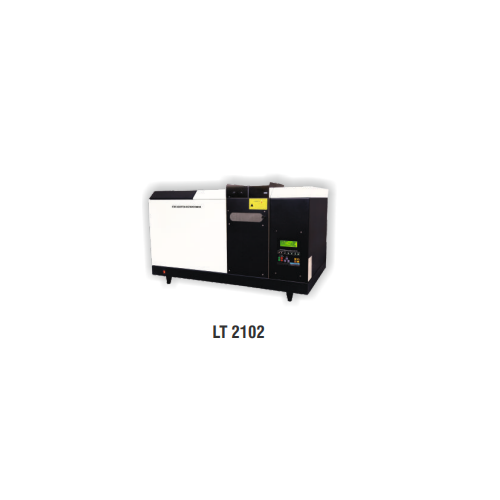
Labtroniks Atomic Absorption Spectrophotometer (Double Beam)
Price 1250000.0 INR / Unit
Minimum Order Quantity : 1 Unit
Core Components : Hollow Cathode Lamp, Photomultiplier Tube, Flame Burner, Power Supply
Automation Grade : Semiautomatic/Automatic
Measurement Range : 0.001 to 100 ppm (element dependent)
Display Type : Digital display/LED Display
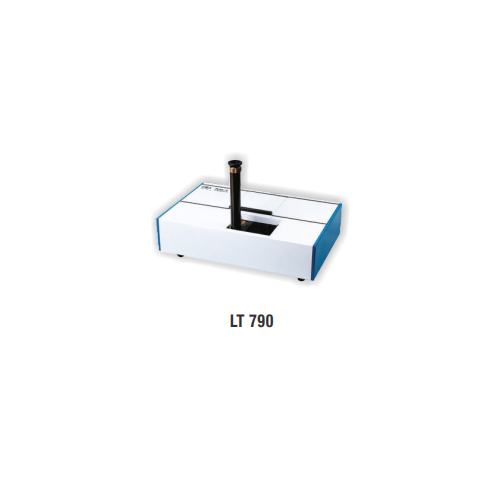
Labtroniks Visual Colorimeter
Price 135000.0 INR / Unit
Minimum Order Quantity : 1 Unit
Core Components : Optical viewing system, light source, color filters
Automation Grade : Manual
Measurement Range : Depends on color scale used
Display Type : Visual
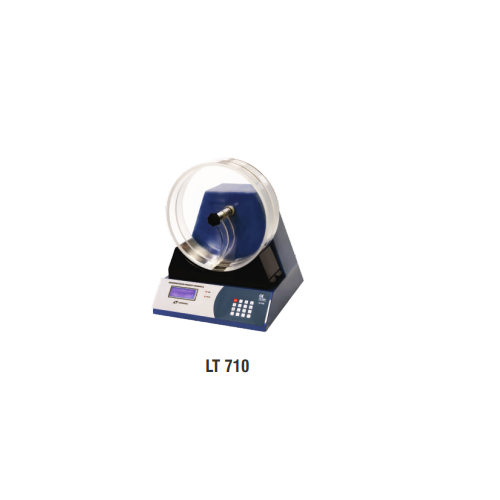
Labtroniks Microprocessor Friability Apparatus (Double Drum)
Price 57000.0 INR / Set
Minimum Order Quantity : 1 Set
Core Components : Drums, microprocessor control unit, digital display, keypad
Automation Grade : Fully Automatic
Measurement Range : 0999 revolutions
Display Type : Microprocessorbased digital display
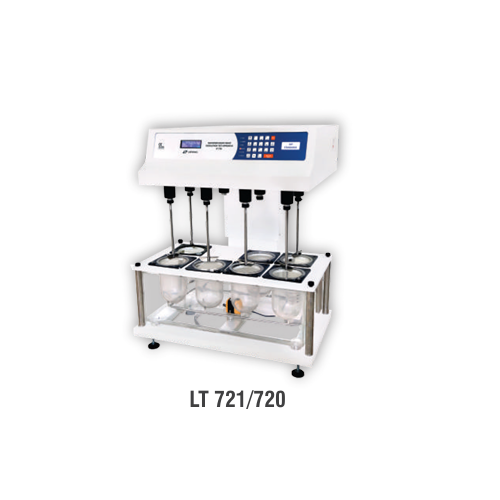
Labtroniks Microprocessor Dissolution Test Apparatus (Eight Basket
Price 240000 INR / Unit
Minimum Order Quantity : 1 Unit

GOVT. APPROVED MANUFACTURER, SUPPLIER AND EXPORTER
 Send Inquiry
Our Products
- Laboratory Microscope
- Hospital Furnitures
- Pharmacy Instruments
- COVID-19 SAFETY EQUIPMENTS
- Physical Instruments
- Laboratory Glasswere
- Anatomical Models
- Laboratory Glassware
- MIDWIFERY & CHILD HEALTH CARE SECTION
- Unique Products
- Chemistry Lab Equipment
- Scientific Instrument
- scientific laboratory instruments
- Physics equipments
- Hospital Equipments
- Educational Equipments kits
- ANALOG LAB TRANING MODULES
- Engineering Models & Equipments.
- Scientific Instruments
- Math catalogue Math items
- Building Furniture for School, Collegs & Office
- EDUCATIONAL WORKING MODELS
- AGRICULTURE EQUIPMENTS
- GEOGRAPHY EQUIPMENTS SECTION
- Disposible items
- The Survey Engineering Equipments Section
- Nursing College Equipments
- Fluid Machnical Lab Equipmens Labcare-Online
- Heat Transfer Lab Appartus Labcare-Online
- Labcare Entomological Equipments.
- Science and Security Equipments
- Defence Utility Equipment
- Office Equipment
- Sanitary Napkins and Diapers
- I.T.I Tools and Machines
- SCIENCE LAB EQUIPMENT
- LABTRONIKS SPECTROPHOTOMETERS
- Nebulizers
- LABTRONIKS


 Send Inquiry
 Send SMS
Developed and Managed by Infocom Network Private Limited.
